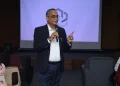




Kochat Narendran has stepped down as President of Afcom Holdings after almost six years with the company, during which the Indian cargo operator moved from planning a regional airline to building up a solid freighter operation.
“I’m extremely proud of the journey we have had right from the inception of the company,” Narendran told The STAT Trade Times looking back at his tenure in Afcom. His responsibilities included the positioning of Afcom in the industry, building brand awareness and acceptance and developing Afcom’s commercial and GSSA operations in India and abroad.
“The route and the network we created was very good and we are very happy with the launch,” he said.
Narendran joined Afcom in January 2020, when the company was gearing up to launch a cargo airline from Chennai. The plan at that time was for smaller aircraft such as an ATR with regional routes such as Chennai-Colombo-Malé being considered.
Those plans were altered by the Covid-19 pandemic. Afcom then progressed to the Boeing 737-800 freighter, and after the required regulatory approvals, was awarded its air operator certificate in December 2024. Later that month, the carrier commenced commercial cargo services on the Chennai-Bangkok route using a Boeing 737-800 freighter.
Afcom currently operates three converted Boeing 737-800 freighters, each with a payload of approximately 20-22 tons. Chennai is connected with regional markets such as Bangkok, Colombo and Malé by an aircraft link. The company has plans to add two more Boeing 737-800 freighters by the end of 2026.
Afcom Holdings also signed a letter of intent with Boeing earlier this month for the potential purchase of up to four 777-8F freighter aircraft, signaling ambitions that go well beyond its current narrowbody operation.
Afcom has been growing and has been doing well financially. The company reported a 48% year-on-year growth in standalone revenue at ₹1.76 billion in the first quarter of FY27. Net profit was at ₹392 million. Afcom’s revenue from operations for FY26 stood at ₹5.83 billion ($66.5 million) and net profit at ₹1.219 billion ($13.9 million).
More than three decades in logistics
Narendran’s career in the industry stretches back more than 35 years. He began working at BPL-India in 1985 before moving into logistics in 1993.
His career subsequently included senior positions across several major logistics and express companies. He served as Regional Sales Manager at TNT Express Worldwide, National Sales Manager and Managing Director at Hindustan Cargo, COO at Continental Carriers and CEO at DTDC Nikko International Logistics.
He also played an important role in restructuring the southern operations of Yusen Logistics before eventually joining Afcom Holdings.
One of the key lessons Narendran took from building Afcom’s cargo operation was the importance of reliability and consistency. Instead of continually changing routes when initial results were disappointing, the company found that maintaining a dependable schedule on markets with long-term potential was more effective in building customer loyalty.
Malé became a particularly strong example of that strategy.
The market had originally been part of Afcom’s earlier plans involving smaller aircraft serving Malé and Colombo. Once the Boeing 737-800 freighter programme took shape, the company began examining whether Malé could be developed into a larger niche market and cargo hub.
The opportunity emerged at a significant moment, coinciding with the redevelopment of Velana International Airport. Discussions with local agents, including Afcom’s Colombo agent, also helped shape the operation, according to Narendran.
The cargo profile through Malé initially relied heavily on perishables. Over time, however, the market broadened to include engineering and industrial products, with cargo moving onwards to destinations including Russia, the UK and Italy.
Afcom also expanded its use of charter partnerships with other airlines. Among them was Turkish Airlines, with cargo charters operated between Colombo and Malé and, on several occasions, between Chennai and Malé.
Chennai nevertheless remained central to Afcom’s scheduled network. After experimenting with Bengaluru, the company decided to concentrate its scheduled operations in Chennai.
“We started focusing on Chennai because Chennai is a hub,” Narendran said, noting that Afcom’s presence had also contributed positively to the airport’s cargo growth.
Supply-chain disruption created new opportunities
The company also benefited from the changing dynamics of global supply chains. Narendran recalled how disruptions created additional opportunities for Afcom, including increased charter demand following the Red Sea disruption.
For him, the development of Afcom from Chennai was closely connected to the company’s ambition to build the operation from its home city. While the carrier has since expanded its presence to Mumbai, further growth could potentially take it into Delhi and other markets.
As Narendran leaves the company, Afcom is therefore entering its next phase with an established Boeing 737-800 freighter fleet, plans for further narrowbody expansion and a potential future move into the Boeing 777-8F.
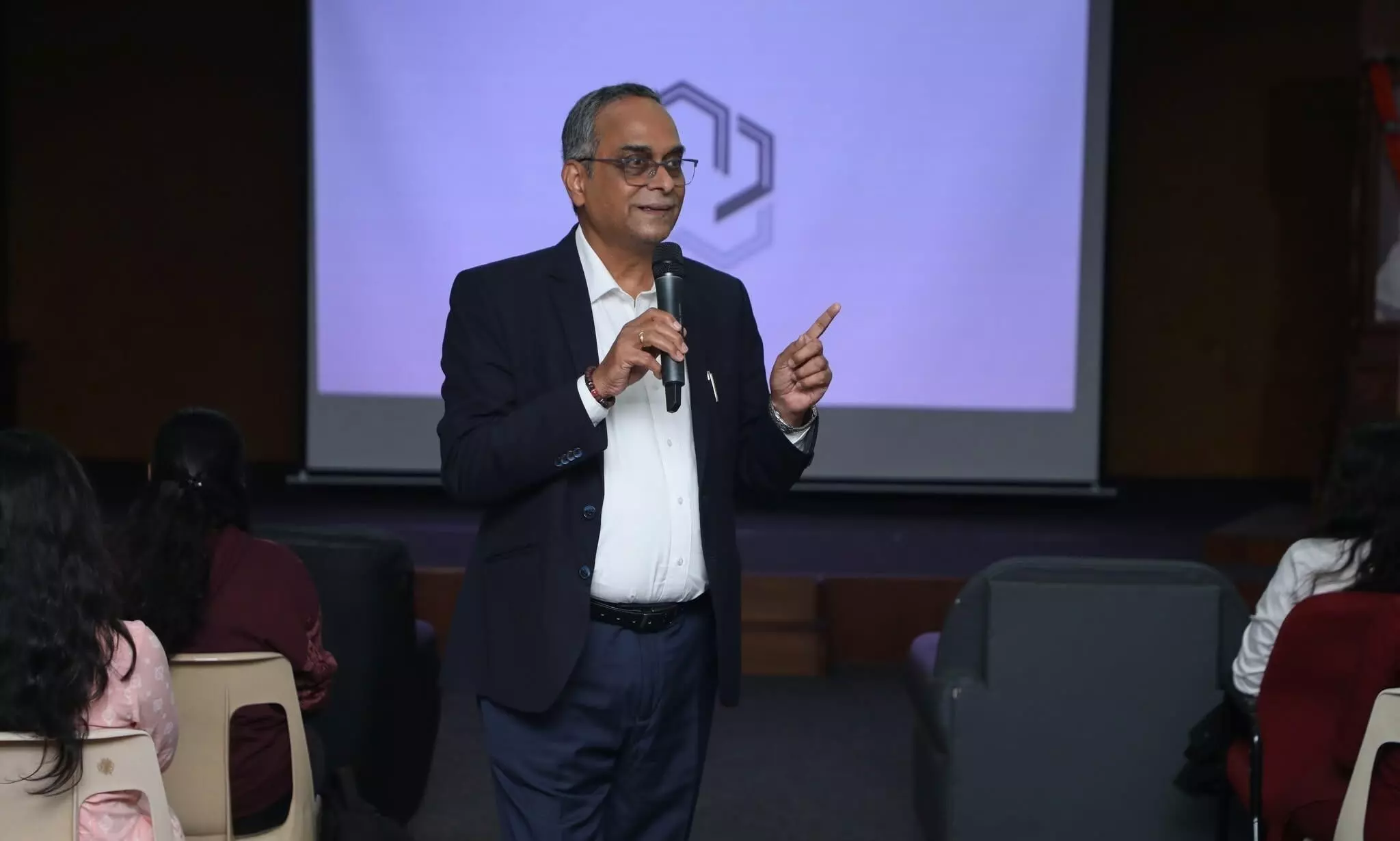
Watch Kochat Narendran speaking to STAT Publishing Group during the recent ACFI World Conclave 2026 in Delhi.
Watch Kochat Narendran speaking to STAT Publishing Group during the recent ACFI World Conclave 2026 in Delhi.