




Just a week after a devastating earthquake struck Venezuela, LATAM Cargo has already transported more than 300 tonnes of humanitarian aid to the country, underscoring how quickly the air cargo industry can respond when disaster strikes.
The operation was carried out through the airline’s Solidarity Plane programme, which was activated immediately after the earthquake to help deliver emergency supplies to affected communities.
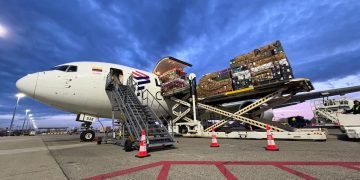
In only seven days, LATAM Cargo operated six dedicated freighter flights and four passenger flights carrying humanitarian cargo in their belly holds. The aircraft departed from Miami, Panama City, Bogotá and Quito, bringing together relief supplies from across the Americas before flying them into Venezuela.
The volume of cargo moved in such a short period is considerable. More than 300 tonnes of aid—including medical supplies, food, power generators and field hospital equipment—have already reached the country and are being distributed by humanitarian organisations working on the ground.
But the operation was about much more than aircraft and cargo.
It brought together dozens of organisations from across the region, all working toward the same objective: getting help to people as quickly as possible.
Humanitarian groups including UNHCR, the International Federation of Red Cross and Red Crescent Societies, GEM, TAAP, Fundana, Peru Pendiente and the Cámara de Comercio Venezolana Ecuatoriana all relied on LATAM Cargo’s network to transport donations into Venezuela.
Behind the scenes, logistics specialists such as KOPE and Kuehne+Nagel helped speed up customs procedures, ensuring that critical supplies spent less time waiting at airports and more time reaching the communities that needed them.
For Andrés Bianchi, CEO of LATAM Cargo, the response reflects what the company’s Solidarity Plane programme was created to do.
“We are deeply proud to support Venezuela,” he said. “Our team showed remarkable commitment, working hand in hand with the broader ecosystem against the clock. That commitment reflects the human purpose behind our work.”
While the emergency phase is still ongoing, the operation has already shown the value of strong cooperation between airlines, humanitarian organisations and logistics partners. When every hour counts, that kind of coordination can make a real difference.
As Venezuela begins what is expected to be a long recovery, air cargo will continue to play a vital role—not only in delivering emergency relief, but also in supporting the rebuilding efforts in the weeks and months ahead.