




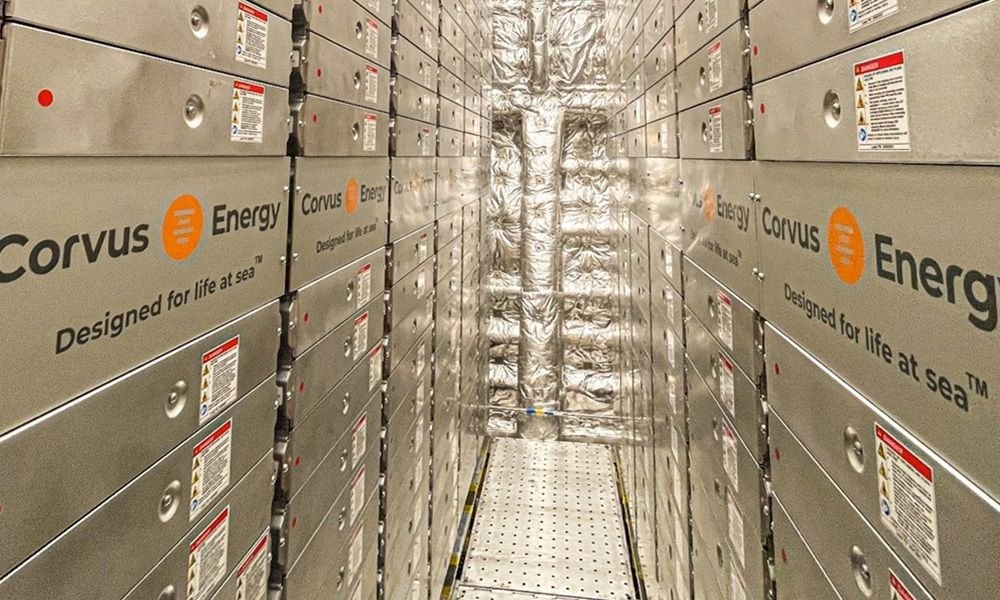
Norwegian battery specialist Corvus Energy and BYD Energy Storage have taken a step further in their collaboration, signing a strategic cooperation agreement aimed at accelerating the development of next-generation battery systems for the maritime sector.
The agreement builds on a memorandum of understanding signed late last year, which first set the framework for joint work on marine battery technologies. This new phase formalises a deeper industrial partnership between the two companies.
Under the deal, Corvus and BYD will co-develop lithium iron phosphate (LFP) battery systems specifically designed for maritime use. The collaboration brings together Corvus’ experience in shipboard integration with BYD’s large-scale battery cell manufacturing capabilities.
Both companies say the objective is to deliver systems that are not only safer and more reliable, but also more cost-efficient for demanding marine operating environments, where durability and performance are critical.
Fredrik Witte, chief executive of Corvus Energy, said the partnership would help widen access to competitive LFP solutions in shipping.
“By pairing Corvus’ deep maritime knowledge with BYD Energy Storage’s world-leading cell technology, we can reduce system cost significantly while maintaining the safety and performance standards this industry needs,” Witte said.
The two companies will work together across research and development, certification processes, and commercial deployment of high-rate marine battery systems across global markets.
The agreement was signed during the China International Battery Fair held in Shenzhen.
Headquartered in Bergen, Corvus Energy has become one of the leading suppliers of maritime battery systems, with more than 1,350 projects delivered across offshore, passenger, and commercial shipping segments.
The company also states that more than half of all vessels equipped with zero-emission technology worldwide currently use its systems.
For its part, BYD Energy Storage has been steadily expanding its presence in marine applications as demand grows for hybrid and fully electric vessel solutions, driven by the shipping industry’s broader decarbonisation push.