Maritime Nov 17, 2026
Russia Rules Out Black Sea Interim Agreement Without a Lasting Peace Settlement
Türkiye is pursuing diplomatic efforts with Moscow and Kyiv to restore safe navigation in the Black Sea and bring grain exports back to international markets. Foreign Minister Hakan Fidan says Russia is unwilling to accept a separate interim arrangement without a permanent peace agreement, while negotiations remain focused on territorial disputes, security guarantees and Europe's future relationship with Moscow.
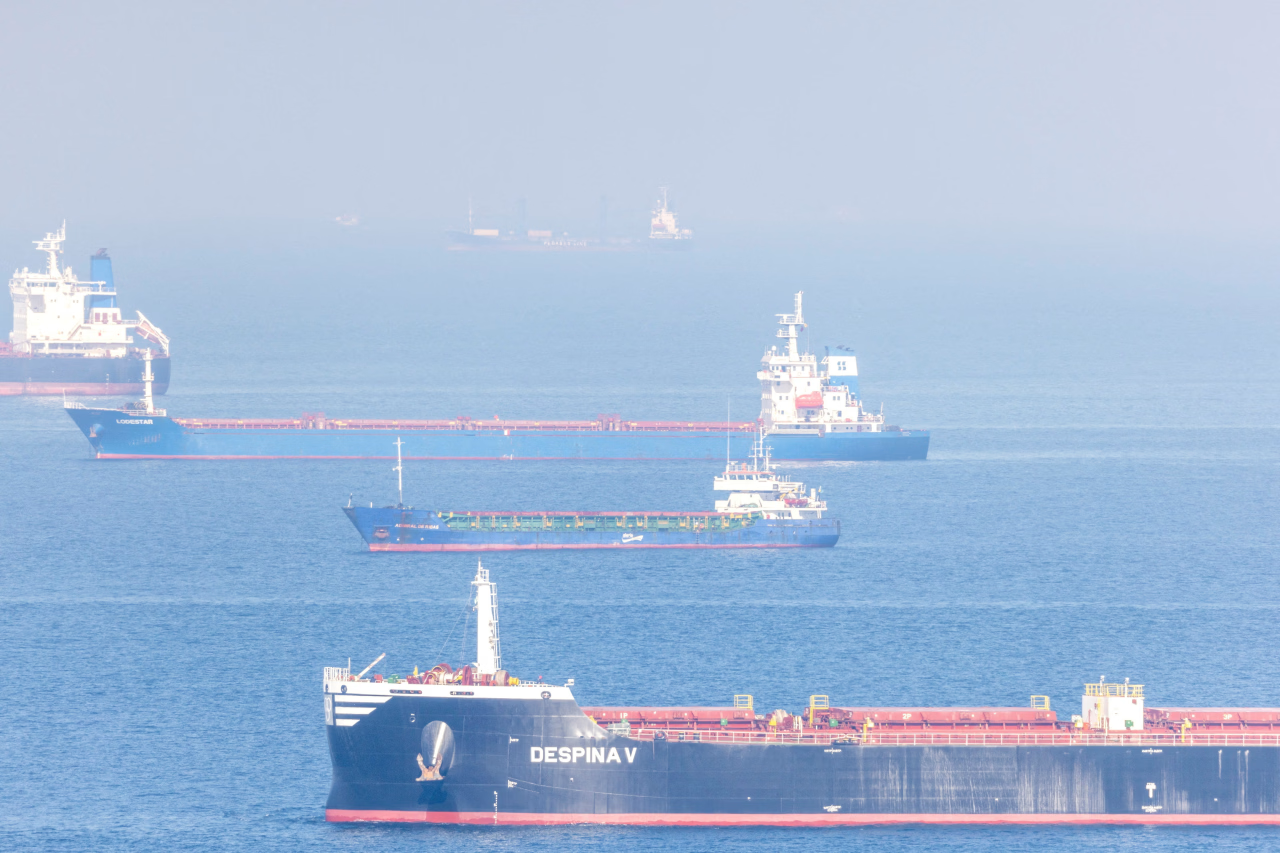
Efforts to restore maritime security in the Black Sea and reopen reliable routes for international grain shipments remain closely tied to the wider negotiations aimed at ending the war between Russia and Ukraine. Türkiye is continuing diplomatic discussions with both sides, but a separate agreement on navigation and exports is proving difficult to achieve as Moscow insists on a comprehensive peace settlement.
Turkish Foreign Minister Hakan Fidan outlined the latest diplomatic developments following the Second Ministerial Meeting on Interregional Security and Connectivity, held in Brussels on November 16, alongside the European Union Foreign Affairs Council.
Speaking to journalists after the meeting, Fidan confirmed that Türkiye was maintaining discussions with several countries involved in regional security and connectivity, including Ukraine, Russia, Bulgaria and Romania. He stressed that negotiations were also addressing the practical conditions needed to restore Black Sea shipping and facilitate the return of grain to international markets.
Türkiye seeks to restore Black Sea shipping and grain exports
Fidan said Ankara was engaged in an ongoing series of discussions with both Moscow and Kyiv, with particular attention given to the resumption of grain shipments destined for international markets.
The diplomatic initiative is taking place against a wider background of disruption affecting major international trade and transport corridors.
During the Brussels meeting, representatives from the European Union, the Caucasus and Central Asia examined how trade, energy and data connections could become more efficient, reliable and resilient. Discussions also considered lessons from recent geopolitical crises and disruptions affecting strategic maritime passages, including the Strait of Hormuz, Bab el-Mandeb and the Black Sea.
According to Fidan, connectivity cannot remain limited to political strategies and declarations. Governments must translate their commitments into practical measures capable of maintaining uninterrupted commercial flows.
Türkiye occupies a strategically important position between Europe, the Black Sea, the Caucasus and Central Asia. The country also plays a central role in the Middle Corridor, which connects Asian markets with Europe.
Fidan argued that this geographical position comes with responsibilities, particularly in proposing solutions and taking a leading role in implementing them. He said Türkiye's importance as a regional hub for trade, energy and data connections was recognised by participating countries.
On the sidelines of the Brussels meeting, the Turkish foreign minister also held bilateral discussions with representatives from Ukraine, Germany, Lithuania, Denmark, Bulgaria, Romania and Moldova.
The main obstacle to a peace deal remains Donbas
Talks to end the war between Russia and Ukraine are stuck on fundamental disagreements about territory, beyond just maritime security.
Fidan noted that Türkiye had hosted some rounds of talks between the parties previously, including meetings during the summer of 2025. Since then, diplomatic contacts have continued, with representatives traveling between countries in an attempt to bring the positions closer together.
But he said the underlying issues were unresolved.
The Turkish foreign minister said Russia is now demanding control over the rest of Donbas because the territory falls within the scope of its national borders. Ukraine disputes this, saying the region is part of its sovereign territory.
Fidan pointed to the different territorial assessments between the two sides. Russia claims that the rest of the disputed territory amounts to some 11% to 12%, while Ukraine puts the figure at closer to 18%.
This disagreement continues to block progress toward a comprehensive settlement.
Another key question is the future line of contact between Russian and Ukrainian troops. “Any agreement should establish this line clearly, the most difficult part of the process being the Donbas dispute,” Fidan said.
Once the territorial issues are resolved, negotiations will also have to cover security guaranties for Ukraine.
Any settlement would reshape Europe's security relationship with Russia
Fidan stressed that a peace agreement between Moscow and Kyiv would have consequences extending far beyond the two countries.
In his assessment, the outcome would effectively establish a new framework for relations between Russia and Europe, requiring both sides to reconsider their long-term security arrangements.
He said that discussions on this broader European security architecture had previously remained relatively general, with the parties expressing political intentions without translating them into detailed proposals.
However, he believes negotiations are gradually reaching the stage where these questions must be addressed in practical terms.
Türkiye, he added, has developed proposals concerning a future security framework intended to address the confrontation between Russia and Europe and establish conditions for ending it.
Fidan also referred to the experience of Turkish President Recep Tayyip Erdoğan, who has followed the conflict and related diplomatic developments for many years.
The foreign minister identified several issues that would need to form part of a comprehensive agreement:
The precise definition of the line of contact between Russian and Ukrainian forces.
A resolution of the territorial dispute over Donbas.
Security guarantees for Ukraine.
A new security and peace architecture between Russia and Europe.
The future of international sanctions imposed on Russia.
The treatment of frozen Russian assets in the context of Ukraine's reconstruction.
According to Fidan, bringing all these elements together in an agreement acceptable to every party represents a considerable diplomatic challenge.
Nevertheless, he stressed that the objective must be a lasting end to the war rather than a temporary arrangement that leaves the fundamental causes of the conflict unresolved.
Black Sea maritime security remains linked to wider negotiations
The discussions on maritime navigation and grain exports are taking place alongside the broader diplomatic process.
Türkiye is seeking a formula that would allow commercial vessels to operate safely in the Black Sea and restore the movement of agricultural commodities, particularly wheat destined for countries facing food supply challenges.
Fidan said Ankara had submitted several proposals concerning these issues and that some elements had been finalised during the latest diplomatic discussions.
The initiative also directly concerns other Black Sea countries, particularly Bulgaria and Romania, whose maritime and commercial interests are closely connected to regional shipping security.
Fidan confirmed that Türkiye had recently held discussions with Russian representatives and had also met with his Bulgarian, Romanian and Ukrainian counterparts.
The objective is to identify a mechanism that could bring the relevant parties together around practical arrangements for maritime safety and the resumption of trade.
However, the negotiations face a significant obstacle: Moscow does not want a separate interim agreement with Ukraine covering the Black Sea unless it forms part of a permanent peace settlement.
This position complicates efforts to establish an immediate arrangement for commercial navigation while the wider territorial and security disputes remain unresolved.
Fidan described the situation as a difficult diplomatic equation, explaining that Ankara was examining possible solutions but was not yet prepared to make its proposals public.
For the moment, these ideas are being discussed directly with the relevant parties. The Turkish foreign minister indicated that details could be disclosed if the proposals eventually lead to an agreement and are put into practice.
Progress on the horizon for international trade talks
The outcome of these discussions has huge implications for maritime transport, international grain supplies and the security of commercial shipping across the Black Sea.
Reopening safe navigation would ease the movement of agricultural exports to markets and help countries that rely on grain shipments from around the world. It would also give more predictability to shipping operators and businesses that depend on the Black Sea trade corridors.
Yet Turkish diplomacy is still heavily dependent on progress in the wider Russia-Ukraine talks.
The key problem is how to address immediate maritime and commercial issues without detaching them from the political and security issues that Moscow sees as crucial for a permanent settlement.
Meanwhile the relevant governments are still talking to each other, with Ankara seeking a diplomatic formula reconciling maritime security, international trade and the objective of a permanent end to the war.
END OF REPORT