



The Mærsk Mc-Kinney Møller Center for Zero Carbon Shipping is scaling back operations and cutting jobs as the influential non-profit adapts to what it describes as the next stage of shipping’s energy transition.
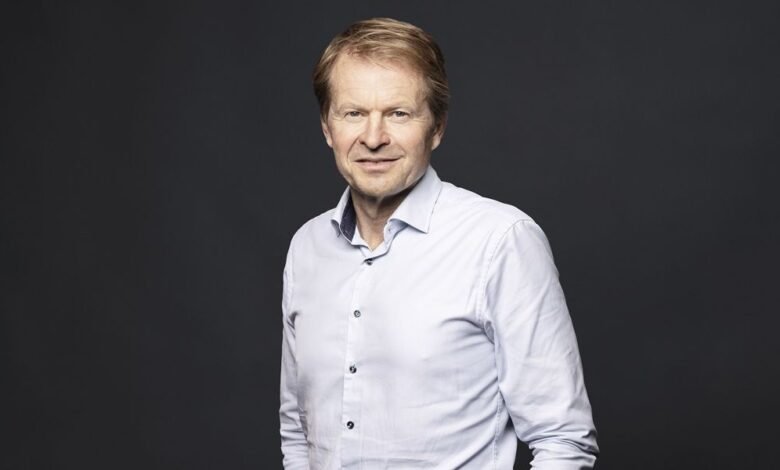
The Copenhagen-based organisation confirmed the restructuring in a letter issued by chief executive Bo Cerup-Simonsen alongside the release of its latest assessment on global maritime climate regulation.
Although the centre did not publicly specify the number of redundancies, Danish media reports indicate that around 35 positions could be affected.
The move marks a significant shift for an organisation that rapidly became one of the maritime industry’s most prominent voices on decarbonisation after launching in 2020 with backing from the A.P. Moller Foundation and a network of major industry partners.
Over the past several years, the centre has brought together shipowners, fuel producers, technology companies, financial institutions and logistics stakeholders to help shape pathways toward net-zero shipping.
However, the operating environment surrounding maritime decarbonisation has changed considerably.
At its peak in mid-2025, the organisation counted 24 strategic partners supporting its activities. Since then, six companies have reportedly withdrawn financial backing amid geopolitical uncertainty, shifting corporate priorities and tighter spending controls, reducing the number of strategic partners to 18.
Against this backdrop, management has decided to streamline operations and focus resources on areas where it believes the organisation can have the greatest long-term impact.
According to Cerup-Simonsen, the centre’s initial role was to help establish the technical, commercial and regulatory foundations needed for shipping’s transition toward lower emissions.
Now, with the International Maritime Organization pushing forward with its greenhouse-gas reduction framework, the industry’s attention is gradually shifting away from scenario modelling and policy design toward real-world implementation.
Since its creation, the centre has been deeply involved in research linked to alternative fuels, carbon pricing systems, fuel standards, green shipping corridors and emerging vessel technologies.
Many of these core concepts are now better understood than they were five years ago, prompting the organisation to reassess where future resources should be concentrated.
Cerup-Simonsen stressed that regulation remains one of the biggest drivers needed to unlock large-scale investment across the maritime value chain.
The organisation’s latest “Countdown” analysis highlights the importance of regulatory certainty for shipowners, fuel suppliers and infrastructure developers preparing for the next phase of IMO environmental compliance.
The restructuring also reflects a wider reality across global shipping, where decarbonisation ambitions continue colliding with economic pressures and investment uncertainty.
During discussions at the recent Geneva Dry 2026 conference, several shipowners openly voiced concerns about unclear fuel pathways, uncertain carbon pricing mechanisms and inconsistent regulatory implementation.
Many operators argued that committing billions of dollars to alternative-fuel vessels remains difficult without predictable long-term rules and stronger financial incentives.
Engebret Dahm notably warned during the event that many owners are reluctant to invest heavily in green ready vessels without clearer regulations and customers willing to pay higher prices for low-emission transport.
At the same time, pressure from cargo owners and charterers is intensifying.
In a recent edition of Maritime CEO, Josephine Le argued that environmental performance is increasingly becoming a commercial requirement rather than simply a branding advantage, warning that shipowners without credible decarbonisation strategies may eventually lose access to premium charter opportunities.
The contrasting positions underline the difficult balancing act facing organisations like the Mærsk Mc-Kinney Møller Center as the industry attempts to bridge the gap between ambitious climate targets and the commercial realities of global shipping.