



China’s overwhelming dominance in global container manufacturing is once again at the centre of international attention after US authorities launched a major antitrust case targeting some of the industry’s biggest players.
The United States Department of Justice has indicted four leading container manufacturers and seven executives over allegations they operated a cartel that manipulated container supply and inflated prices during the Covid-19 pandemic.
According to prosecutors, the companies coordinated production cuts and fixed prices for standard dry shipping containers between late 2019 and early 2024, a period during which container prices surged dramatically across global supply chains.
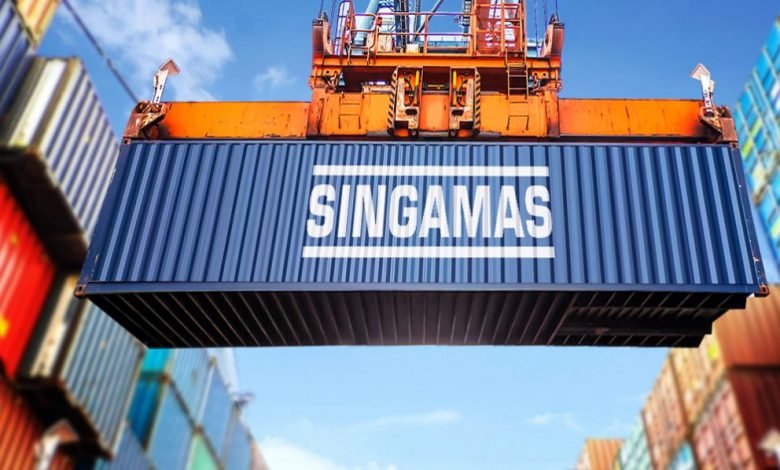
The companies charged include CIMC, Singamas Container Holdings, Dong Fang International Containers and CXIC Group Containers.
US authorities claim the companies violated the Sherman Antitrust Act by conspiring to restrict output and artificially raise prices at a time when global logistics networks were already under extreme pressure.
Today, Chinese factories produce more than 95% of the world’s dry cargo containers and almost all refrigerated containers used in international trade, giving Beijing enormous influence over a critical part of global supply chains.
The issue has become increasingly sensitive in Washington over recent years, with US officials repeatedly warning about the strategic risks associated with such heavy dependence on Chinese manufacturing capacity.
Back in 2022, former Federal Maritime Commission commissioner Carl Bentzel released a detailed investigation into China’s growing control over both container and chassis manufacturing.
Even earlier, the US government intervened to block the sale of Maersk’s refrigerated container manufacturing business amid concerns that Chinese companies would gain even greater control over the sector.
According to the indictment, the alleged conspiracy intensified during a meeting held on November 14, 2019, at CIMC’s headquarters in Shenzhen.
Executives from CIMC, Dong Fang and CXIC allegedly agreed to limit production by reducing working shifts and operating hours on dry container production lines. Prosecutors say the group later installed 87 surveillance cameras across 49 production lines to monitor compliance with agreed production quotas.
The investigation also alleges that financial penalties were introduced for companies that exceeded their assigned output limits. Singamas reportedly joined the arrangement by March 2020.
The financial impact was enormous.
CIMC’s container manufacturing profits reportedly jumped from $19.8 million in 2019 to $288 million in 2020 before soaring to $1.75 billion in 2021. Meanwhile, Singamas moved from a $110 million net loss in 2019 to a profit of nearly $187 million two years later.
One of the executives named in the case, Vick Nam Hing Ma, was arrested in France in April and is currently awaiting extradition to the United States.
Several other defendants remain at large, including Siong Seng Teo, a well-known figure in Singapore’s maritime industry who previously led the Singapore Shipping Association and controls Pacific International Lines.
The case immediately shook financial markets, with shares in CIMC and Singamas falling sharply in Shanghai and Hong Kong trading following the announcement.
The investigation is also likely to intensify global discussions around supply chain diversification, with countries such as Vietnam, India and Bangladesh increasingly positioning themselves as alternative container manufacturing hubs outside China.
US prosecutors described the alleged cartel as a direct attack on global economic stability during one of the most fragile periods for international trade.
“Global price-fixing cartels strike at the heart of our economic liberty,” said Omeed Assefi, arguing that the companies effectively held the global supply of shipping containers hostage while supply chains were already under severe strain.