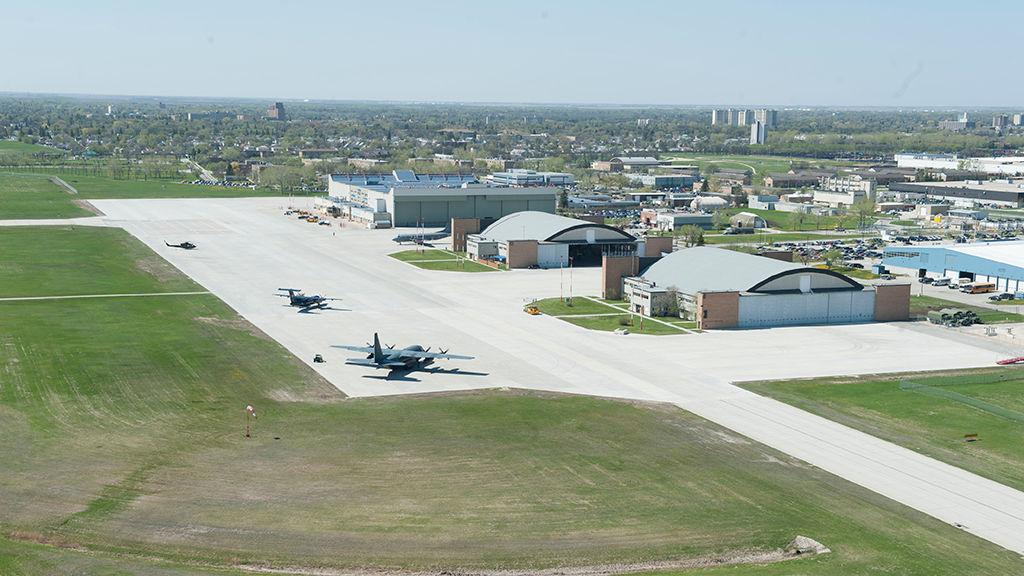
 Canadian Forces Base Winnipeg’s 17 Wing is preparing for its largest expansion in decades, with dozens of construction projects expected to generate significant opportunities for contractors while strengthening Canada’s military infrastructure.
According to the Department of National Defence (DND), the multi-year expansion will modernize training facilities, improve operational readiness and enhance services for Canadian Armed Forces (CAF) personnel and their families.
Supporters of the project say the expansion will bring hundreds of new military and civilian employees to the base, along with millions of dollars in construction activity.
The Winnipeg Construction Association (WCA) is currently tracking 33 projects at 17 Wing, including new buildings, engineering works, renovations, alterations and heavy civil infrastructure projects.
One of the largest developments is the Future Aircrew Training (FAcT) program, which will include the construction of a new integrated training complex.
According to SkyAlyne, the Ottawa-based company overseeing the project, the facility will feature a combined aircraft hangar, classrooms, office space, learning areas and advanced flight simulators designed to support the next generation of Canadian military pilots.
The project is currently in the design phase, with construction expected to begin in 2027 and continue over several years.
SkyAlyne spokesperson Harrison Ruess said contractors interested in infrastructure opportunities should work with EllisDon, the project’s lead construction subcontractor. An online portal outlining upcoming procurement opportunities is expected to be launched as construction approaches.
Companies seeking to work at the military base will also need to meet federal security requirements.
WCA President and CEO Darryl Harrison explained that both construction firms and, in some cases, individual workers must obtain the appropriate security clearances depending on the scope of each contract.
Although military construction projects are relatively uncommon in Manitoba, Harrison said local contractors have extensive experience delivering complex institutional, healthcare, aviation, defence, industrial and infrastructure developments.
He added that transparent procurement processes and early communication with industry would help maximize opportunities for qualified Manitoba businesses while ensuring strong competition and value for taxpayers.
According to Capt. Ken Jacobson, spokesperson for 17 Wing, all Department of National Defence contracts are advertised through the Government of Canada’s procurement platforms, including MERX and CanadaBuys.
Tender documents outline evaluation criteria, bid requirements and any security clearance obligations associated with individual projects.
Jacobson also noted that Defence Construction Canada has already issued an Advance Procurement Notice for CFB Winnipeg, allowing interested companies to begin the security clearance process before contracts are released.
Beyond the military installation itself, the expansion is expected to stimulate broader economic development across the surrounding region.
Located within CentrePort Canada, Canada’s largest tri-modal inland port connecting air, rail and road transportation, 17 Wing is well positioned to support future aerospace and logistics growth.
CentrePort Canada President and CEO Carly Edmundson said plans are underway for a 500-acre residential development in CentrePort South that will provide housing for between 8,000 and 10,000 residents, helping accommodate the growing workforce, including incoming military personnel and their families.
Winnipeg Mayor Scott Gillingham described the expansion as a major economic opportunity for the city.
In the short term, he said the project will generate significant construction work for local contractors, skilled trades and suppliers. Over the longer term, the arrival of additional military and civilian personnel is expected to increase demand for housing, retail and local services while reinforcing Winnipeg’s established aerospace and defence industries.
Estimates suggest the expansion could create between 800 and 1,400 new jobs, further strengthening one of Canada’s most important air force bases.
To support future operations, the Manitoba government is also increasing the base’s electrical capacity by 10.5 megawatts. The additional power will support critical operations, including airfield services, communications, security, emergency response systems, lighting, heating, ventilation and other mission-critical infrastructure.