



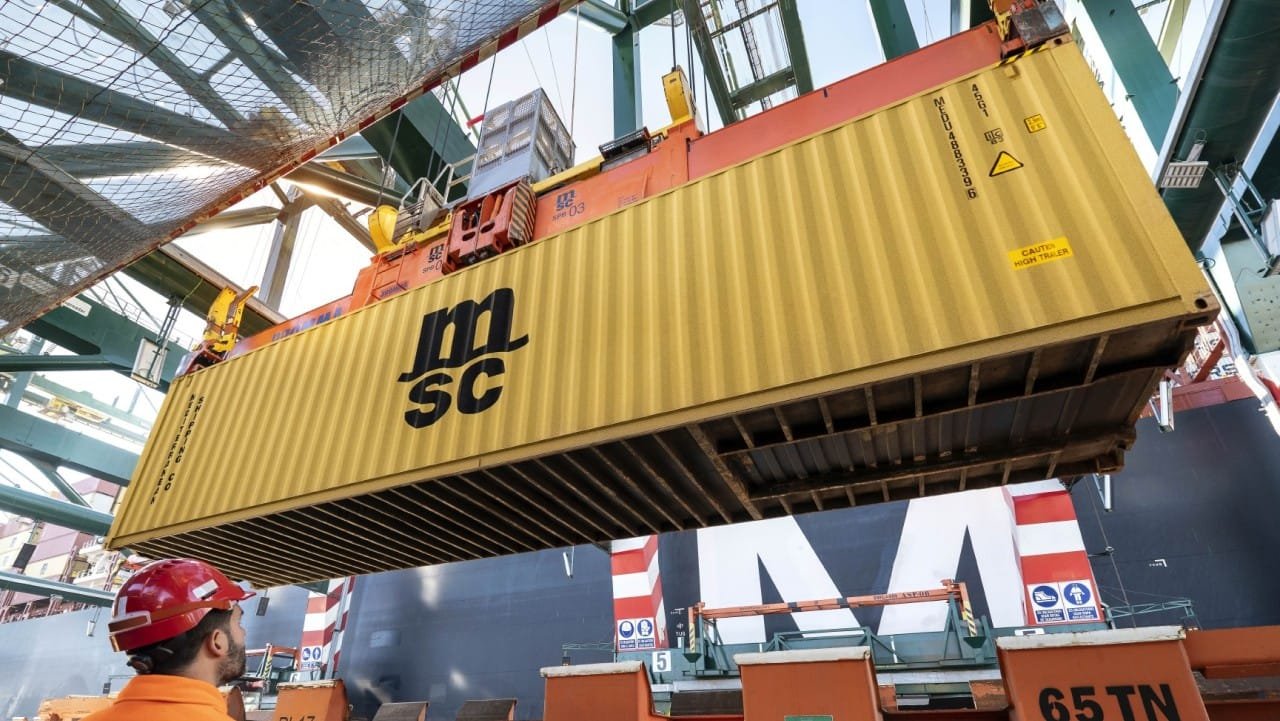
Container shipping is returning to the Red Sea, with MSC boosting its presence on the route and other main carriers reviewing diversions around the Cape of Good Hope.
MSC has sent seven vessels through the Bab el Mandeb Strait in the past two weeks and Maersk has also increased the amount of cargo through the Red Sea.
The Switzerland-based carrier has not yet made a formal announcement of a full return to the Suez Canal. So far, Red Sea transits have been limited to eastbound trips, suggesting MSC is adopting a cautious, phased approach to bringing the route back online.
But the move could also be a harbinger of a wider change in carrier strategies.
MSC’s partial return to Red Sea transits on Europe-Asia services could signal a more widespread return to the Suez Canal could happen earlier than previously expected, Consultancy Linerlytica said.
This follows CMA CGM and Maersk, which have already resumed services through the Red Sea in both directions.
Linerlytica said MSC’s decision might also prompt more carriers to rethink their ongoing diversions around the Cape of Good Hope.
Maersk moves volumes back to Red Sea
Maersk has already diverted 30% of the volumes it had earlier sent around the Cape of Good Hope, back through the Red Sea and Suez Canal.
The carrier’s decision follows the return of the MECL, ME11 and AE19 services to the Red Sea and CMA CGM’s continued presence in the region.
MSC seems to have been prompted by such developments to commence its own slow return to the route.
The strategic appeal is substantial for Asia-Europe shipping. Sailing through the Suez Canal instead of going around the Cape of Good Hope can cut transit times between Asia and Europe by about seven to 14 days.
For carriers the potential savings in sailing time could be translated into shorter voyage cycles and more effective vessel deployment.
But the gradual pace of MSC’s return demonstrates that shipping lines are still evaluating operational conditions before fully restoring Red Sea and Suez Canal services.
Now that MSC is increasing its transits and Maersk is shifting an increasing share of volumes back to the region, other carriers are being pressured to consider whether Cape diversions should continue to be their primary routing strategy.