



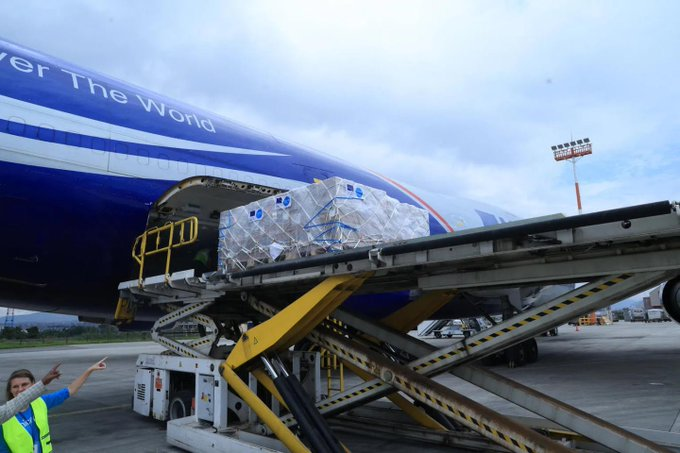
A humanitarian airlift carrying 84 tonnes of emergency supplies arrived in Kathmandu on September 4, supporting UNICEF’s efforts to assist children and families affected by the devastating flash floods that struck Nepal.
Backed by European Union Humanitarian Aid, the shipment was flown from UNICEF’s global supply and logistics hub in Copenhagen to communities impacted by flooding in the Bhotekoshi-Trishuli river basin.
National Airlines said in a social media post that it operated the mission for UNICEF, transporting more than 75 tonnes of aid and relief cargo on a direct Boeing 747 freighter service between Copenhagen and Kathmandu. The airline said the entire operation was organised in less than 48 hours, from the initial request through cargo loading and departure.
Such a rapid mobilisation required close coordination across several areas, including ground support services, logistics, permits, flight operations and cargo-handling arrangements, all of which had to be put in place at short notice.
The UNICEF shipment contained a wide range of emergency supplies. These included acute watery diarrhoea (AWD) kits and diagnostic equipment, water tanks, hygiene kits and water-treatment supplies, tents, winter clothing kits for infants and children, as well as learning materials.
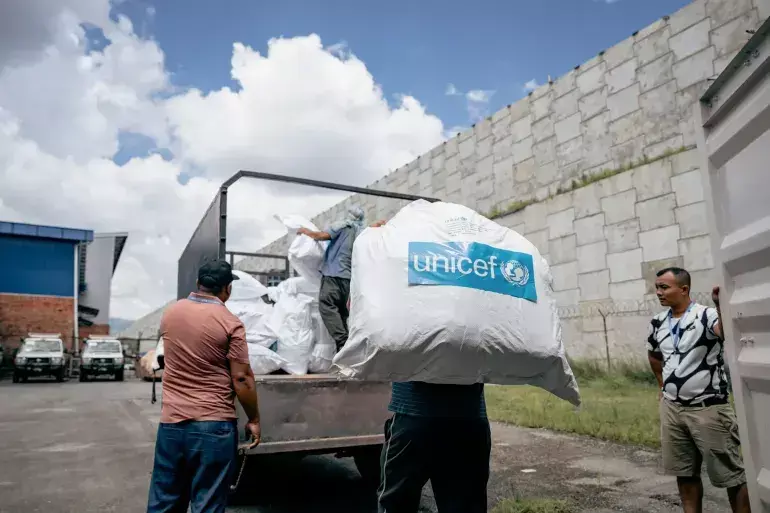
Following the aircraft’s arrival, dozens of trucks were mobilised to transport the relief supplies towards some of the communities worst affected by the floods in Rasuwa, Nuwakot and Dhading districts.
The airlift is part of a much broader humanitarian response launched after flash floods hit Nepal on August 26. The disaster damaged homes, roads, bridges, health facilities, schools, water systems and telecommunications infrastructure, creating significant challenges for relief teams attempting to reach isolated communities.
UNICEF initially relied on emergency stocks that had already been pre-positioned in the country to begin delivering assistance. On August 27, the organisation reported that more than 17,000 children had been affected and appealed for $17.2 million to fund the emergency response and early recovery efforts.
“Children across Rasuwa and Dhading saw their lives being literally washed away in front of their eyes in a very short span of time, with homes, classrooms, and medical facilities damaged. Too many lost their lives and loved ones,” said Alice Akunga, UNICEF Representative to Nepal.
Damage to roads and bridges left entire communities cut off, making the distribution of humanitarian assistance considerably more difficult. At least four health facilities were severely damaged, while 18 schools were completely destroyed and another 20 sustained damage.
As assessments continued, UNICEF estimated that at least 65,000 people had been affected, including approximately 22,100 children. Hundreds of people were reported dead, while thousands remained missing.
Water, sanitation and health
More than a week after the floods, access to safe drinking water and sanitation remained one of the most urgent concerns.
Damage to water infrastructure and sanitation facilities, combined with overcrowding among displaced families, increased the risk of waterborne and infectious diseases.
UNICEF estimates that at least 22,000 children urgently require safe drinking water, sanitation and hygiene support. The organisation has dispatched WASH (water, sanitation and hygiene) supplies for approximately 19,000 people in Rasuwa and Nuwakot.
The supplies include more than 3,800 hygiene kits, 3,300 jerrycans, 3,500 buckets and mugs each, 4,000 bottles of water-treatment solution and more than 1,000 tarpaulin sheets.
The humanitarian response also incorporates disease surveillance, hygiene promotion and measures aimed at preventing outbreaks.
UNICEF estimates that around 2,600 children under the age of five could require treatment for severe wasting following disruptions to food systems and critical infrastructure. Other pre-positioned emergency supplies have included medical tents, bed nets, newborn kits, ready-to-use therapeutic food and micronutrient powders.
Supporting children beyond emergency supplies
The response extends beyond the delivery of immediate relief materials. Education, child protection and psychosocial support are also part of UNICEF’s humanitarian efforts.
From a logistics perspective, the operation involves several interconnected stages. Supplies that had already been pre-positioned in Nepal provide an initial response, while additional emergency cargo is brought in through international airlift from UNICEF’s Copenhagen hub. Once in Kathmandu, the supplies must then be transported by road towards affected communities.
The National Airlines operation provided a dedicated long-haul cargo connection between Copenhagen and Kathmandu. The carrier highlighted the speed of the mobilisation, with the flight, permits, cargo handling and ground support organised within a period of less than 48 hours.
“These supplies are arriving at a critical moment for children and families affected by the floods,” Akunga said. “Thousands of children have seen their lives turned upside down in a matter of minutes. Many have lost their homes, their classrooms, and their sense of normalcy.”
The European Union supported the September 4 airlift as part of the wider humanitarian operation.
“The EU stands with the people of Nepal in the aftermath of these devastating floods,” said Thomas Millar, Chargé d’Affaires a.i. at the EU Delegation to Nepal.
“As climate change increases the risks of floods, landslides and other disasters, we are supporting communities with essential humanitarian assistance when disaster strikes, while strengthening preparedness, early warning systems and local response capacities to help save lives and build resilience for the future.”
With infrastructure severely damaged across the affected districts, the success of the relief operation depends on more than securing international cargo capacity. Airport handling, permits, road transport, local coordination and last-mile access are equally critical to getting supplies to the people who need them.
The September airlift demonstrates how these different elements of the humanitarian logistics chain are being brought together: emergency supplies are moved from a global humanitarian logistics hub in Copenhagen to a disaster-affected country, handled through Kathmandu and then transported onwards by road towards communities in need.