Maritime Nov 26, 2026
Ocean Freight Rates Remain More Than Double Year-Ago Levels as Congestion Disrupts Global Capacity
With 3.6 million TEUs immobilized in congested ports, elevated bunker costs and unreliable vessel schedules, shippers face continued pressure as the market heads towards 2027.
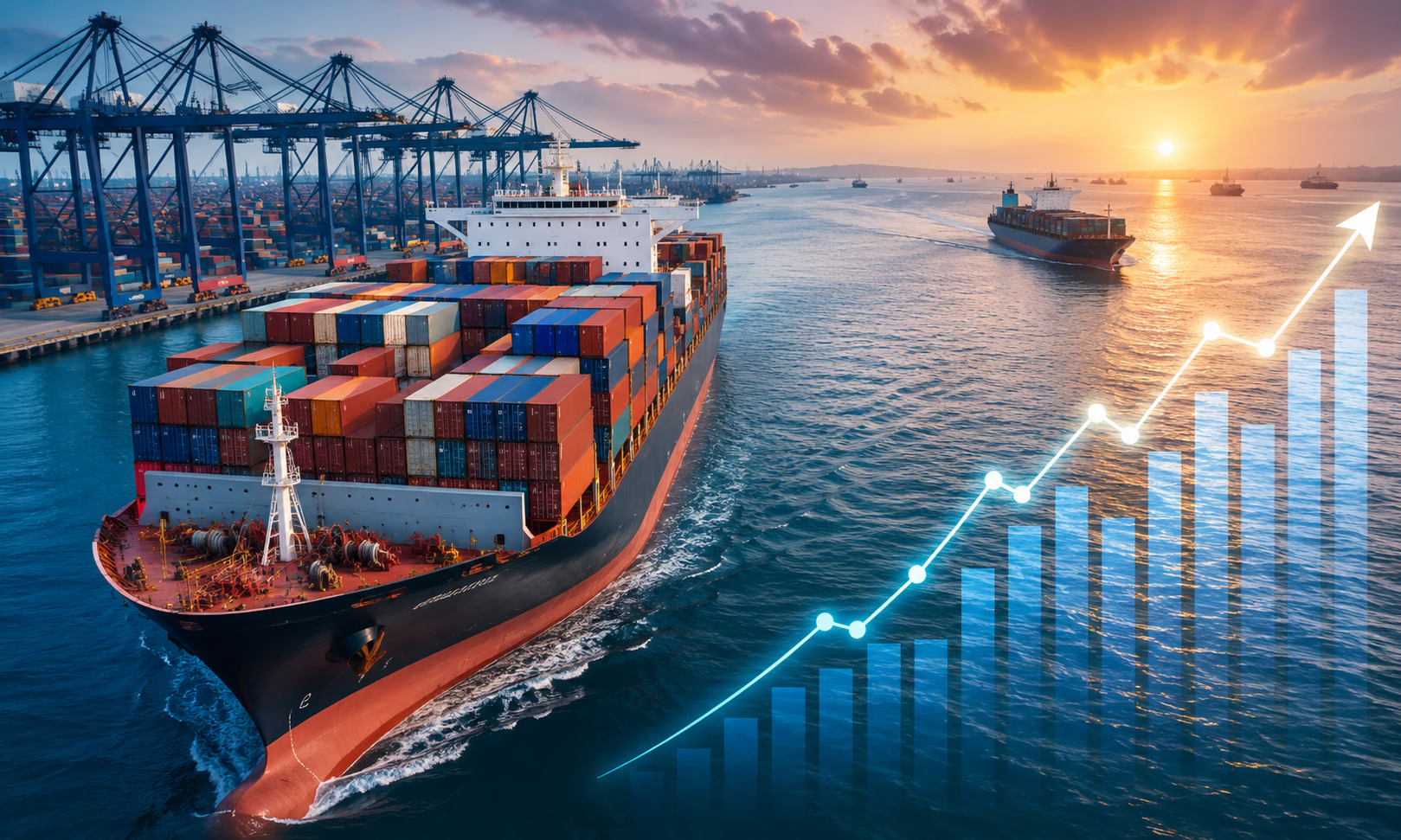
Global ocean freight rates are still well above last year’s levels as congestion, rising fuel prices and ongoing schedule disruptions continue to weigh on the container shipping market. DHL Global Forwarding said in its November analysis that while a gradual improvement is expected, the industry is still in the transition from managing immediate disruptions to navigating a broader market transition, which will take time before the industry is back to more stable conditions.
Container freight rates have risen 138% year over year and 15% compared with August. But prices have been largely steady at last month’s level as the traditional peak shipping season starts to wane. DHL expects rates to remain well above last year's baseline in the coming months. Carriers and shippers are entering the annual contract negotiation season and prices are not expected to fall back to 2025 levels, although a seasonal lull in fourth quarter volumes could see some softening.
Global demand rises, but unevenly
Worldwide demand for containers is up 5% year to date and 4% year-over-year. Exports from Asia have been better, up 8% year to date.
But the growth is not equal across trade routes. Backhaul movements are slow but Asian exports and secondary trades are holding up okay.” Demand in the westbound Far East-Europe corridor has increased 9% since the beginning of the year while the backhaul trade has been static, with 0% growth.
The imbalance is a sign of the prevailing imbalance between outbound and return cargo flows, and makes it harder to manage capacity and plan networks.
Congestion continues to impact vessel availability
The global container fleet continues to expand, but effective shipping capacity remains hampered by port congestion. The fleet is projected to expand to 4% in 2026, compared with the average annual growth of about 6% over the past decade.
"Currently, more than 10% of the world fleet, or some 3.6 million TEUs are stuck at congested ports. DHL estimates that the disruptions have cut effective capacity by some 15%, with much of the pressure felt in Asian ports following the typhoons that hit Chinese terminals in July and August.
Looking further ahead, global net vessel capacity is projected to increase by 4% in 2026, accelerating to 9% in 2027 and 15% in 2028. It predicts new vessel deliveries will exceed nominal growth in international trade as the major shipping companies have placed an unprecedented number of orders.
But more ships don’t always translate into lower freight rates. Scrapping activity has so far been limited, but infrastructure continues to constrain the benefits of fleet expansion. The strain on terminal capacity is also causing problems for container yards and inland transport networks.
Other operational difficulties are caused by weather disruptions, uncertainty in geopolitics and hub-and-spoke operating models. DHL points specifically to the Maersk and Hapag- Gemini partnership. Lloyd as an example of how network structures affect the movement and concentration of vessels.
Suez Canal reopens, new challenges for operations
Some 60% of Asia-Europe shipping services have resumed using the Suez Canal and Red Sea after about three years of diversions.
Carriers such as Gemini and Mediterranean Shipping Co. are among the quickest to revert to the shorter route. DHL also said some shipping lines rerouted vessels without notice, while cargo was already on board.
These shifts bring some new considerations for shippers, especially regarding obtaining cargo insurance. DHL recommends insurance cover for Red Sea transits, war related risks, general average and possible route changes.
Vessel bunching is also happening along the Asia-Mediterranean corridor because of the use of the Suez Canal and alternate routes around Africa. DHL expects to see these operating effects continue in the Asia-North Europe trade in December.
The reliability of the timetable is another big problem. Some large ports in Asia are experiencing fewer than a third of vessels arriving on time. Delays are expected to continue through early summer 2027. The analysis also opens the door to more labor unrest in Europe, adding to the uncertainty in international supply chains.
Rising bunker costs raise freight rates
High fuel prices remain another major source of pressure on carriers and their customers. Very Low Sulfur Fuel Oil (VLSFO) prices are up 69% since February and nearing their 2026 highs.
A lot of the rise is because of Middle East instability and uncertainty over the Strait of Hormuz. Diesel prices have also jumped up as much as 75% since December 2025, which likely means more inland transportation surcharges.
DHL cites a number of options available to shippers to manage bunker costs. These are reverting to a quarterly Bunker Adjustment Factor (BAF) or freezing the second quarter BAF and putting in Emergency Bunker Surcharges or going to monthly bunker price adjustments without emergency surcharges.
The choice of mechanism will be a key issue in contract talks, especially with fuel price volatility continuing to hit the budgets of ocean and inland transportation.
The analysis was released before the latest round of proposed tariffs was announced by the Trump administration, so the possible effects of those additional trade measures were not yet included in the report.
DHL offers tips on reducing supply chain risk
To that end, DHL recommends shippers use more flexible sourcing and transportation strategies instead of only traditional routing and pricing arrangements.
The recommendations are:
Look at alternate regional gateways Other ports and gateways can offset exposure to congestion and bottlenecks in operations.
Be flexible on carriers: Even if it costs more, booking with a different shipping line can help you get the transportation you need.
Buffer schedules Longer lead times and contingency arrangements help buffer against delays and unexpected disruptions.
Rate agreements should have alternative solutions: Rate cards have more flexibility to respond to changing market conditions, allowing you to choose your routing and your carrier.
DHL also advises importers, exporters, freight forwarders and Beneficial Cargo Owners (BCOs) to adapt their contracting strategies to the individual needs of each shipment.
Capacity still matters for critical cargo committed. Hybrid arrangements can manage more variable volumes and access to the spot market offers another option for unexpected increases in demand.
What’s at stake
The ongoing rise in ocean freight rates is an example of how a contract price can no longer guaranty reliable transportation. Even if rates and capacity are agreed in advance, congestion, schedule disruptions, fuel volatility and shifting vessel routings can unravel shipping arrangements.
Freight rates are still more than double a year ago, bunker prices are approaching their 2026 peak and port congestion will remain an issue until mid-2027, leaving procurement teams with an even more challenging Request for Quotation (RFQ) season ahead.
“So first, shippers need to get away from trying to negotiate the lowest rate possible. Securing capacity, keeping alternative routing options open and strengthening supply chain resilience are becoming equally important elements of international freight procurement.
END OF REPORT