

• Latest
  • Trending
Optimizing vessel time in port: a shared responsibility

Optimizing vessel time in port: a shared responsibility

August 27, 2026
Efficiency critical in volatile regulatory climate says DNV

Efficiency critical in volatile regulatory climate says DNV

August 27, 2026
Iran-Oman Hormuz plan adds complexity, but little hope of reopening

Iran-Oman Hormuz plan adds complexity, but little hope of reopening

August 27, 2026
ADVERTISEMENT
Another Tanker Hit in the Strait of Hormuz as Attacks on Shipping Continue

Another Tanker Hit in the Strait of Hormuz as Attacks on Shipping Continue

August 27, 2026
Air China Cargo partners with cargo.one to launch global e-booking

Air China Cargo partners with cargo.one to launch global e-booking

August 27, 2026
How Big-Box Retailers Are Putting Tariff Refunds to Work

How Big-Box Retailers Are Putting Tariff Refunds to Work

August 26, 2026
Garment supplier of H&M, Inditex and PVH accused of violating union rights

Garment supplier of H&M, Inditex and PVH accused of violating union rights

August 26, 2026
Girteka expands operations in Latvia and Romania amid European driver shortage

Girteka expands operations in Latvia and Romania amid European driver shortage

August 26, 2026
Norway’s Digitoll customs rollout raises air cargo delay concerns

Norway’s Digitoll customs rollout raises air cargo delay concerns

August 26, 2026
WorkSafeBC urges young construction workers to ask supervisors before turning to AI

WorkSafeBC urges young construction workers to ask supervisors before turning to AI

August 26, 2026
New South Bowmanville Recreation Centre nears completion

New South Bowmanville Recreation Centre nears completion

August 26, 2026
Oakville council approves four-tower mixed-use development near Bronte GO Station

Oakville council approves four-tower mixed-use development near Bronte GO Station

August 26, 2026
Canadian home sales slip 5.3% year over year as housing market moves toward balance

Canadian home sales slip 5.3% year over year as housing market moves toward balance

August 26, 2026
  • Home
  • About Us
  • Press Room
  • Podcasts
  • Media Kit
  • Contact Us
  • Careers
Thursday, August 27, 2026
  • Login
  • Register
The Logistic News
  • Logistic
  • Air
  • Maritime
  • Land
  • World
  • Business
  • Tech
  • Events
  • Advertise
No Result
View All Result
  • Logistic
  • Air
  • Maritime
  • Land
  • World
  • Business
  • Tech
  • Events
  • Advertise
No Result
View All Result
The Logistic News
No Result
View All Result
Home Logistic

Optimizing vessel time in port: a shared responsibility

How port authorities, terminal operators and carriers can work together to improve vessel turnaround and strengthen supply-chain reliability

The Logistic News by The Logistic News
August 27, 2026
in Logistic, Maritime, World
Reading Time: 3 mins read
0
Optimizing vessel time in port: a shared responsibility
ADVERTISEMENT

For every hour a container vessel spends in port the ramifications stretch far beyond the quay. A ship at anchor cannot proceed to the next port, containers are delivered later to their destination, schedules are less reliable and available capacity is committed. Such delays can ultimately raise freight costs and disrupt entire supply chains.

Recent years have reminded us of how vulnerable maritime schedules can be. The fragility of the global maritime networks has been exposed by the disruptions of the pandemic, the drought restrictions at the Panama Canal, attacks on shipping in the Red Sea, and wider geopolitical tensions. Ports are under pressure when vessels are behind schedule. Port operations can cause delays that quickly ripple through the network.

This brings us to an important question: how to measure the performance of ports? Port authorities can blame terminal operators, terminal operators can blame shipping lines and carriers can blame congestion, customs procedures or external events. But the experience of many successful ports leads to another conclusion: vessel turnaround time is rarely a function of any one stakeholder. There are many elements that need to come together for efficient port calls.

ADVERTISEMENT

Vessel time in port – a joint responsibility

The time a vessel spends at port is measured from the time the vessel arrives in the port area until the time it leaves the berth. There are many operations between those two moments: waiting at anchor, pilotage, towage, berth allocation, regulatory inspections, cargo handling, documentation and coordination with landside operations. Cargo handling is therefore just one part of the whole picture.

This distinction is important in that it broadens the search for solutions. The world’s most efficient ports have done this by reducing what can be called “time absorption”: the accumulation of unproductive hours from waiting, queues, uncertainty, poor co-ordination or administrative friction.

The aim is to reduce the time lag between a vessel’s arrival and the commencement of productive operations, and to enable the port to recover quickly when disruptions occur. Most important, vessel turnaround should be viewed as a system-wide performance metric, not a terminal problem.

The public sector: establishing the conditions for efficiency

Governments and port authorities are a key player as they define the operating environment in which all other stakeholders operate.

The first priority is efficient access to the sea. Cargo operations cannot start until a vessel has arrived at its berth. “Delays involving pilots, tugs, mooring crews, vessel traffic services, channel restrictions or navigational bottlenecks can therefore add directly to port time. In some cases, marine service improvements can produce gains similar to large investments in terminal infrastructure.

The second duty relates to regulatory efficiency. Customs, health authorities, immigration, security services and other public agencies are all integral parts of the port ecosystem. If their procedures are sequential rather than coordinated, vessels and cargo may be left in wait. Sharing information and aligning processes can save critical hours off the port call.”

Third major factor is governance. Predictable regulatory structures and transparent institutional arrangements are characteristics of good ports. Clear responsibilities, aligned incentives and effective coordination mechanisms reduce operational friction and lower the barrier for stakeholders to respond during disruptions.

In digitalization, public authorities are also becoming more and more important. Maritime Single Windows, Port Community Systems and other information sharing platforms are no longer just useful conveniences. They are turning into a vital infrastructure. As shipping schedules change rapidly, the ability to exchange accurate information in real time is becoming as important as physical port infrastructure.

Terminal Operators: Performance from the Capacity

The heart of the vessel turnaround process is still the terminal operator, but their role is more than just moving containers as fast as possible.

The best performing terminals combine operational discipline with available physical capacity. They use cranes well, streamline yard moves, reduce idle time before and after cargo operations and invest in equipment maintenance, workforce skills and planning systems. Importantly, they should also be able to sustain performance under adverse operating conditions.

Recent disruptions have demonstrated that resilience can be as important as efficiency. A terminal when it is working properly can be extremely productive. The more difficult test is when multiple large vessels come in at once, schedules get disrupted or an outside factor causes a sudden spike in demand.

Increasingly this has meant what might be called ‘burst congestion’, brief intense periods when a number of delayed vessels arrive at the same time and exert exceptional pressure on available capacity. In such circumstances, the speed at which a terminal can bounce back is just as critical as its day-to-day productivity.

This aim can be supported by digital technologies. Operational predictability can be improved by Terminal Operating Systems, predictive planning tools, dynamic yard allocation and better integration with shipping line information. The aim is not merely to speed up individual operations but to achieve a stable rhythm of operations that can absorb disruptions without falling into congestion.

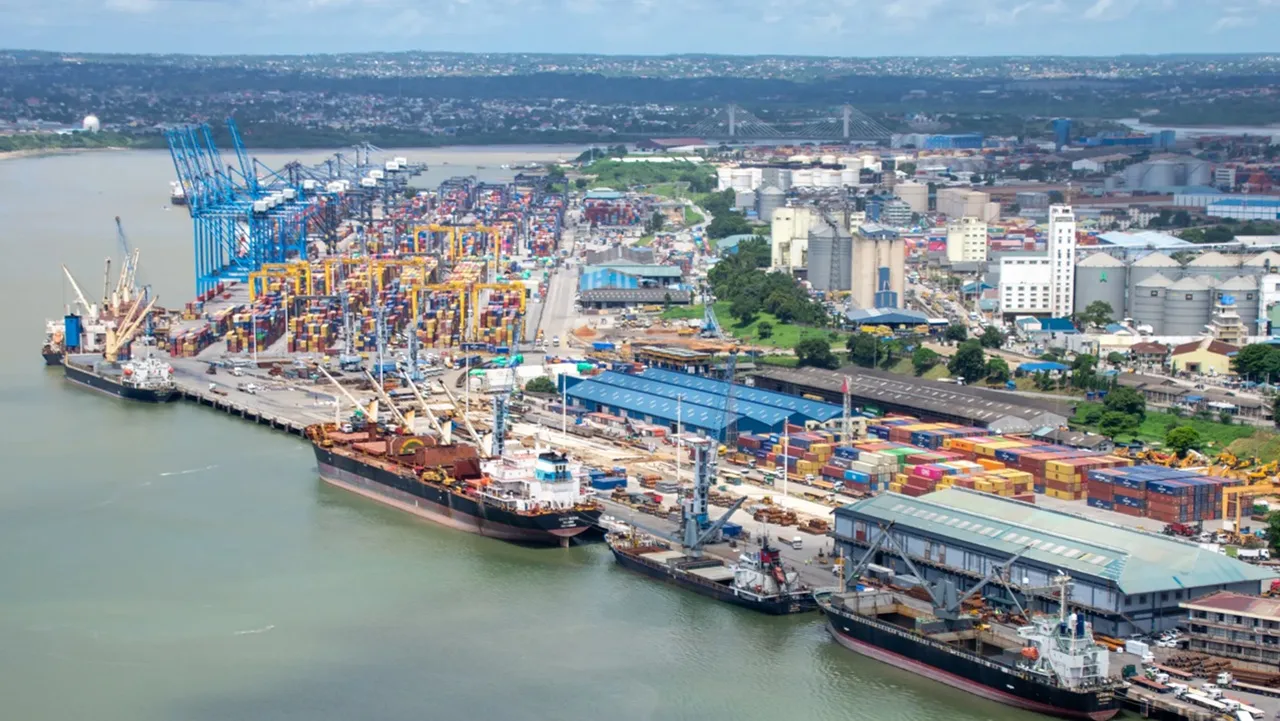
Ports like Dar es Salaam show what can be done through a mix of infrastructure investment and operational reforms, digitalization and more disciplined berth management. Sustainable performance gains are typically the result of a combination of better infrastructure and better processes, not relying on one or the other alone.

Contributed by Jan Hoffmann, Global Lead, Maritime Transport and Ports, The World Bank.

Previous Post

Iran-Oman Hormuz plan adds complexity, but little hope of reopening

Next Post

Efficiency critical in volatile regulatory climate says DNV

Next Post
Efficiency critical in volatile regulatory climate says DNV

Efficiency critical in volatile regulatory climate says DNV

Leave a Reply Cancel reply

Your email address will not be published. Required fields are marked *

A D V E R T I S E M E N T

Popular News

  • Drone Delivery Takes Flight: Amazon Partners with UPS for Trial Program

    Drone Delivery Takes Flight: Amazon Partners with UPS for Trial Program

    0 shares
    Share 0 Tweet 0
  • Rail Cargo Group Strengthens European Network with Captrain Netherlands Acquisition

    0 shares
    Share 0 Tweet 0
  • Automotive Inbound Logistics Market: Navigating Future Challenges

    0 shares
    Share 0 Tweet 0
  • Global Inflation Cools to Target After Three Years, Central Banks Face Policy Dilemma

    0 shares
    Share 0 Tweet 0
  • Dubai Mercantile Exchange Rebrands as Gulf Mercantile Exchange Following Saudi Tadawul Group Acquisition

    0 shares
    Share 0 Tweet 0

Recent News

Efficiency critical in volatile regulatory climate says DNV

Efficiency critical in volatile regulatory climate says DNV

August 27, 2026
Optimizing vessel time in port: a shared responsibility

Optimizing vessel time in port: a shared responsibility

August 27, 2026
Iran-Oman Hormuz plan adds complexity, but little hope of reopening

Iran-Oman Hormuz plan adds complexity, but little hope of reopening

August 27, 2026

Discover a new era of logistics reporting with The Logistic News, your go-to platform for breaking news, insightful features, and exclusive interviews shaping the global logistics and freight landscape. Trust us to deliver accurate, timely, and relevant information that empowers professionals and enthusiasts alike in navigating the intricacies of this vital sector.

Navigation

  • Home
  • About Us
  • Press Room
  • Podcasts
  • Media Kit
  • Contact Us
  • Careers
  • Privacy Policy
  • Terms of Use

© 2024 - thelogisticnews.com

Welcome Back!

Login to your account below

Forgotten Password? Sign Up

Create New Account!

Fill the forms below to register

All fields are required. Log In

Retrieve your password

Please enter your username or email address to reset your password.

Log In

SIgn Up Newsletter

This will close in 20 seconds

Manage Cookie Consent
We use technologies like cookies to store and/or access device information. We do this to improve browsing experience and to show (non-) personalized ads. Consenting to these technologies will allow us to process data such as browsing behavior or unique IDs on this site. Not consenting or withdrawing consent, may adversely affect certain features and functions.
Functional Always active
The technical storage or access is strictly necessary for the legitimate purpose of enabling the use of a specific service explicitly requested by the subscriber or user, or for the sole purpose of carrying out the transmission of a communication over an electronic communications network.
Preferences
The technical storage or access is necessary for the legitimate purpose of storing preferences that are not requested by the subscriber or user.
Statistics
The technical storage or access that is used exclusively for statistical purposes. The technical storage or access that is used exclusively for anonymous statistical purposes. Without a subpoena, voluntary compliance on the part of your Internet Service Provider, or additional records from a third party, information stored or retrieved for this purpose alone cannot usually be used to identify you.
Marketing
The technical storage or access is required to create user profiles to send advertising, or to track the user on a website or across several websites for similar marketing purposes.
Manage options Manage services Manage {vendor_count} vendors Read more about these purposes
View preferences
{title} {title} {title}
No Result
View All Result
  • Logistic
  • Air
  • Maritime
  • Land
  • World
  • Business
  • Tech
  • Events
  • Advertise

© 2024 - thelogisticnews.com