Maritime Nov 6, 2026
PIL expands its regional fleet with seven methanol-ready container ships from Huanghai
The 1,400 teu vessels, scheduled for delivery between 2029 and 2030, will strengthen the carrier’s Intra-Asia and Pacific Islands operations while supporting its long-term decarbonisation ambitions.
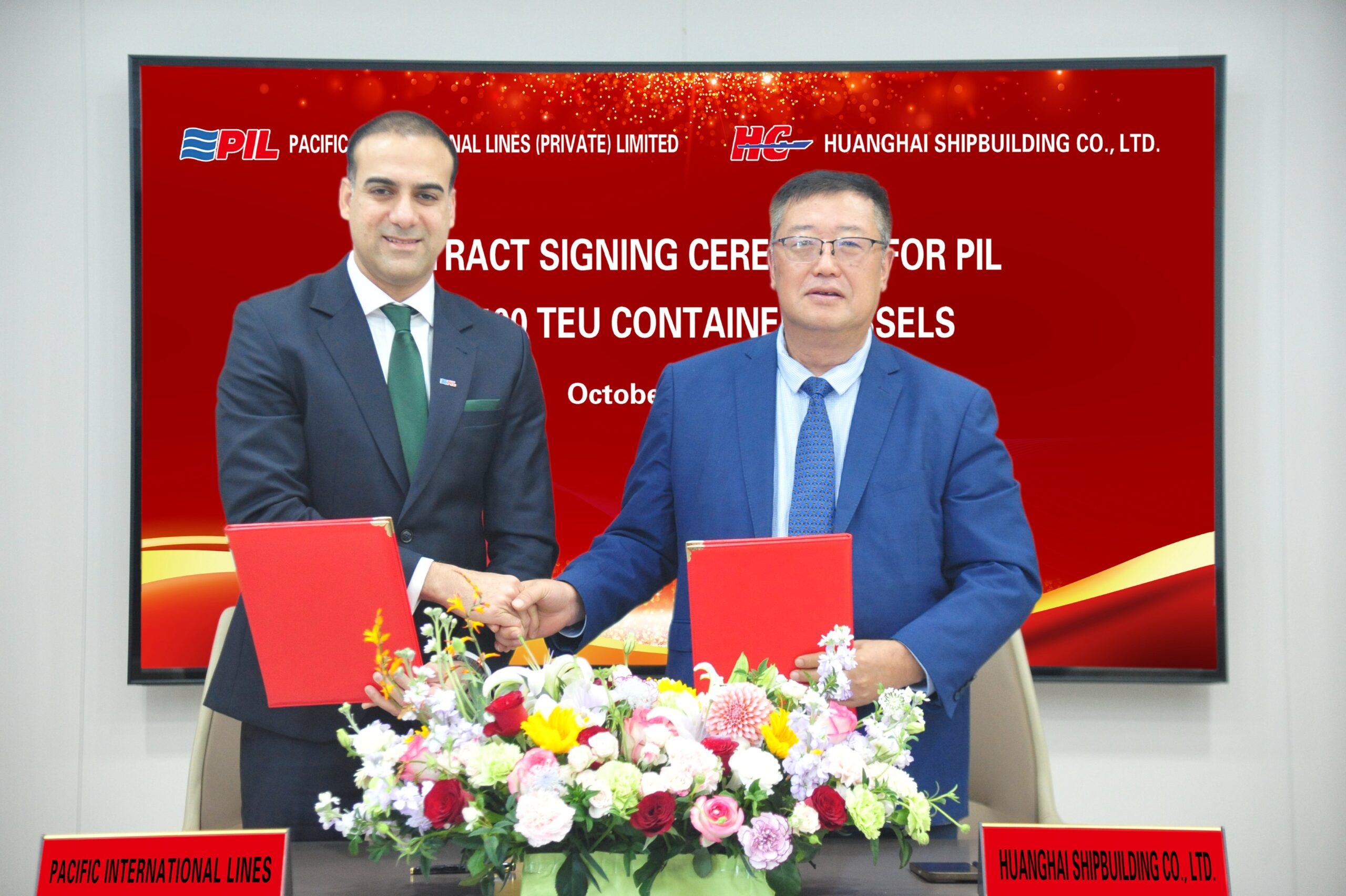
Pacific International Lines (PIL) is stepping up its fleet expansion programme with an order for seven new 1,400 teu container ships from Huanghai Shipbuilding. The agreement forms part of the carrier’s wider strategy to renew its fleet, increase regional capacity and improve the efficiency of its operations.
The vessels are expected to enter service between 2029 and 2030. Each ship will measure 172 metres in length and 25 metres in beam, dimensions selected to suit PIL’s regional trading requirements. Their design will allow the carrier to improve connections between smaller outports and major transshipment hubs across its wider network, strengthening the reach of its Intra-Asia and feeder services.
A key feature of the newbuildings is their methanol-ready configuration. This will give PIL the flexibility to move towards cleaner marine fuels as supply chains develop and shore-side bunkering infrastructure for low-carbon alternatives becomes more widely available.
Lars Kastrup, Chief Executive Officer of PIL, said the investment would reinforce the company's presence across Intra-Asia and the Pacific Islands.
“Investing in this new class of feeder tonnage reinforces our capacity and service reach throughout Intra-Asia and the Pacific Islands,” he commented.
He also highlighted the role of the vessels' technical specifications in improving operational performance and supporting the company's environmental objectives.
“Fitted with energy-saving hardware and engineered for methanol compatibility, these ships will streamline our operations and keep us on track toward our 2050 net-zero target.”
Beyond their alternative-fuel readiness, the seven ships will incorporate several established technologies designed to improve propulsion efficiency and reduce fuel consumption. These include pre-swirl vanes and propeller boss cap fins, both intended to optimise propulsive performance.
Safety has also been addressed in the vessel specifications. The newbuildings will feature fixed fire water monitors and sprinkler systems in the cargo holds, providing additional fire suppression capabilities for containerised cargo.
Through this order, PIL is combining regional fleet growth with investments in energy efficiency, operational performance and future fuel flexibility, as it works towards its 2050 net-zero emissions target.
END OF REPORT