



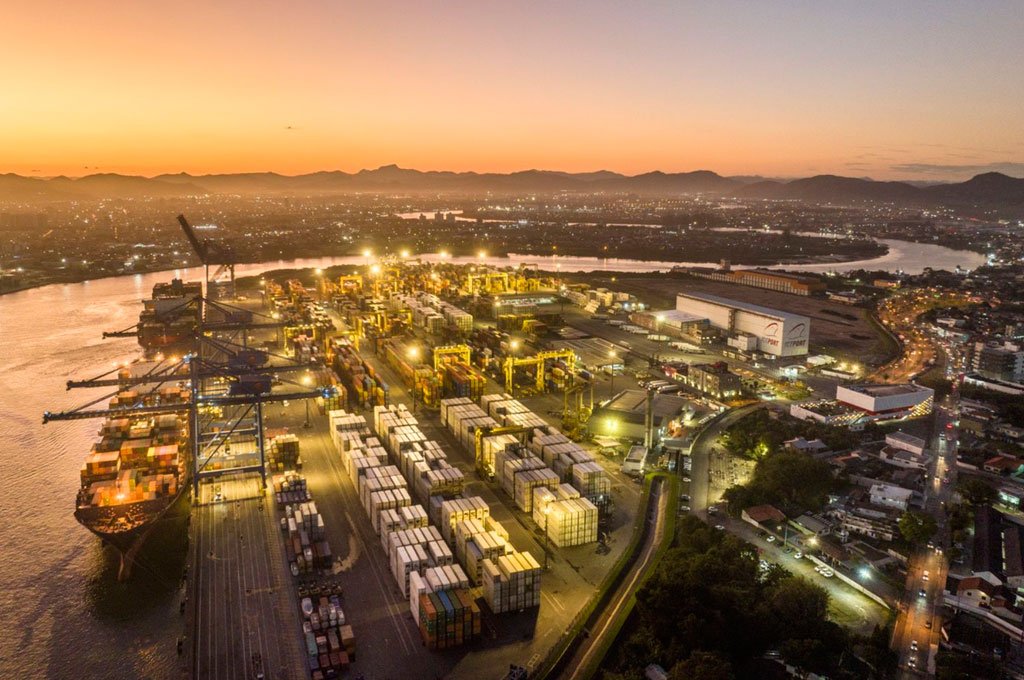
Portonave is continuing to modernise its operations with the arrival of the first seven electric rubber-tyred gantry cranes (e-RTGs) at its terminal in Navegantes, Brazil. The investment is part of a major expansion project that will increase the terminal’s annual handling capacity from 1.5 million TEUs to 2 million TEUs.
The seven cranes are the first half of an order for 14 units and are expected to begin operating in August. The remaining cranes are scheduled to arrive before the end of July.
Designed by Konecranes in Finland and built in China, each crane stands 28 metres tall, weighs 150 tonnes and can lift containers weighing up to 41 tonnes. They are also capable of stacking containers up to seven levels high, helping the terminal improve both efficiency and storage capacity.
The new equipment is part of a broader investment programme worth more than $360 million, which includes infrastructure upgrades and additional cargo-handling equipment.
One of the key projects is the refurbishment of the quay at Portonave, which is due to be completed later this year. When completed, the terminal will be capable of handling container ships up to 400 meters long — enabling it to handle larger vessels and more cargo.
By the end of the expansion, Portonave will operate a fleet of eight ship-to-shore cranes and 32 RTGs, giving it greater flexibility to support future trade growth.
Sustainability is also at the heart of the project. The new battery-powered cranes are fully integrated into the terminal’s electrified yard system and are expected to reduce emissions from RTG operations by 96.5% compared with conventional diesel-powered equipment.
The electrification programme doesn’t stop there. Later this year, Portonave will also receive two new ship-to-shore cranes, while deliveries of 30 electric terminal tractors and five electric reach stackers will continue through January 2027.
With these investments, Portonave is not only increasing its capacity but also building a more modern, efficient and environmentally responsible terminal capable of handling the growing demands of the global container shipping.