



Postal operators that are members of the International Post Corporation (IPC) have cut their combined annual CO₂ emissions by 41% compared with the sector’s 2008 baseline, moving the industry closer to its shared goal of a 50% reduction by 2030.
The progress was highlighted during the International Green Postal Day which provided a snapshot of the measures being taken across the postal sector. Two of the main contributors to the reduction to date are increased use of renewable energy at postal facilities and the shift to alternative-power delivery fleets.
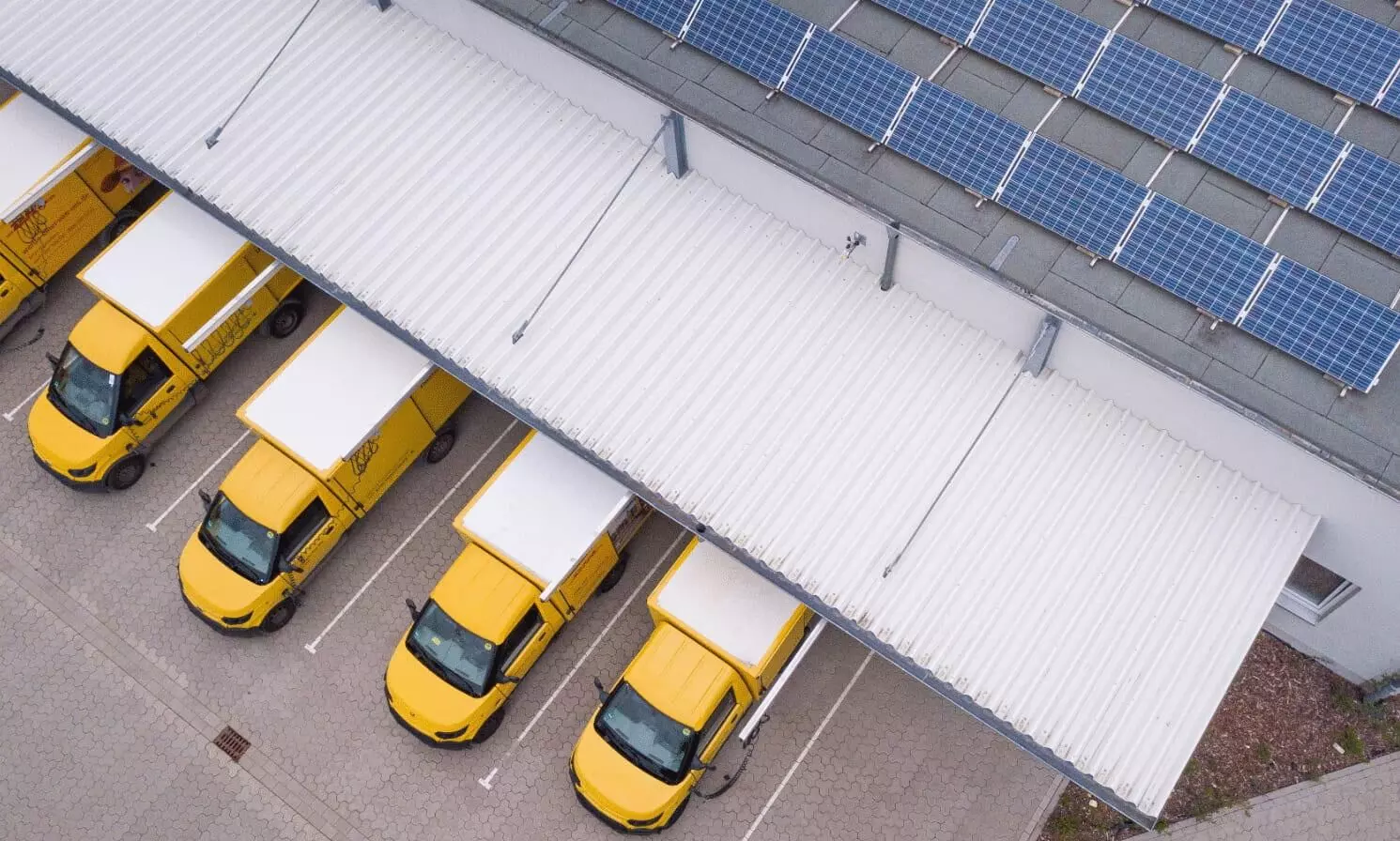
Deutsche Post AG has hit a major milestone in Germany on the road to electrify its fleet of delivery vehicles. Today, the company has 40,000 electric vans making deliveries across the country. It has the largest single-market electric delivery fleet operated by a postal operator, under its Deutsche Post and DHL brands.
Electric vehicles are supported by 44,400 charging points, and 95% of the electricity used is from renewable sources. Fleet electrification, and renewable power, are thus adding another dimension to the emissions reduction effort in the form of the power grid itself.
Postal operators are also tackling emissions from longer distance transportation. Deutsche Post currently operates 50 electric trucks and 570 bio-CNG trucks in its mail and parcel transport fleet as part of its wider push to decarbonize its logistics activities.
Postal operators’ sustainability measures are also attracting the attention of online retailers. A survey of 2,500 e-retailers in 19 countries by IPC found that 70% of respondents were satisfied with the sustainability performance of postal operators.
The survey covered retailers in Europe, Asia, the Middle East and North America and highlights the increasing importance of sustainability in e-commerce logistics.
A separate effort seeks to improve transparency around emissions linked to online orders. Thirteen postal operators in the IPC network have launched the Carbon Footprint Calculator, a tool to measure emissions of individual shipments along the entire transportation chain.
The program has already gathered information on 95 million parcels. The aim is to respond to the growing demand for trusted sustainability information, while helping businesses to make better informed decisions on how they can reduce emissions.
With the expected participation of additional postal operators in the initiative, the calculator may eventually provide a common basis for assessing the carbon footprint of cross-border shipments.
“Climate change is a physical challenge, not a political one, and we need to act,” said Tobias Meyer, CEO of DHL Group. “Green Postal Day shows that postal operators around the world are making real progress in climate protection,” he said.
Meyer also cited the electrification of delivery operations, especially in Germany, as proof of what is already possible. “The next focus is to decarbonize long-haul transport and air freight to reach climate targets across the whole transportation value chain,” he said.
Deutsche Post now counts 40,000 electric vehicles in its delivery fleet and is further strengthening its focus on e-mobility and low-emission deliveries. “Fleet electrification continues to be a major part of our long-term sustainability strategy, but the increased demand from customers for greener logistics solutions is also helping to accelerate the transition,” said Nikola Hagleitner, CEO of Post & Parcel Germany.
Green Postal Day was launched by the CEOs of postal operators that are members of the IPC Sustainability Measurement and Management System (SMMS) in 2019. The initiative demonstrates the environmental and business benefits of collaboration to reduce CO₂ emissions.
The program gathers postal operators from the Americas, Europe, Asia, Africa and Oceania, offering a common platform for the sector’s efforts to promote emissions reduction and sustainability.