



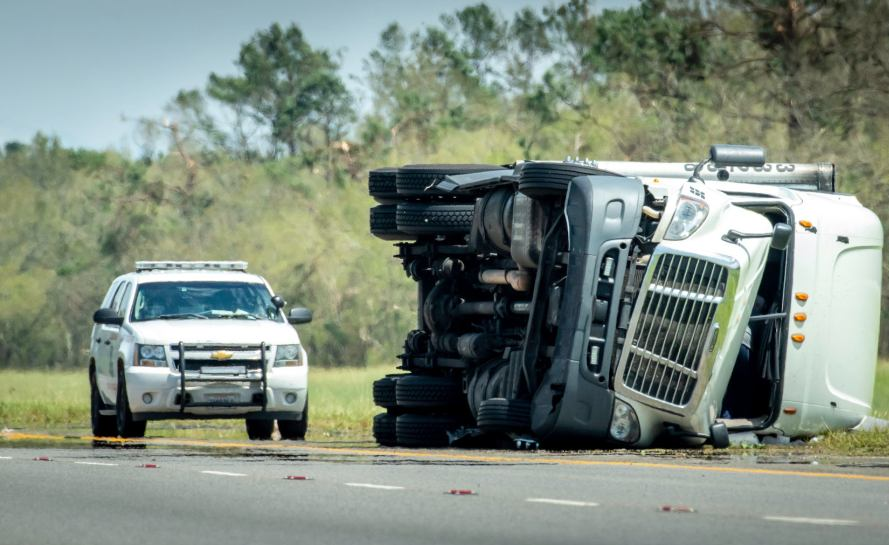
The highest-risk 10% of drivers identified by Samsara’s Risk Model were linked to 47% of crashes, according to a new report from the fleet technology company.
The finding comes from Samsara’s Compounding Risk Report, which examines how multiple driving behaviors and contextual factors can interact to increase crash risk. The company says the analysis is designed to help fleet managers make better use of limited coaching resources by identifying the drivers and behavioral patterns that require the most attention.
“The real key takeaways are that 10% of drivers account for nearly half of all crashes, 30% account for more than three-fourths of crashes. So who you coach, who you zoom in on, really, really matters,” said Arpan Podduturi, Samsara VP of AI safety.
How compounding risk works
Rather than assessing individual safety events in isolation, Samsara’s Compounding Risk Report looks at how different behaviors and external conditions can combine to create a higher level of risk.
The analysis relies on Samsara’s Risk Model, which evaluates more than 50 factors across driving behavior, exposure, situational context and driver development. These include speeding, harsh braking, distracted driving and mobile phone use, along with conditions such as night driving and weather.
Samsara describes the interaction between these factors as “compounding risk.”
“It’s like the combination of speeding plus it’s raining. Plus, it’s dark out. Plus, you’re at the end of your shift, and those things compound in ways that are really dangerous,” Podduturi said.
According to the report, combinations of risky behaviors were associated with substantially higher risk than individual behaviors on their own.
Drivers exhibiting mobile phone use alone were 2.7 times more likely than the overall driver population to fall into the model’s highest-risk tier. When mobile phone use was combined with harsh braking, that figure rose to 4.5 times. When mobile phone use, distraction and harsh braking were present together, the likelihood reached 5.4 times.
The report also identified associations between individual behaviors and crash risk. Harsh braking was associated with a 1.8 times higher likelihood of a crash, while mobile phone use and distracted driving were each associated with a 1.7 times higher likelihood. Speeding events were associated with a 1.5 times higher likelihood.
Samsara emphasized that its Risk Model ranks drivers according to relative risk. It is not intended to predict whether a particular driver will crash on a particular day. The findings show statistical associations and do not establish that the identified behaviors directly caused a crash.
Turning risk data into coaching priorities
The same Risk Model also underpins Samsara’s new Coaching Priority feature, which is designed to help fleet managers determine where coaching resources should be directed.
Coaching Priority consolidates the model’s risk factors into a single view, giving managers visibility into the drivers, behaviors and other factors associated with elevated risk.
“These are the top drivers that you should prioritize to coach them. And then we’re saying you should coach them on behavioral patterns, not isolated events,” Podduturi said.
That approach is intended to move fleets beyond reacting to individual alerts as they happen. Instead, managers can look at a driver’s broader risk profile, identify recurring patterns and determine where additional coaching could be useful.
“It’s who needs the human-to-human coaching, and where can you automate? I think that’s really the key thing that fleets need to internalize,” Podduturi said.
Risk signals before crashes
Samsara’s analysis also identified a potential signal in advance of crashes.
When the company compared drivers who were subsequently involved in a crash with those who were not, the Risk Model prioritized the driver who went on to be involved in a crash about three out of four times.
Samsara said the finding remained consistent across both a next-day evaluation window and a seven-day evaluation window.
The company believes that capability could give fleets another way to identify where intervention may be warranted before a crash occurs.
Focusing on driver safety
The report is intended to provide fleets with another method for approaching driver safety, particularly by identifying behavioral patterns that may justify intervention before an incident takes place.
In a separate analysis, Samsara identified aggressive driving, distracted driving and speeding-related patterns as the most consistent and credible behavioral contributors to crash risk.
Other factors, including night driving, freezing temperatures and urban exposure, can increase or amplify risk, but Samsara said they are not coaching targets on their own.
The company says its Coaching Priority feature is intended to help managers concentrate their time on the behavioral patterns most strongly associated with elevated risk. At the same time, self-coaching can be used to reinforce safer habits among the rest of the workforce.
The report is based on aggregated data used to train and evaluate Samsara’s Risk Model between July 1 and Dec. 15, 2025. The dataset covers drivers and fleets operating across multiple industries and regions.
Samsara’s broader objective is to help fleets shift from a reactive approach centered on individual safety alerts toward identifying recurring patterns of behavior and directing coaching resources toward the areas where they may have the greatest impact.