Business Nov 13, 2026
UPS-Teamsters: Shippers urged to prepare early for potential 2028 labor disruption
With the current labor agreement set to expire on July 31, 2028, logistics experts are advising UPS customers to secure alternative carrier partnerships, review contractual commitments and strengthen their operational flexibility to reduce the impact of a possible strike.
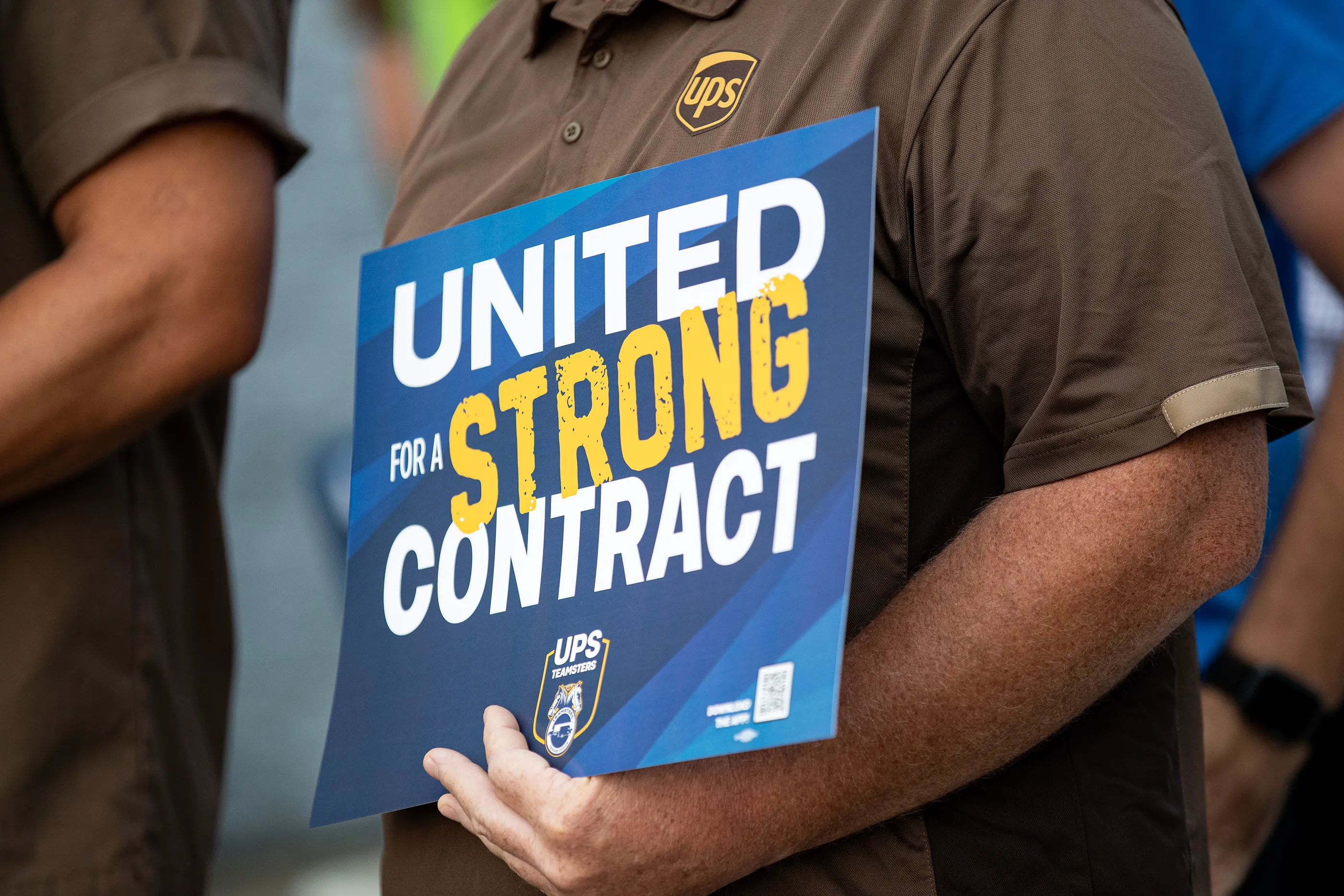
The next labor talks between UPS and the International Brotherhood of Teamsters may be some time away, but logistics experts are already advising shippers not to wait until the last minute to get ready. The current collective bargaining agreement runs until July 2028. Companies that are highly dependent on UPS are being advised to review their transportation strategies and develop contingency arrangements well in advance.
Parcel shipping specialists interviewed by Supply Chain Dive said shippers should already be planning for a potential labor dispute. While a strike isn’t expected soon, it could have major ramifications for companies that rely on the carrier to keep their deliveries moving.
UPS has about 300,000 Teamster-represented workers, including package handlers and delivery drivers. The current national agreement was ratified in 2023 after difficult negotiations and is valid until 31 July 2028.
While no strike has happened, the union’s threats of strike action during the last negotiation cycle sent waves of concern across the logistics industry. However, experts say companies should take the looming deadline seriously, especially when negotiating new commercial agreements with UPS.
“The shipping contracts that were signed today, typically three years, could outlast the current labor contract,” says Kenneth Moyer, partner and chief supply chain officer for strategic advisory at LJM. This creates a potential contractual challenge for companies looking to switch carriers should negotiations break down.
Many shippers in 2023 redirected packages to FedEx, the United States Postal Service and other delivery providers to limit their exposure to potential disruptions. But now contractual conditions are an additional consideration.
“Early termination penalties are becoming more common in UPS agreements,” Moyer said. Therefore, customers that want to cancel contracts or move shipments under existing commitments to competing carriers may incur financial losses.
He warns that a company that signs up with UPS today could be subject to penalties if it tries to lock in contractual protections with FedEx through a side contract before the next round of Teamsters talks.
UPS, meanwhile, is locking in long-term customer commitments. During its July 28 earnings call, CEO Carol Tomé said the company had already signed contracts with several shippers that extend well beyond 2028. She credited the confidence to relationships UPS has built with its customers and its experience dealing with previous contract negotiations.
Teamsters prepare more aggressive approach for next UPS talks
The union is already starting to draw up its priorities for the next round of collective bargaining. Teamsters General President Sean O’Brien said the union plans to be more aggressive in making sure UPS is accountable for all employees it represents, including part-timers.
O’Brien said in a LinkedIn post that part-time employees who load trucks and help with day-to-day operations deserve a proper share of the company’s financial success. He also asked union members to get ready for the coming negotiations, rather than just reacting to decisions by management.
Part-time worker compensation was already a major sticking point in the talks in 2023. The two sides eventually reached an agreement with better pay for these workers, but the process was slowed by disagreements over wages.
Other issues are likely to be high on the agenda for the next round of discussions, apart from compensation.
Teamsters for a Democratic Union (TDU), an independent group that represents union members’ interests, said workers want to address the use of non-union gig workers through UPS subsidiary Roadie and challenge excessive overtime and secure improvements to pension arrangements and healthcare benefits.
The union says the upcoming talks are one of the most important contract battles for UPS Teamsters in a generation. The company’s decisions to restructure, including closing plants, reducing shipping volumes and cutting the workforce, are also creating tensions between management and employees, it says.
UPS has cut tens of thousands of jobs and shut a number of facilities since last year as it tries to retool its distribution network to cope with falling volumes of packages from Amazon.
There have also been a number of disagreements between the company and the union since the current agreement was ratified.
In 2023, the Teamsters threatened industrial action after UPS laid off workers at its hub in Louisville, Kentucky, during the peak shipping season. The job cuts were later reversed, preventing the dispute from escalating to a strike.
More recently, the union has tried to challenge UPS’s driver buyout program in court. The judge dismissed the union’s arguments and the program went ahead. Eventually the two sides agreed to limit the scope of the program.
But even with those differences, Carol Tomé said she is confident UPS is capable of handling the next round of negotiations. During a more recent earnings call, she referenced her experience negotiating the 2023 deal, noting she would be the first CEO since company founder Jim Casey to negotiate two Teamsters contracts.
She feels the lessons from the previous negotiation give her an edge as the company gears up for the next round.
Logistics experts advise UPS customers to diversify carrier networks
Preparing for 2028 is more than simply finding other delivery providers for UPS-dependent businesses. Experts also are emphasizing the significance of making sure that operational systems could accommodate a rapid change in transportation partners.
Kenneth Moyer says companies have to be sure their shipping technology and logistics infrastructure are ready to talk to other carriers. That means having the right systems and processes in place to handle shipment volumes and shipments, and print shipping labels, without major operational headaches.
“Some companies have been using UPS for so long they’re not even set up to create shipping labels for other carriers,” he says.
He recommends having the basic operating infrastructure in place ahead of time so that you can plug in another delivery provider on a temporary basis if needed.
Likewise, Joe Wilkinson, vise president of professional services at Intelligent Audit, said UPS-dependent shippers should begin forging ties with competing carriers well in advance of the current contract expiration.
Specifically, he says, if a lot of firms try to shift their shipments only months before the cutoff in July 2028, FedEx may not be able to provide enough capacity.
“I don’t think alternative carriers will take unlimited additional volumes with any restrictions,” Wilkinson says. Companies that delay may face capacity constraints and increased transport costs.
This is not an unprecedented circumstance. Rival delivery companies like Fedex and Purolator also limited shipments during the 2024 Canada Post employee strike as customers sought out alternative delivery options, increasing demand.
History has shown that switching carriers during a major labor disruption does not necessarily mean more transportation capacity will be available.
Contractual safeguards could lessen exposure to strikes
Besides diversifying their carrier networks, shippers should review the contractual protections built into their existing UPS agreements.
“We have seen a number of our customers negotiate clauses that cover exceptional circumstances,” says Matt Sumowski, head of go-to-market for parcel intelligence at Loop, a logistics data platform.
While these provisions don’t specifically call out a potential Teamsters strike, they can be a chance to reconnect with UPS when disruptions are beyond a shipper’s control.
Such clauses could be particularly useful if companies are forced to re-evaluate their contractual obligations because of an unforeseen interruption of delivery services.
However, the extent of protection available depends very much on the negotiating position of each shipper and his ability to obtain favorable contractual terms.
Sumowski points out that the effectiveness of these protections ultimately depends on the bargaining power of individual companies and their knowledge of which provisions to seek when negotiating.
The UPS-Teamsters deal doesn't expire for another five years, until July 2028, so there's still time to prepare the logistics business. But the mix of possible labor unrest, tighter shipping agreements and competition for alternative delivery capacity makes early planning an important consideration.
Thus, for UPS customers, the priority is to avoid over-reliance on one carrier, to have operational alternatives and contractual flexibility in place before negotiations reach a crunch point.
END OF REPORT