



Singapore has taken a firm position in defence of freedom of navigation as concerns grow over Iran’s move to impose tolls on ships passing through the Strait of Hormuz.
Since the conflict in the Middle East began on 28 February, Iran has restricted access to the Strait, allowing only approved vessels to transit while introducing a fee of $1 per barrel of oil carried by tankers. For a VLCC, that would amount to roughly $2m per voyage.
The Strait of Hormuz lies within the territorial waters of Iran and Oman, but vessels enjoy transit passage rights under the United Nations Convention on the Law of the Sea.
Singapore, which sits alongside the similarly strategic and even narrower Straits of Singapore and Malacca, has drawn a clear parallel between the two waterways.
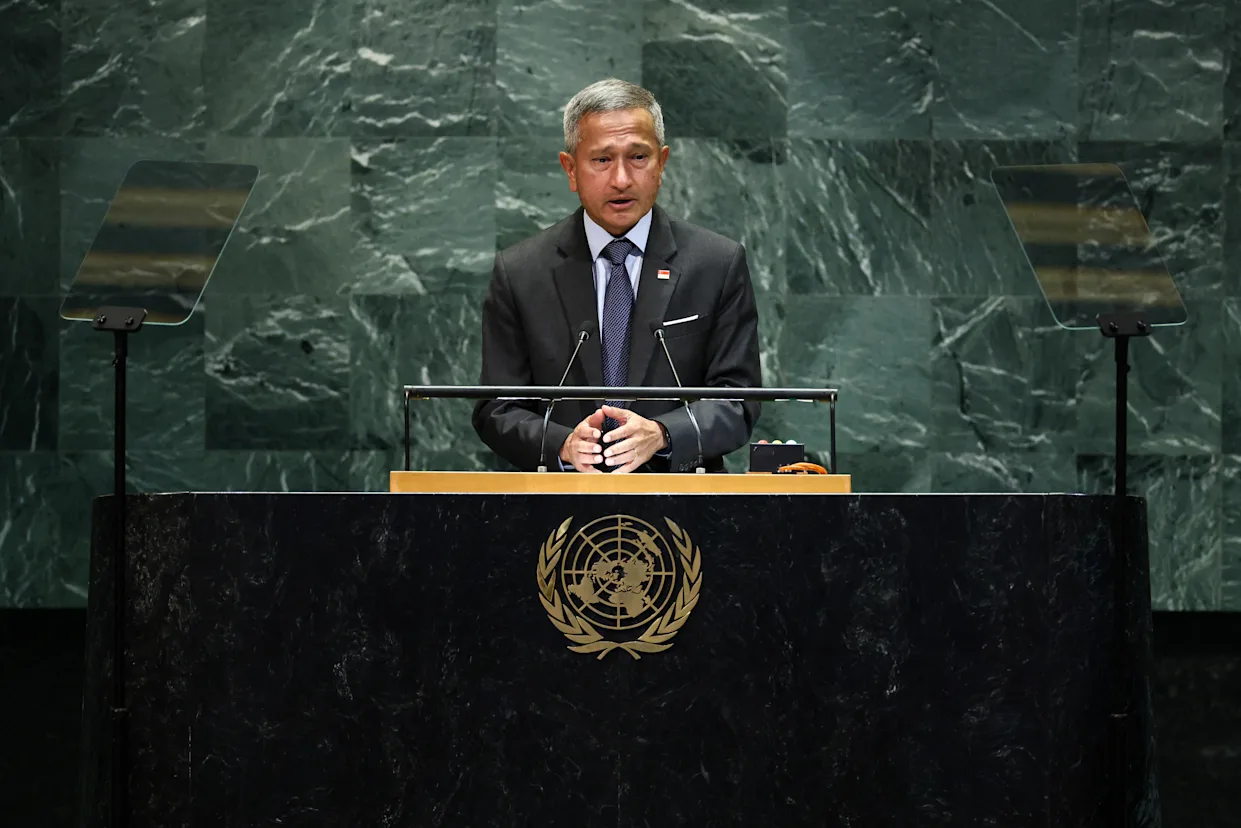
Speaking at an event on Monday, Singapore’s Coordinating Minister for National Security K Shanmugam reaffirmed the government’s position that no state has the right to impose tolls or selectively decide which ships may pass through such straits.
He said that, under UNCLOS and customary international law, there is a right of transit passage and that no one can unilaterally transform that right into a paid or selective access regime.
The issue had already been raised in parliament last week, when Foreign Affairs Minister Vivian Balakrishnan was asked whether Singapore would engage Iran to pay tolls for transit, as some other Asian countries, including Malaysia, have reportedly done. Balakrishnan responded that freedom of navigation is a right, not a privilege, and cannot be treated as a licence to be requested or a toll to be paid.
Singapore has a major stake in the issue. It is home to the world’s fourth-largest ship registry, with 137.46m gross tonnes recorded at the end of 2025, and has a direct interest in ensuring freedom of passage for ships, including Singapore-flagged vessels currently trapped inside the Arabian Gulf.
On 13 April, Shanmugam also compared the scale of Hormuz with the Strait of Malacca, noting that the narrowest point of Malacca is less than two nautical miles, compared with 21 nautical miles for Hormuz.
He used that comparison to underline the wider implications of accepting tolls in strategic waterways, asking how the world would respond if ships passing through Malacca were told they had to pay or face missile, mine or drone threats.
The shipping industry has welcomed Singapore’s position, seeing it as an important defence of a principle vital to global trade. The Malacca and Singapore Straits carry around 24% of all seaborne trade. In 2025, the Malacca Strait recorded 102,525 transits by vessels over 300 gt, according to Malaysian Marine Department data compiled by the Nippon Maritime Center.
With around 281 vessel transits per day, including 28 laden VLCCs and deep-draught ultra large container ships, the economic potential of tolling the route would be enormous.
Yet Singapore, as one of the world’s leading maritime centres, continues to benefit from free and open navigation. It is home to the world’s second-largest container port, one of the world’s top three oil refining centres alongside Houston and Rotterdam, and a maritime sector that accounts for 7% of GDP and employs around 170,000 people.