




The Lithuanian port of Klaipėda announces a historic performance in 2025: 39 million tons handled, despite a tense geopolitical context and European flows still sensitive to sanctions and industrial arbitrations.
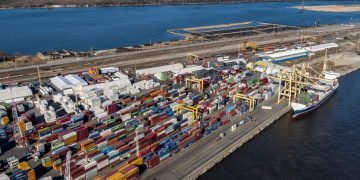
The main driver of this growth is clear: the container. The port indicates a marked increase in volumes, supported by a rise in transshipment, facilitated by improved nautical conditions and infrastructure optimization. On an operational level, Klaipėda highlights an improved ability to capture regional redistribution flows, which strengthens its role as a platform in the Baltic.
Another segment in strong growth: LNG. The port is recording a high level of volumes, partly compared to the previous year marked by maintenance operations, but with an overall positive trend over several years. Ro-ro is not left out: Klaipėda claims a solid dynamic, driven by service adjustments and more frequent maritime connections on certain routes.
Interesting point regarding productivity: the port acknowledges a decrease in the number of calls, but explains that overall performance is improving due to the increase in the average size of ships, indicating a structural evolution of the market (consolidation, larger ships, pursuit of economies of scale).
Not everything is uniform: some traffic is declining, particularly categories related to industry and raw materials, reflecting a more selective commercial environment. Despite this, the management insists on an “offensive” trajectory: investments, port security, technological advances, and environmental solutions are cited as pillars of the strategy.
Finally, Klaipėda is already planning ahead with initiatives focused on energy transition: development of ecosystems around hydrogen and solutions to reduce emissions at the dock. For maritime transport professionals, the message is clear: Klaipėda is positioning itself as a port that combines volume growth with the ability to adapt to new industrial and environmental requirements.