



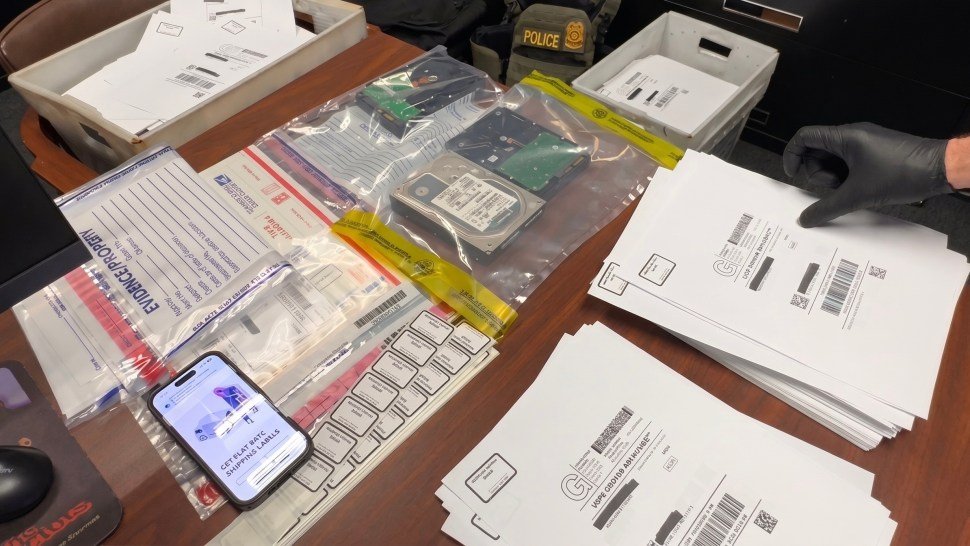
U.S. law enforcement authorities have seized and shut down an internet domain after charging a Pakistani national with allegedly operating an unauthorized website that sold more than 5 million counterfeit U.S. Postal Service postage labels, generating losses of more than $126 million for the national mail carrier.
According to the U.S. Postal Inspection Service, the fraudulent labels enabled customers to ship packages at deeply discounted rates, depriving the Postal Service of a substantial amount of legitimate postage revenue.
Authorities say the sale of counterfeit postage has been increasing across online platforms. Many of the fake stamps are produced outside the United States and are marketed through social media marketplaces, e-commerce platforms operated by third-party vendors and other websites. The agency said counterfeit stamps are frequently offered in bulk at discounts ranging from 20% to 50% of their face value.
Court records identify 33-year-old Faheem Akram of Khanewal, Pakistan, as the operator of LabelsBank.com. The website allegedly sold counterfeit USPS postage at a fixed price, typically charging $2 per label regardless of a shipment’s weight, size or destination.
LabelsBank.com was not authorized to sell Postal Service products or services.
Postal inspectors in Miami determined that more than 5,000 customers had used the website to purchase more than 5.1 million counterfeit shipping labels, according to the U.S. Postal Inspection Service. Following Akram’s indictment, a federal judge authorized the seizure of the domain and the shutdown of the website.
Akram faces one count of conspiracy to defraud the United States and to make and sell counterfeit postage stamps, five counts of making and selling counterfeit postage stamp labels, and four counts of wire fraud.
“Our reach goes beyond our borders,” said Bladismir Rojo, postal inspector in charge of the Miami division. “If you are defrauding the Postal Service and targeting U.S. consumers by pushing phony postage, we will find you and bring you to justice.”
The Postal Inspection Service’s Crime Lab uses forensic analysis to identify subtle differences between counterfeit postage and genuine U.S. stamps.
Investigators are also finding counterfeit postage labels on packages connected to reshipping scams. In these schemes, victims may be offered jobs that require them to receive packages at home and then reship the goods. Those shipments can contain stolen merchandise. The companies running the schemes provide victims with postage-paid labels to print, but investigators warn that handling stolen merchandise is itself a crime, as is knowingly using counterfeit postage.
Why It Matters
The Postal Service loses billions of dollars every year, and fraud further reduces the revenue it needs to maintain mail and package delivery services. Counterfeit postage also gives fraudulent shippers an unfair cost advantage over businesses and individuals who pay the full postage rate.
The latest case follows other major counterfeit postage prosecutions.
In July, a woman from the Los Angeles area was sentenced to 30 months in prison after using counterfeit postage to ship tens of millions of parcels from China. The scheme caused more than $150 million in losses to the U.S. Postal Service.
In another case, a federal grand jury indicted two men over their alleged involvement in a scheme to sell counterfeit U.S. postage stamps. Investigators allege that the pair conspired to purchase fake U.S. postage from suppliers in China and resell the stamps in the United States.
As part of that alleged operation, the defendants created a shipping supply company in Georgia and opened bank accounts in the company’s name. According to charging documents, the scheme generated $1.7 million in proceeds through the sale of approximately 6.5 million counterfeit stamps.
The U.S. Postal Inspection Service is warning consumers that buying postage from third-party wholesalers or online websites carries significant risks because buyers may have no reliable way to determine whether the stamps are genuine. In addition to supporting fraudulent operations, purchasers may ultimately face financial losses themselves.
The agency recommends obtaining postage from approved postal providers, including legitimate “big box” and warehouse retailers that offer very small discounts on stamps through resale agreements with the Postal Service.
The United States has also changed its regulations to specifically define counterfeit postage and established procedures for dealing with mail that carries fraudulent postage. Mail bearing fake postage is now classified as abandoned.