World Nov 26, 2026
Ukraine’s Rail Freight Boom Accelerates Plans for European-Standard Railway Expansion
Rising freight volumes amid ongoing disruption to Black Sea shipping are pushing Ukraine to accelerate cross-border rail projects, including the expansion of European-standard track connections with Poland, Slovakia, Hungary and Romania.
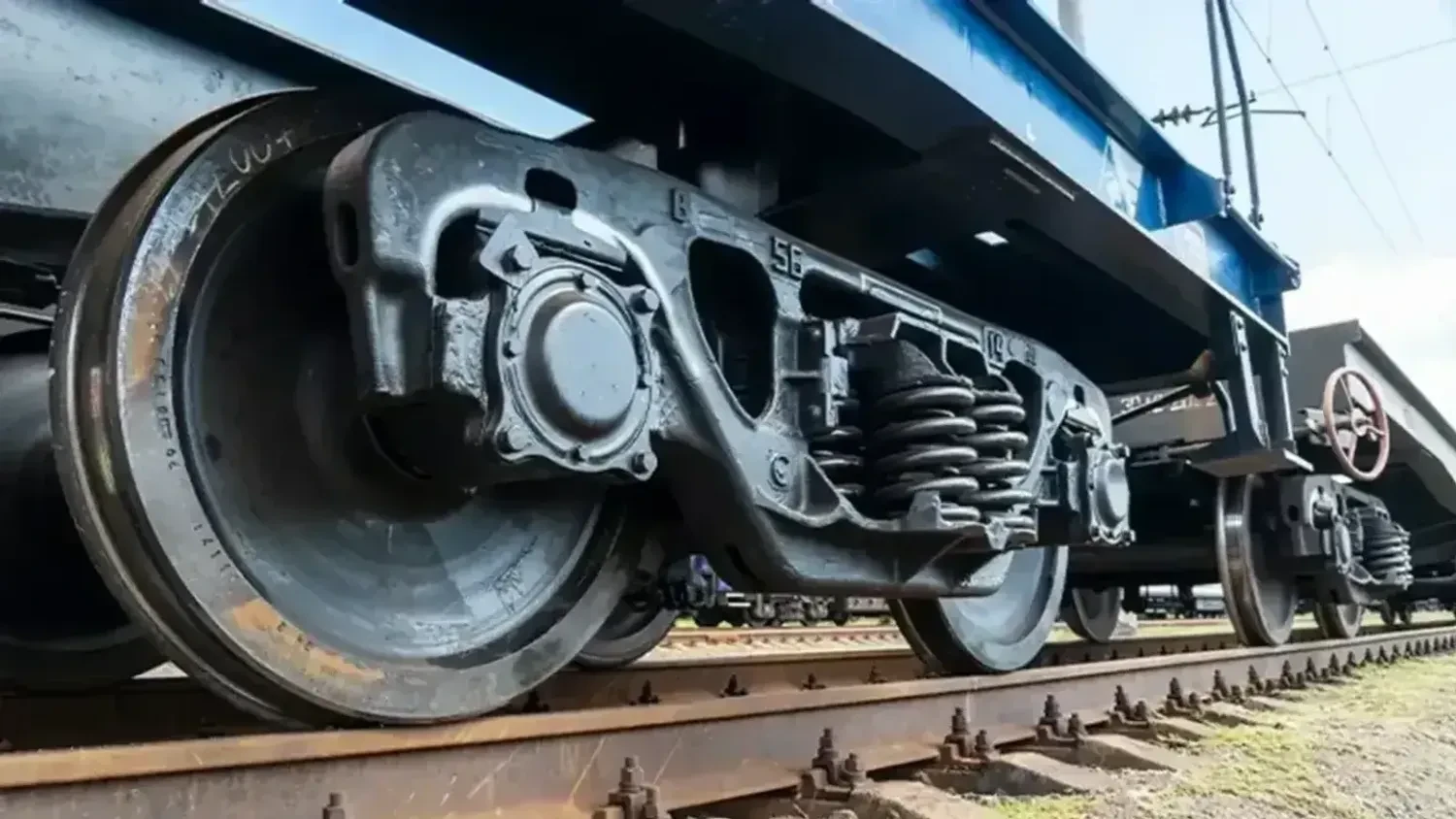
Freight traffic on Ukraine’s railway network continues to grow steadily, despite the ongoing war with Russia. The disruption of commercial shipping routes in the Black Sea has made rail transport even more important, prompting the country to speed up infrastructure projects that had been on hold for years. One of the priorities is the transformation and development of railway lines with the European standard gauge, especially on connections with Poland and Slovakia.
Like other countries that have historically been in Russia’s sphere of influence, Ukraine has traditionally run a broad-gauge railway network of 1,520 mm rather than the standard European gauge throughout continental Europe. The difference leads to additional costs and logistical difficulties for both freight and passenger operations, often requiring the transhipment of goods and passengers between trains using the appropriate track gauge .
Key infrastructure priorities for Ukraine are strengthening cross-border railway connections with the European Union and expanding the standard-gauge network, the country’s Ministry of Infrastructure and Transport said. The objective is to support the integration of Ukraine into the European transport system, improve interoperability and increase the capacity of international rail corridors.
Key infrastructure works already underway
Several projects have already been completed, while others are progressing through the planning and development stages.
In September 2026, one year after its opening and with financial support from the European Union, Ukraine completed the electrification of the standard-gauge railway section connecting Uzhhorod and Chop. The line stretches for just over 20 kilometres and is located close to the borders with Slovakia and Hungary.
The next planned milestone is the completion, by the end of 2026, of electrification works between Chop and the Hungarian border crossing at Záhony.
Beyond these developments, Ukraine is preparing further investments to extend its European-standard railway infrastructure, with particular attention to the Transcarpathian region.
Plans include reconstructing the railway infrastructure between Uzhhorod and the Slovak border, restoring and electrifying an old European-gauge track originating from Slovakia. This track previously ran parallel to the broad-gauge line built to the Russian standard.
Infrastructure improvements are also planned along the Korolevo–Khust section, which provides a railway connection towards Romania. The objective is to strengthen the capacity and modernise this corridor.
New connections towards Poland and the Carpathian region
The Lviv region, located approximately 70 kilometres from the Polish border, is also examining the technical and economic feasibility of constructing a direct European-standard railway connection towards Warsaw.
However, this is not the only route under consideration. Additional railway development projects are expected to focus on improving connections throughout the Carpathian regions, strengthening Ukraine's links with neighbouring European countries and providing greater capacity for international freight movements.
Growing volumes of freight strain border infrastructure
The acceleration of railway investments is closely linked with the continuous increase of traffic volumes, due to closer trade relations with European Union countries.
The freight movements are predominantly grain and ferrous materials. The rise in shipments has increased pressure on rail border crossings with Poland, Slovakia, Hungary and Romania.
What started as a chance to build new international transport links is turning more and more into an operational headache. Congested terminals and a shortage of locomotives and hundreds of freight wagons stuck waiting to cross borders are putting extra strain on the railway network.
Recent figures illustrate the extent of this growth. Over the period from October to the first half of November 2026, the delivery of grain wagons through the railway border crossing with Slovakia increased by 36.4% in one month.
Ukraine's main western railway hubs handled an average of about 400 grain-carrying freight wagons a day in the same period.
The figures show the growing strategic importance of rail transport for Ukraine’s international trade. They also point to the need for greater infrastructure capacity, improved cross-border interoperability and more efficient railway operations as the country tightens its transport integration with the European Union.
END OF REPORT