



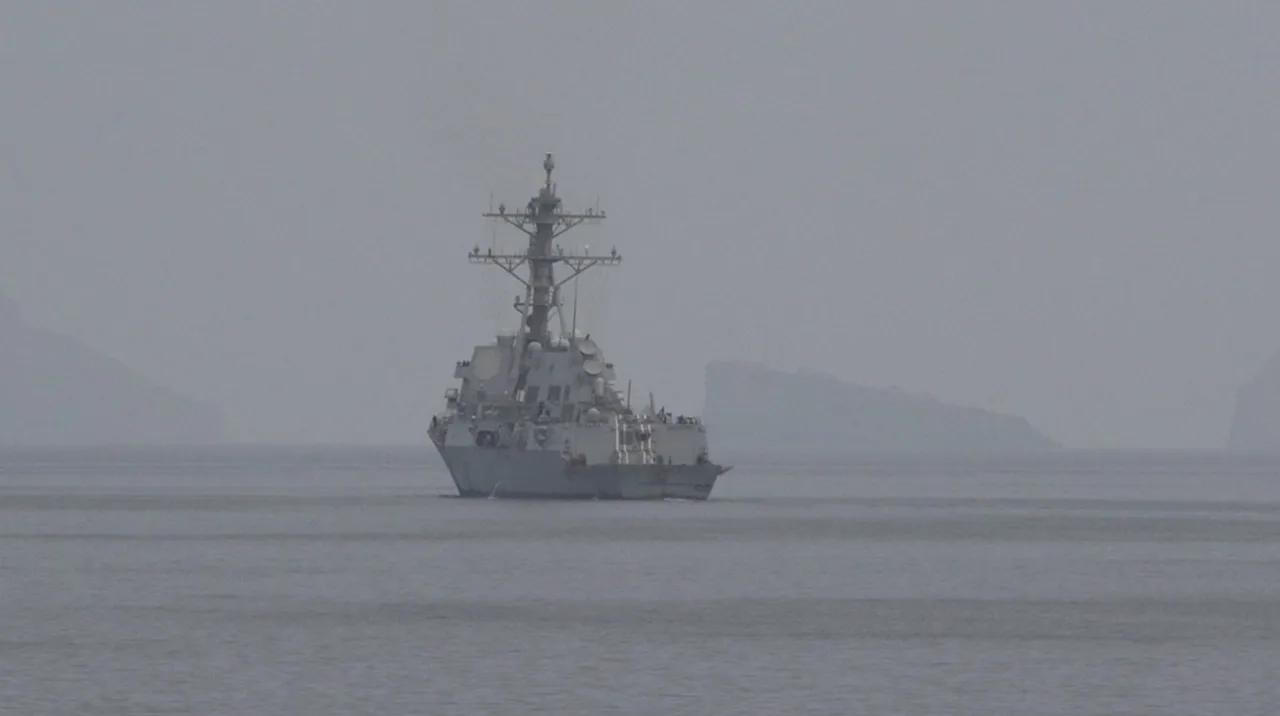
The US naval blockade of Iranian ports has officially entered into force after a grace period allowing neutral vessels to leave Iranian ports expired at 14:00 UTC on 13 April.
The measure was announced on Sunday by President Donald Trump and US Central Command following the collapse of peace talks between Washington and Tehran, which had been mediated by Pakistan.
According to a Notice to Mariners issued by the US, the blockade is being enforced in the Gulf of Oman and Arabian Sea to the east of the Strait of Hormuz and covers the full Iranian coastline, including ports and oil terminals. The notice states that the blockade applies to all vessel traffic, regardless of flag.
The grace period for neutral vessels has now ended. The US notice warns that any vessel entering or leaving the blockaded area without authorisation is subject to interception, diversion and capture.
Shortly after the deadline passed, President Trump posted on Truth Social claiming that the Iranian navy was “at the bottom of the sea”, though he said US forces had not targeted Iran’s fast attack craft because they were not considered a major threat. He also warned that any such ships approaching the blockade would be immediately destroyed.
The US says the new measure does not prevent neutral transit to and from non-Iranian ports via the Strait of Hormuz. However, vessels may still be boarded by the US Navy under a claimed right to visit and search for contraband cargo.
UKMTO said further guidance for mariners on routing, verification and authorised transit procedures is still being developed. In the meantime, it urged vessels operating in the approaches to the Strait of Hormuz, the Gulf of Oman and surrounding waters to remain on heightened alert, maintain maximum bridge readiness and exercise caution in bridge-to-bridge VHF communications.
AIS data from Pole Star Global showed that the tanker Ostria, sailing under what was described as a false Botswana flag, made a U-turn while approaching an eastbound transit of the Strait as the blockade came into effect. Pole Star Global’s PurpleTRAC database lists the vessel as sanctioned under the US OFAC Specially Designated Global Terrorist list in 2024.
Iran has effectively kept the Strait of Hormuz closed to most international commercial shipping since 28 February. While a 14-day ceasefire raised hopes of reopening, only a small number of vessels have reportedly been approved by Iranian authorities, and loaded VLCCs have faced toll demands equivalent to $2m.
Despite the conflict, Iran continued exporting crude through the Strait. According to United Against Nuclear Iran, the country exported 1.15m barrels of oil in March, down from around double that volume in February before the conflict. Of the March total, 1.14m barrels went to China, with the shipments estimated to be worth $3.63bn.







