Business Nov 4, 2026
US Steps Up Enforcement of Labor Rights at Two Mexican Manufacturing Facilities
Washington opens an investigation into alleged union-busting practices at a packaging plant while reaching a separate agreement with Mexico to address labor violations at an ammunition manufacturer.
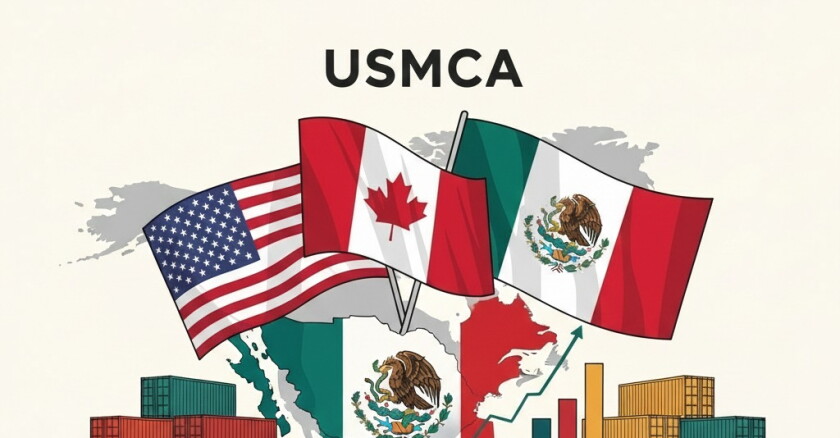
The United States is stepping up efforts to enforce labor protections at Mexican manufacturing plants, launching a new investigation into alleged workers’ rights violations at a packaging company and striking a separate deal with Mexico on a long-running dispute over an ammunition manufacturer.
These developments indicate the ongoing use of the United States-Mexico-Canada Agreement (USMCA) labor enforcement provisions, especially its Rapid Response Labor Mechanism, to address alleged violations of workers’ freedom of association and collective bargaining.
The Office of the U.S. Trade Representative (USTR) said on Monday it had formally requested the Mexican government to investigate allegations against Madobox S.A. de C.V., a commercial packaging manufacturer in Uruapan, Michoacán.
The allegations relate to workers who allegedly experienced restrictions on their rights to organize, join unions and bargain collectively.
In addition to the investigation, the USTR instructed the U.S. Treasury Department to suspend liquidation of unliquidated customs entries of products manufactured at the Madobox facility.
This provision postpones the completion of customs entries and assessment of applicable duties on affected imports. But it doesn’t automatically block the goods from entering the U.S. market.
The suit was filed under the Rapid Response Labor Mechanism of the USMCA, which gives the United States the right to challenge alleged violations of labor rights at particular manufacturing plants in Mexico.
Allegations of union busting and retaliatory firings
A probe was opened after a petition was filed Sept. 30 by a Mexican labor union affiliated with the Confederación Central Nacional, or COCENA.
The union charges Madobox interfered with employees' organizing efforts when it entered into a collective bargaining agreement without the participation of the employees involved.
The complaint also alleges that the company pressured and misinformed employees of their labor rights and illegally fired workers in retaliation for union activity.
The U.S. Interagency Labor Committee on Monitoring and Enforcement reviewed the allegations and determined there was sufficient credible evidence to warrant initiating the USMCA enforcement process.
Mexico has 10 days from November 2 to accept the request and agree to its own review. If the Mexican government agrees, it will have 45 days from that date to finish its investigation.
Madobox is located in Uruapan, one of the main avocado production centers in the State of Michoacán. The company’s website states it produces corrugated cardboard packaging for agricultural products such as avocados, mangoes, berries and tomatoes.
The products are used in the agricultural supply chains, including shipments intended for export markets abroad. The investigation is therefore of particular relevance for companies engaged in cross-border agricultural trade.
Separate agreement reached on labor dispute at ammo plant
Separately, Washington announced an unrelated development involving ammunition manufacturer Industrias Tecnos S.A. de C.V., based in Cuernavaca, Morelos.
The United States and Mexico signed a memorandum of understanding on labor rights issues at the plant.
The accord follows a dispute that erupted in May 2024 after a Mexican labor union claimed workers were being denied their rights to collective bargaining and freedom of association.
The United States asked Mexico to investigate the allegations in June 2024. Mexican authorities later said there were no violations of workers rights.
Washington rejected that finding and requested the formation of a dispute settlement panel under the USMCA.
Today the new memorandum was announced, which sets out a number of corrective measures to provide greater safeguards for workers and reduce the likelihood of such conflicts happening again.
Under the agreement, Industrias Tecnos must pay all compensation owed to the laid-off workers under Mexican labor law. The company should also have workplace neutrality policies, educate workers on their labor rights and create confidential channels for workers to air their grievances.
Mexico has committed to monitor the application of those measures, reexamine decisions to terminate employees and to provide additional training to supervisors, human resources personnel and other company representatives.
The memorandum called for the corrective actions to be completed by October 15. But the USTR did not say in its November 2 announcement whether all of the required measures were fully implemented.
Manufacturing processes exposed to international markets.
Aguila Ammunition is a brand manufactured by Industrias Tecnos, and caters to a variety of markets including sporting, hunting, law enforcement and military applications.
Texas Armament & Technology, a US-based distributor, says it is the exclusive master distributor for Aguila in North America and other markets.
The case thus concerns manufacturing and distribution outside Mexico and shows how labor disputes at specific production sites can have consequences for companies involved in international supply chains.
Another compliance issue to consider is the enforcement of the USMCA.
The two developments underscore the increasing importance of labor provisions in the USMCA for manufacturers, exporters and companies that utilize Mexican production facilities.
For businesses engaged in cross-border trade, the Rapid Response Labor Mechanism investigations may extend beyond the context of workplace relations. Customs measures, potential trade disputes and corrective obligations can also affect commercial operations.
The Madobox case is particularly interesting because the suspension of customs liquidation introduces yet another trade compliance issue for the affected imports and their U.S. customers.
Meanwhile, the deal with Industrias Tecnos shows how disputes can result in formal commitments to fix things, including paying compensation, changing company rules, training workers and being monitored by the government.
As Washington continues to wield the USMCA against alleged labor violations, manufacturers with operations in Mexico and their international business partners are feeling the heat to increasingly verify labor practices comply with the agreement’s requirements.
Why this matters: Enforcement of labor rules under the USMCA could impose customs penalties, regulatory oversight and remedial obligations on Mexican manufacturers and their U.S. customers, which add another layer of complexity to cross-border supply chain management.
END OF REPORT