Customs Nov 26, 2026
Washington Unveils New Tariff Proposals Targeting 14 Major Trading Partners
The Trump administration is seeking to revive its trade protectionist agenda through Section 301, proposing duties of up to 40% on certain Chinese imports and 35% on Vietnamese goods, with implementation potentially beginning in January 2027.
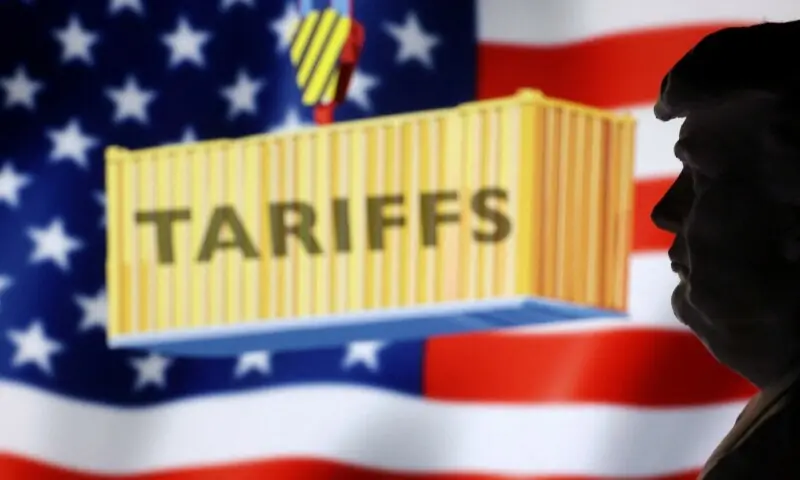
The United States is preparing another major expansion of its tariff policy, targeting imports from China, the European Union and 12 other trading partners following an investigation into global manufacturing overcapacity and alleged unfair trade practices. The proposals, announced on Wednesday by the Office of the US Trade Representative (USTR), could result in additional duties reaching 40% on certain Chinese products and 35% on Vietnamese imports.
The investigation examined the industrial and trade policies of 14 economies. According to Washington, government subsidies, preferential lending arrangements, trade restrictions and excessive manufacturing capacity have enabled foreign producers to supply international markets with lower-priced goods, placing American manufacturers at a competitive disadvantage.
Alongside China, the economies concerned include Vietnam, India, Japan, South Korea, Taiwan, Bangladesh, Cambodia, Indonesia, Malaysia, Singapore, Switzerland and Thailand, as well as the 27-member European Union.
However, the proposed headline rates should not automatically be interpreted as the final duties payable by US importers. Existing bilateral trade agreements, previously negotiated tariff ceilings and exemptions covering certain products will influence the effective rates applied to individual imports.
The measures remain proposals and are subject to public consultation and hearings. The earliest possible implementation date is January 2027.
China, India and Vietnam are facing some of the highest proposed rates
China could be most at risk from the new proposals. Washington is considering further tariffs of up to 20% on covered Chinese imports, and could escalate the rate to 40% if the existing trade truce between the two countries is not maintained.
The divergence was attributed to a trade deal reached between Washington and Beijing in October 2025 that included a commitment to levy tariffs of 20 percent. The latest proposals mirror that agreement but allow for higher duties in the event the arrangement breaks down.
Vietnam may be hit with additional tariffs of up to 35%. But if Hanoi can negotiate a reciprocal trade deal with Washington, the proposed rate could be slashed to 20%.
The proposed duties could be as high as 25% for India, with a lower rate of 17% envisaged if a trade deal is reached.
The European Union has proposed a rate of 15%, in line with the commitments already undertaken in the framework of the trade agreement with the United States. Brussels has already stressed the need to respect the 15% ceiling agreed with Washington.
The USTR has also said its calculations include duties already imposed as a consequence of other trade investigations and existing agreements. Therefore, some products may be excluded or taxed at different effective tariff rates.
A new legal route after the Supreme Court blow
The latest move is another attempt by President Donald Trump to push forward his tariff agenda after a big legal setback earlier this year.
The US Supreme Court threw out many of the administration's so-called Liberation Day tariffs, ruling that the emergency presidential powers used to impose them had no lawful basis for the actions.
The sweeping tariffs were first announced in April 2025 and aimed to encourage companies to move manufacturing back to the United States, bolster domestic jobs and shrink the nation’s trade deficit.
The court’s ruling also meant that American companies that had paid the duties on imported goods were owed billions of dollars in tariff refunds.
Still, the ruling did not end the administration's protectionist trade strategy. Instead, Washington has turned to other legal tools, notably Section 301 of the 1974 Trade Act.
The law allows the U.S. government to investigate foreign trade practices that are deemed unfair or discriminatory, and to take retaliatory action if they are found to be hindering American commerce.
The most recent probes were launched in March by US Trade Representative Jamieson Greer.
Greer said in presenting the findings Wednesday that the U.S. could no longer let its industrial base be hurt by excess manufacturing capacity created overseas and shipped into American markets.
He said several trading partners were producing well beyond what their domestic markets could absorb, with government support and industrial policies dictating production levels that were not related to real market demand.
The White House frames the proposed tariffs as a way to lure manufacturing investment to the United States, protect domestic producers and bolster strategically important supply chains.
Brazil to face separate trade measures, Canada out
Canada, one of the most prominent targets of Trump’s tariff policy, is notably absent from the list of economies included in the latest Section 301 investigations.
A senior US administration official confirmed Canada was not included in the current investigation, but cautioned against reading that as an endorsement of the country's trade practices. The official said the economies selected had especially egregious cases that needed follow-up.
Washington has already imposed multiple rounds of duties on Canadian exports, including such products as steel, copper, automobiles and alcohol. Some of these tariffs are as high as 50%.
Ottawa retaliated with countermeasures on American exports including metals, seafood and dairy products.
But much of the two countries’ trade continues to flow tariff-free under the United States-Mexico-Canada Agreement, or USMCA.
Separately, Brazil is being dealt with after trade negotiations bogged down. Washington is weighing extra duties on some imports from Brazil, including higher tariffs on raw and refined sugar and a proposed 10% duty on aircraft. The latter measure could affect Embraer, Brazil’s biggest aircraft manufacturer.
US importers and consumers could pay the price
The tariffs are aimed at products made overseas, but it's U.S. companies importing those goods that have the immediate obligation to pay the duties.
“Importers have to pay any customs charges that may be applicable to the US authorities. These extra costs can then have a knock-on effect through supply chains impacting manufacturers, distributors and retailers before potentially being passed through to end consumers in the form of higher prices.
Tariffs can increase domestic costs, contribute to inflation and restrict international trade – especially when companies have few options to find alternative suppliers to replace those affected, economists have long warned.
Trump has argued that the actions will ultimately help boost U.S. manufacturing, create well-paying jobs and help reduce the federal deficit.
But the previous rounds of tariffs have already added costs for US businesses and prices for consumers. So their economic impact remains a major consideration as the administration prepares another set of trade restrictions.
Domestic critics of the president's tariff policy have also increased their attacks, particularly citing concerns about its role in the rising cost of living.
Next steps will be informed by public consultation
The proposed tariffs now have to go through a formal consultation process. Businesses, industry associations and other interested organisations will be given the opportunity to submit written observations and to request to present evidence during hearings.
Written submissions and requests to appear at the hearings, which are scheduled to begin on 25 January, must be received by the USTR on 5 January 2027.
The administration has floated the idea of the new duties potentially starting as early as January 2027, but the final tariff rates and the list of products that might be excluded will be determined by the outcomes of this process.
The proposals add another layer of uncertainty to international manufacturers, exporters and logistics operators’ planning for global trade. If finally implemented, they could impact sourcing strategies, import costs and supply chain decisions in several key trading economies, while reshaping the commercial relationship between the United States and its main trading partners.
END OF REPORT