



YMX Logistics is leveraging computer vision and yard-management data to assist retailers in investigating missing freight. In one recent case, the technology helped investigators trace five shipments of cheese to a particular truck and driver after the loads repeatedly arrived with fewer pallets than were noted on the purchase orders.
The case named a Minnesota-based supplier and an unidentified retailer as defendants. Five shipments of cheese were delivered to the retailer’s facility short of the pallet quantities indicated on the purchase orders, according to YMX’s Sept. 18 case study.
Investigators knew which supplier and shipping lanes were involved, but they didn’t know at first which carriers or drivers had moved the loads.
YMX said its team used the shipment information to search the retailer’s yard-management system, identify carriers that had operated on those lanes and pull gate video from the relevant dates.
The video showed the trailers and drivers associated with the loads. Investigators matched the video up with the yard-management records, and were able to link all five loads to a particular truck and driver.
YMX said the video evidence supported the retailer’s claim to recover approximately $60,000 worth of missing product. The logistics company didn’t say who the claim was against or if the retailer got the money back.
YMX did not disclose the name of the retailer but said it is one of the five largest grocery companies in the U.S. with sales exceeding $145 billion in fiscal 2025.
The retailer is currently piloting YMX’s yard operating system at distribution facilities like the Arizona facility shown in the case study. The site has about 600 to 800 truck movements a day.
The retailer operates more than 2,000 stores in over 30 states in the U.S. YMX would not say how many distribution centers it has or where the other pilot facilities are.
Data for yard footage searchable
Cameras at the gates of the facility record trucks as they come and go. The machine-learning software then picks up information like license plates, trailer numbers and carrier information.
The end result is a digital trail of truck movements that can be followed up by investigators when a discrepancy in a shipment is found.
But the video didn’t reveal where the missing pallets went, or who took them.
Since the cameras were set up at the retailer’s facility, the footage could determine which trucks and drivers brought the loads and when they arrived in the yard. It could not tell if the shortage occurred when the cheese was loaded at the supplier, while in transit on the freight or once it arrived at the retailer.
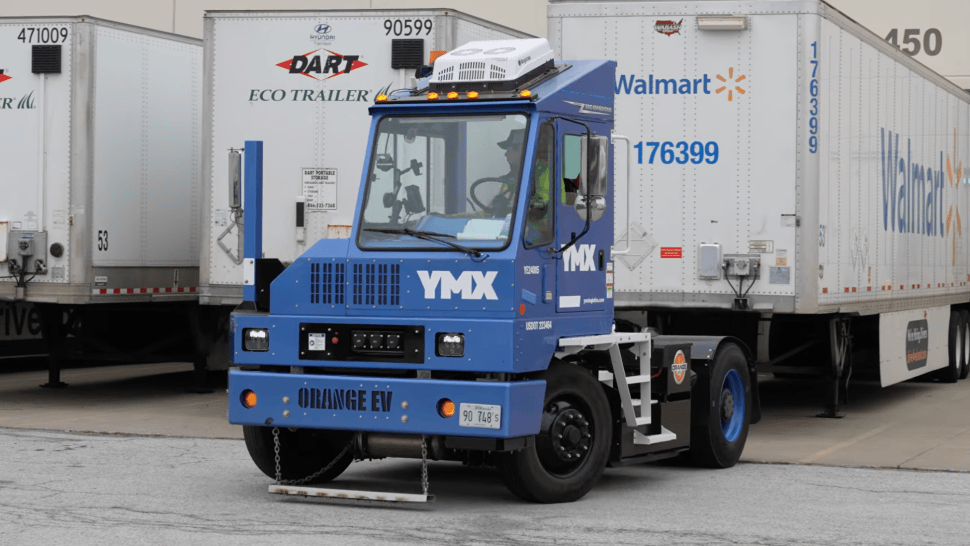
YMX’s system is not only gate cameras. The company also merges that footage with other yard info, including cameras installed on trucks used to move trailers around the facility.
YMX says those cameras track where and when trailers are dropped off at dock doors.
When combined, the various data sources provide a better picture of a trailer’s journey within the facility, from the time it arrives through the gate to the point it reaches a dock.
The company’s computer-vision system automatically pulls data from gate footage and feeds it into YMX’s yard-management platform, the company said. The technology can also identify carriers through information like logos, even when the name of the carrier isn’t visible clearly.
Cargo theft a costly problem
The case comes amid ongoing security challenges from cargo theft for supply chains, although recent figures do not point to a simple increase in the number of theft incidents.
Verisk CargoNet recorded 677 cargo theft incidents in the U.S. and Canada during the second quarter, a 26% decrease from the same period in 2025.
Incidents decreased but the estimated value of losses more than doubled to $304.6 million.
Food and beverage shipments have been particularly vulnerable. Food and beverage thefts rose 47% to 708 in 2025, according to CargoNet. It was the biggest increase among the commodity categories tracked by CargoNet.
Estimated cargo theft losses across all commodity types were nearly $725 million in 2025, a 60% increase over 2024.
The YMX case demonstrates why having interior visibility of distribution yards can be useful even if a theft or shortage is not directly captured by a camera. By tying gate footage to yard-management records, companies can reconstruct a vehicle’s path and find the trucks and the drivers who handled a shipment.
FreightTech is also looking at the same visibility gap
YMX isn’t the only one turning to technology to solve cargo-security problems.
The company’s approach is part of a wider effort by FreightTech providers to integrate automated monitoring, data and connected devices to detect or investigate cargo losses.
FreightWaves recently covered Wiliot’s ambient IoT technology, which uses item-level sensors to detect possible theft, diversion and handling issues as freight travels through the supply chain.
The retailer is now testing its system at two facilities, said YMX, while another food distributor has started testing the technology at one site.
That expansion is part of a broader push by shippers and distributors to automate yard operations and improve visibility in an area that traditionally has had fragmented information across gate logs, spreadsheets, transportation systems and manual checks.
For cargo-security teams, piecing together those records can provide another way to put together what happened after freight enters a distribution facility. This can be particularly useful if a shortage is only discovered after the shipment has reached its destination.
Why it Matters
The YMX case illustrates how computer vision can give shippers a better record of truck and trailer activity inside distribution yards.
The technology may not be able to definitively say when or where exactly freight disappeared, but when investigators combine camera footage and yard-management data, they can more easily identify what vehicles and drivers came into contact with a shipment and trace its route.
For retailers missing freight, that additional visibility can provide useful evidence when investigating losses and determining where in the supply chain the problem may have occurred.