



Tunisia is steadily strengthening its position as a strategic logistics gateway at the intersection of Europe, Africa and the Mediterranean, as global supply chains undergo a period of structural transformation.
Driven by geopolitical uncertainty, shifting trade corridors and increasing pressure on traditional logistics routes, companies are actively seeking alternative hubs capable of offering both proximity and flexibility. In this evolving landscape, North Africa is gaining visibility — and Tunisia is emerging as one of the region’s most credible platforms for routing, consolidation and regional distribution.
Its geographic location remains a key advantage. Positioned just across Southern Europe, with direct access to both maritime and land corridors, Tunisia offers a competitive and efficient base for managing flows between European markets, Sub-Saharan Africa and the broader Mediterranean basin.
However, geography alone is no longer sufficient.
The current transformation of supply chains is increasingly driven by the need for adaptability. Businesses are moving away from rigid, single-source models toward more diversified and resilient structures. As a result, secondary hubs such as Tunisia are no longer seen as alternatives — but as strategic components of global logistics networks.
At the operational level, this shift is being supported by a new generation of logistics providers capable of aligning local expertise with international standards.
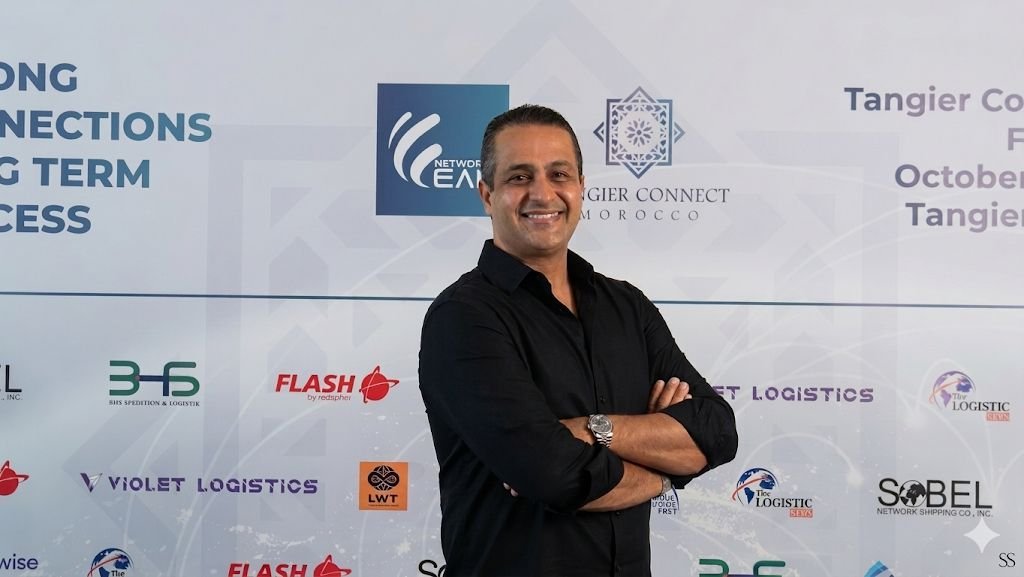
Among them, WinWay Logistic Solutions, led by Managing Director Mourad Mahjoub, reflects this evolution. The company operates within a framework that prioritises flexibility, execution reliability and responsiveness — key attributes in an environment where supply chains are becoming more fragmented and time-sensitive.
Rather than positioning themselves purely as intermediaries, operators like WinWay are increasingly acting as facilitators of trade continuity, helping clients navigate complex routing scenarios while maintaining operational consistency across multiple markets.
This includes the ability to manage multimodal flows, adapt quickly to changing conditions and ensure seamless coordination between regional and international partners — all of which are becoming critical differentiators in today’s logistics environment.
More broadly, the rise of such operators highlights a wider shift within the industry: performance is no longer defined solely by scale, but by the capacity to combine agility with operational discipline.
As global supply chains continue to move toward regionalisation and diversification, Tunisia is expected to further consolidate its role as a strategic logistics platform — not only as a transit point, but as an active enabler of trade, connecting markets and supporting more resilient international flows.
WinWay Logistic Solutions
Managing Director: Mourad Mahjoub
Website: www.winwaylogistic.com