



AVI-SPL has launched commercial autonomous freight operations between Dallas and Houston, a major milestone in its logistics strategy. Rather than announcing future plans, the company chose to disclose a project already running in the real world.
“This is not a dream, this is real life,” said Jeremy Codiroli, Vice President of Global Supply Chain at AVI-SPL, explaining that the company wanted to demonstrate tangible results instead of making promises about future technology.
The autonomous freight service began during the week of June 8, 2026, and is part of what AVI-SPL describes as a long-term investment in the future of its supply chain. For the company, autonomous trucking is less about replacing today’s operations and more about preparing for the challenges expected over the next several years.
One of those challenges is the growing difficulty of recruiting and retaining truck drivers. Codiroli said his team constantly plans three to five years ahead, looking for ways to solve tomorrow’s problems before they become critical. Autonomous transportation, he believes, is one of those solutions.
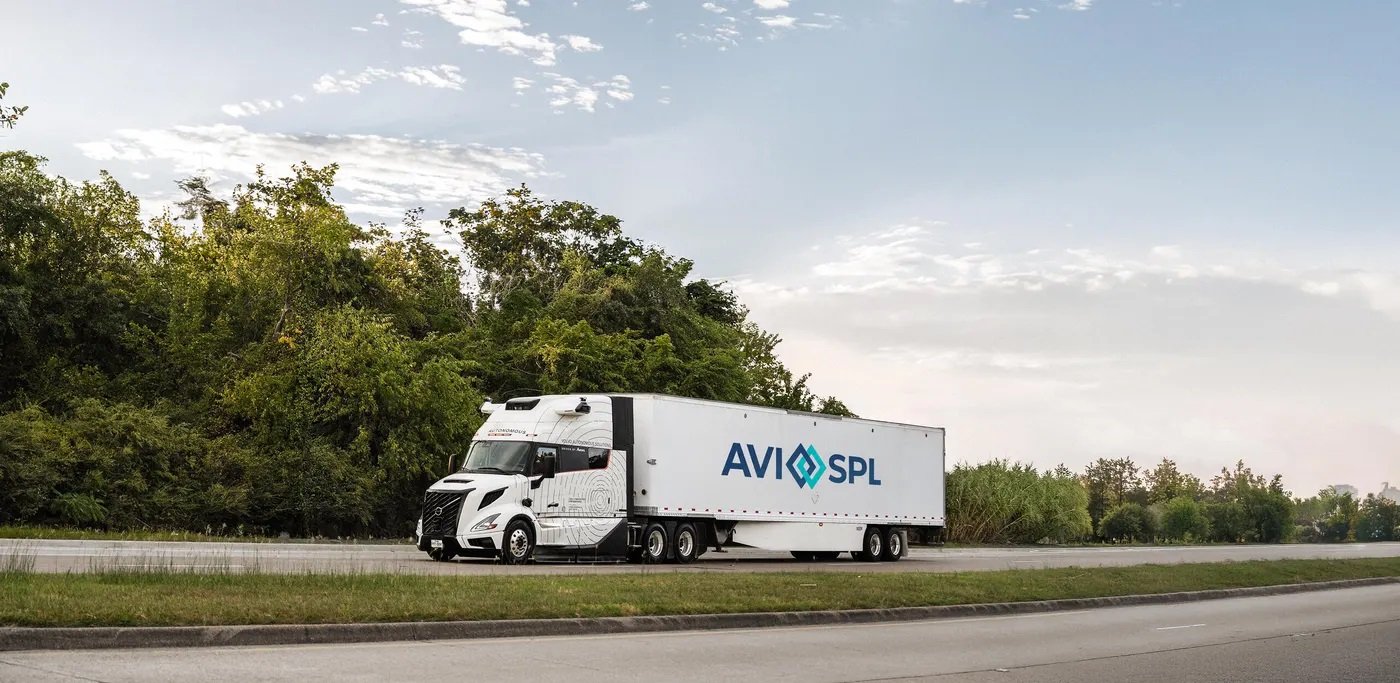
To make the project possible, AVI-SPL partnered with Volvo Autonomous Solutions, using the manufacturer’s self-driving Volvo VNL Autonomous truck together with Aurora Innovation’s autonomous driving platform. The system currently operates on a 239-mile commercial route linking Dallas and Houston.
Built at Volvo’s New River Valley plant in Virginia, the autonomous truck was designed with multiple layers of redundancy across essential systems, including steering, braking, communications, computing, power management and vehicle control. Although Level 4 autonomous vehicles are not legally required to include all of these backup systems, Volvo chose to incorporate them to maximize operational safety.
Proponents of automated trucking say eliminating fatigue and driver distraction, which account for some of the leading causes of highway accidents, can greatly improve road safety.
For now, each truck still carries a safety operator on board. However, Codiroli explained that these individuals are there primarily to monitor the system and ensure everything is functioning as expected rather than actively driving the vehicle.
The Dallas-Houston corridor also serves a dual commercial purpose. On trips from Dallas, the autonomous trucks transport audio-visual equipment and electronics from major suppliers to support customer installations in the Houston area.
On the return trip, the vehicles bring back retired electronic equipment to Dallas, where recycling partners extract precious metals and other valuable materials as part of AVI-SPL’s sustainability program. Codiroli says the pairing of freight efficiency and recycling initiatives naturally corresponds to the company’s broader environmental goals.
Launching autonomous freight operations was so much more than just rolling out new vehicles. AVI-SPL needed to reconfigure many facets of its supply chain, working hand-in-hand with customers, suppliers and its own logistics teams to ensure the new transportation model could run smoothly.
The biggest change operationally was to consolidate shipments into larger truckloads versus the more frequent smaller deliveries. The company feels this approach maximizes the value of autonomous transportation while improving overall network efficiency.
The next major milestone is already in sight. Volvo Autonomous Solutions and Aurora Innovation expect to begin operating fully driverless trucks on Texas highways during the first quarter of 2027 by removing the onboard safety operators.
According to the companies, one of the biggest advantages of autonomous trucks is their ability to operate around the clock without being limited by hours-of-service regulations, dramatically increasing vehicle utilization.
Codiroli believes autonomous trucking could transform freight transportation on a scale not seen in decades. Looking ahead, he expects self-driving trucks could eventually account for up to half of all highway freight movements within the next five to ten years.
For AVI-SPL, adopting the technology early is about more than innovation. The company believes it’s a way to guarantee long-term supply-chain reliability to stay on schedule with freight as the logistics industry changes.