



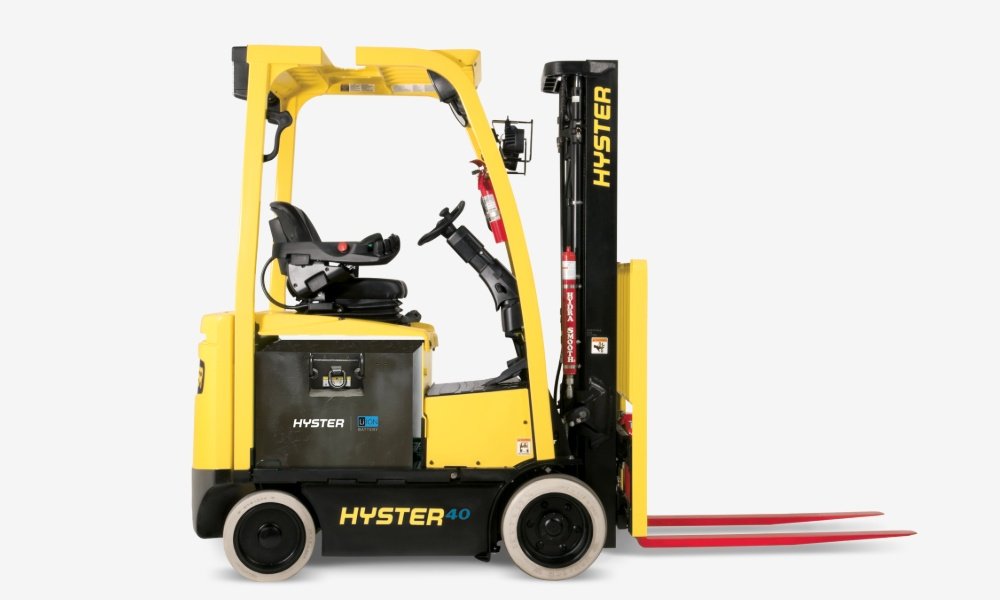
Hyster, the forklift and container-handling equipment specialist, has introduced a new range of factory-validated lithium-ion batteries and charging systems designed specifically for its lift truck fleet, aiming to make energy use more efficient and less complex in busy port and logistics environments.
The system is based on lithium iron phosphate (LFP) battery technology, which offers strong energy density, better thermal stability, long service life and fast-charging capability. In practice, it is designed to support continuous multi-shift operations where equipment is running almost non-stop.
A key improvement is the move to a modular battery design. Instead of replacing an entire battery pack when something goes wrong, operators can service individual modules. Hyster says this should make maintenance faster, reduce downtime and lower long-term costs.
The charging units have also been built with real operations in mind. They include easy-access charging points and safety interlocks that stop a truck from moving while it is still connected. Importantly, the chargers can be placed directly in active yard areas, allowing operators to top up machines during short breaks without disrupting workflow.
The system is also fully connected. Batteries, truck systems and Hyster’s Tracker telemetry platform work together, giving fleet managers near real-time information on battery status and overall equipment performance.
On top of that, the platform can send alerts when battery levels drop or temperatures rise, helping operators react quickly and avoid unexpected downtime or safety issues.
Hyster is positioning the solution as a fully integrated, single-vendor ecosystem. The idea is to reduce the kind of compatibility problems and operational errors that can happen when mixing different third-party power systems with OEM equipment.
Finally, the company highlights its global dealer network, which will provide end-to-end support across equipment, batteries and charging infrastructure. The goal is to make maintenance, warranty handling and after-sales support simpler and more consistent, especially for operators running large, high-intensity fleets.