


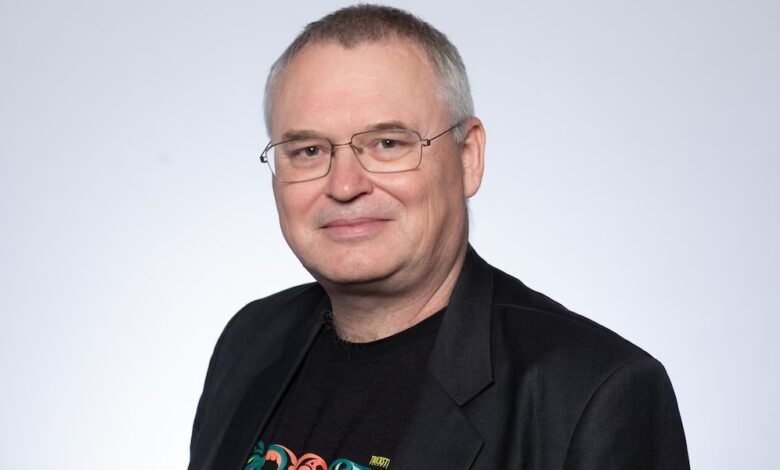
One of container shipping’s most recognised analysts, Lars Jensen, is preparing for a major field expedition across Africa aimed at identifying future logistics opportunities across the continent’s rapidly expanding trade landscape.
The founder of Vespucci Maritime will soon embark on an 18-month journey supported by industry sponsors including Hapag-Lloyd, DSV and Nexxiot.
The trip will begin in Denmark at the start of July before heading to Algeciras in Spain, crossing the Strait of Gibraltar into Morocco, and continuing along the West African coastline down to South Africa. From there, the route will turn northwards along East Africa, ending in Kenya after visiting a total of 41 countries over the course of the expedition.
Jensen’s objective is to examine how Africa’s demographic and economic trajectory will reshape global container demand. He estimates that the continent could add close to one billion people between now and 2050, significantly increasing consumption and import needs.
Based on his modelling, even modest per capita economic growth would result in Africa importing container volumes comparable to today’s European levels by 2050. However, he warned that current logistics infrastructure is not yet capable of supporting such growth.
“With the current port and inland logistical setup, that cannot be done,” he said. “This in turn means there are huge opportunities arising in logistics in the many coming years – but not without challenges.”
With more than 170,000 followers on LinkedIn, Jensen has become one of the most influential voices in container shipping, widely followed for his analysis of global disruptions, including the Red Sea crisis and more recently developments around the Strait of Hormuz.
He noted that his ongoing Red Sea commentary has now extended beyond 900 days, describing it as a warning sign for the potential longevity of other geopolitical disruptions.
“For those arguing that Hormuz is too important for the global economy to remain closed for a long period, keep in mind that the Suez Canal was closed for eight years from 1967 to 1975,” he pointed out.
While Jensen has built a reputation for anticipating major structural changes in liner shipping including industry consolidation he acknowledged that forecasting has become significantly more difficult in the current environment.
“The challenge is the increasing influence of geopolitics,” he explained. “That means decisions are made at a large scale, which are not necessarily rooted in traditional economic rational viewpoints, and this makes predictions tougher.”
Looking ahead, Jensen suggested that China could begin construction of the long-discussed Nicaragua Canal as an alternative route to the Panama Canal within the next decade, reviving a project that has been debated for more than 20 years.
During the expedition, his yellow camper van named Syncro Sally will be equipped with a live tracking system provided by Nexxiott, allowing followers to monitor his journey in real time as he travels across the African continent.





