



FarSounder is taking another step towards smarter ship navigation by adding AI-powered radar technology from Tocaro Blue into its existing Argos forward-looking sonar system, as the industry continues to push for better real-time situational awareness at sea.
The idea behind the integration is fairly straightforward: instead of crews having to interpret multiple separate systems, radar, sonar and vessel tracking data are now brought together into one unified display.
Technically, the upgrade links Tocaro Blue’s ProteusCore software with FarSounder’s SonaSoft interface, creating a single operational picture that merges different layers of navigation information.
FarSounder’s Argos 3D sonar is already used across a wide mix of vessels from expedition cruise ships and superyachts to unmanned vessels, commercial fleets and government platforms. Its main role is to give a forward-looking view of what lies beneath the water, helping crews detect hazards before they become a problem.
With the new AI layer, ProteusCore adds another dimension. It uses machine learning trained on more than three million radar frames to detect, classify and track objects, improving how radar data is interpreted in real time.
The system is designed to help identify both surface and underwater risks, including vessels that are not transmitting AIS, buoys, coastlines and submerged obstacles that can easily be missed in difficult conditions.
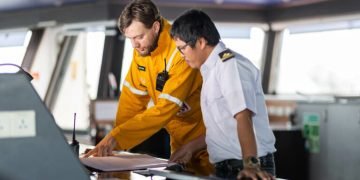
One of the more practical features is an Autofocus function, which automatically adjusts radar settings like range and gain depending on sea and weather conditions. In practice, this reduces the amount of manual tuning required on the bridge, especially when conditions are changing quickly.
For Tocaro Blue’s CEO John Minor, the integration is about enhancing an already strong sonar platform with more intelligent radar interpretation, giving crews better awareness when navigating complex waters.
From FarSounder’s perspective, the goal is to make navigation information easier to read and act on, rather than overwhelming operators with separate systems that don’t communicate well with each other.
The company has been working on 3D forward-looking sonar for over 25 years, mainly focused on reducing groundings and collisions in areas where charts are incomplete or traffic is dense and this latest step continues that same direction, just with more intelligence layered on top.