



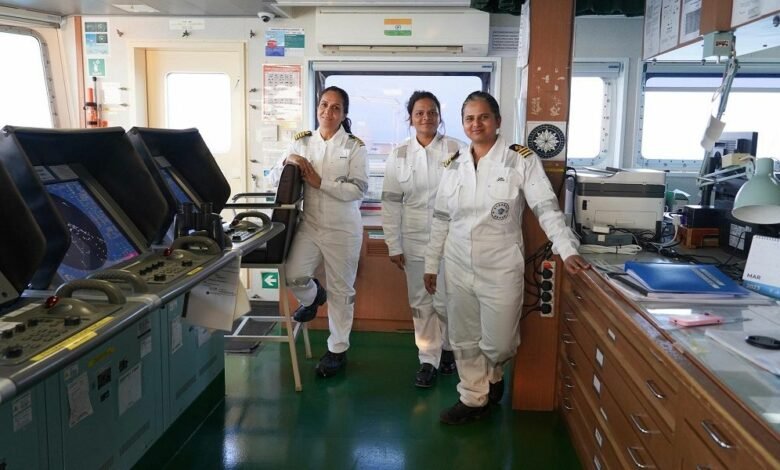
Women in Maritime Day is usually framed as a moment to celebrate progress, but it also exposes something the industry still struggles to fully address: the gap between intention and reality.
Irene Rosberg, programme director for the Blue MBA and Blue Board Leadership Programme at Copenhagen Business School, puts it bluntly in this reflection. Yes, the maritime sector talks about gender equality, and yes, most companies say they support it. But women are still significantly underrepresented, especially at sea and in senior leadership roles.
For her, the real issue today is not whether women are “allowed in” the industry, but whether the system is actually designed to help them progress because they are qualified, trained, and ready to lead.
She draws a clear line that is often blurred in diversity discussions: women should not be selected just to “balance numbers”. In her view, that approach can end up doing the opposite of what it intends, by creating doubt around whether a woman earned her position or was chosen to tick a box.
And that, she argues, is not real empowerment. It quietly undermines credibility instead of strengthening it.
What matters more, she says, is what happens before leadership roles even come into the picture. Real equality is built much earlier — through access to training, technical experience, mentoring, networks, and real exposure to decision-making. Without that foundation, opportunity at senior level is just a promise, not a pathway.
She also points out that maritime is changing fast. Digitalisation, decarbonisation, automation and regulatory pressure are reshaping the skills the industry needs. At the same time, companies are already struggling to attract enough talent.
In that context, not properly developing half of the potential workforce is no longer just an equality issue — it becomes a practical and commercial weakness.
Rosberg argues that if the sector genuinely wants more women in leadership, it has to invest in them much earlier in their careers. That means giving them real responsibility in key areas like operations, finance, safety, crewing, ship management, chartering, and technical roles — not just support functions.
Because visibility alone is not enough. Without real competence behind it, representation does not last.
She also acknowledges something important: women themselves have a role to play in this shift. Inclusion is not passive. It requires effort, preparation, and ambition.
That means building expertise, seeking out responsibility, developing leadership skills and actively shaping careers in a demanding industry.
The barriers in maritime are still there — many of them cultural and deeply rooted in how the industry has traditionally defined leadership. But Rosberg’s point is that the most effective way to break them is not through symbolism, but through substance: women entering the industry fully prepared, fully skilled, and impossible to ignore.