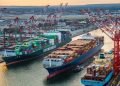




At China’s Port of Qingdao, one of the more traditional and labour-intensive parts of port operations has just been turned on its head.
A vacuum-based autonomous mooring system has been deployed for the first time, and reports say it was able to berth a container ship in just 30 seconds after being introduced in January.
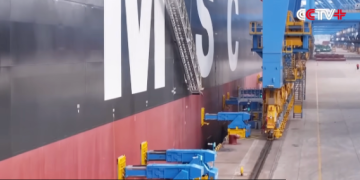
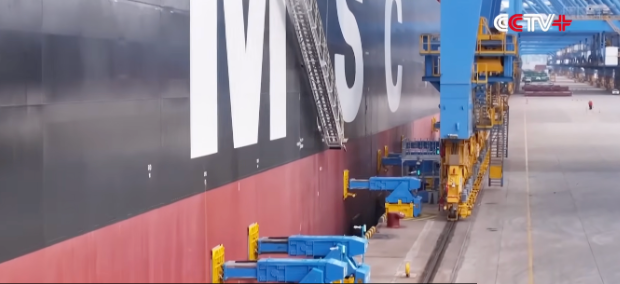
Instead of relying on crews to throw, pull, and secure heavy mooring lines, the system uses suction units to hold the vessel firmly against the quay. In other words, the ship gets “locked in” automatically once it comes alongside.
The installation consists of 13 vacuum mooring units working in coordination. Together, they cut the mooring process from what is usually around 30 minutes per vessel down to less than a minute.
Beyond speed, the shift also has a clear safety angle. With fewer people involved in physically handling ropes and working close to large moving vessels, the risks on the quay are significantly reduced.
The system is currently operating at Qingdao, which is already among the world’s busiest ports. In 2025, it handled 32.89 million TEU, an increase of more than 6% compared to the previous year.
With volumes continuing to rise, ports are under pressure to move faster without adding complexity or manpower. What’s happening in Qingdao is another sign that automation is no longer limited to cranes or yard equipment it is now starting to reshape the very moment a ship arrives and gets secured.