



Sweden’s Berg Propulsion has secured a contract to equip a new generation of high-powered tugs that are set to become the most powerful diesel-electric units ever built in Turkey, marking another step in the evolution of offshore and port support vessels.
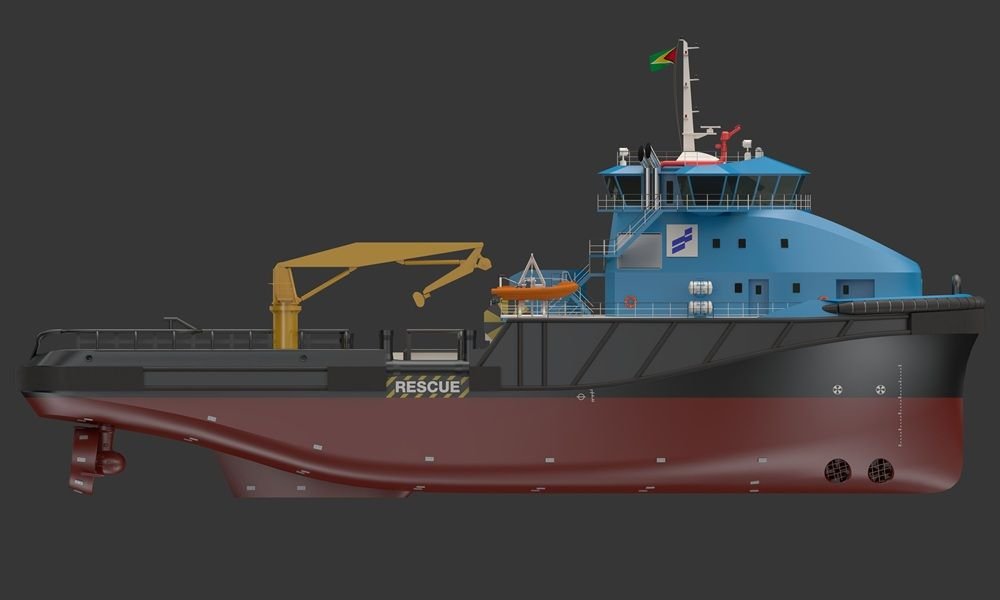
The order covers four firefighting offshore support tugs being built by Uzmar Shipyard in Turkey for Smit Lamnalco. Once delivered, the vessels will initially be deployed in French Guiana.
What stands out in this project is scale. Each tug will deliver a bollard pull of over 130 tonnes, a significant jump compared to previous hybrid-electric tug designs built by Uzmar.
The vessels are based on Robert Allan’s RAmpage 6000-DE design and measure 60 metres in length. Berg Propulsion will supply the full propulsion package, including two MTA836 Z-drive fixed-pitch azimuth thrusters, two MTT216 controllable-pitch bow thrusters, and the company’s MPC800 control system.
At the heart of the setup are twin 4,000 kW electric motors, forming a diesel-electric configuration designed to combine strong pulling power with improved efficiency and operational flexibility.
For Berg Propulsion Eurasia managing director Mustafa Müslüm, the contract is both technically and commercially significant, reinforcing a long-standing relationship with Uzmar Shipyard.
He also noted that the first equipment deliveries are planned for November 2026, with the final vessel in the Bureau Veritas classed series scheduled for delivery by July 2027.
From the shipyard side, Uzmar chief executive A. Noyan Altug highlighted the continued rise in demand for tug designs that can deliver higher performance while reducing emissions, particularly in ports and offshore terminals.
According to him, this latest project reflects that trend clearly, combining very high bollard pull capability with the operational flexibility of diesel-electric propulsion.
The contract also reflects Turkey’s growing role in the construction of advanced tug vessels, especially in hybrid and electric propulsion segments where demand is accelerating.
Müslüm added that fully electric propulsion systems are particularly well suited to tug operations, thanks to their ability to deliver instant torque at any speed, which is critical for manoeuvring and response work.
He also pointed to a broader shift in the industry: instead of building larger fleets of medium power tugs, operators are increasingly opting for fewer vessels with significantly higher bollard pull capacity.
In his words, the market is moving away from multiple 70–80 tonne tugs towards fewer, more powerful units per vessel.
This latest order strengthens Berg Propulsion’s position in the tug sector, as shipowners continue to balance emissions reduction targets with the need for higher performance in demanding offshore and terminal operations.