



Canadian Pacific Kansas City (CPKC) reported record second-quarter revenue as strong demand for grain, automotive and energy-related shipments drove higher freight volumes across its rail network.
During the quarter, operating income increased 10% to US$1.06 billion, while revenue rose 13% year over year to a record US$3 billion. Adjusted earnings per share, excluding one-time items, climbed 13% to US$0.91.
Chief Executive Officer Keith Creel said the results reflected the strength of CPKC’s integrated rail network connecting Canada, the United States and Mexico, as well as the resilience of the company’s diversified business.
The railway posted an operating ratio of 64.6%, an increase of 0.9 percentage points compared with the same period last year, as operating expenses rose 14%. Fuel costs alone increased 53% during the quarter.
Freight volume, measured by revenue ton-miles—CPKC’s preferred performance metric—increased 4% year over year. However, total carloads and containers remained essentially unchanged.
Creel noted that the company achieved second-quarter volume records in grain, energy, chemicals and plastics, as well as automotive shipments.
Operational performance also improved significantly compared with the previous year, when congestion affected former Kansas City Southern operations following a major computer system integration.
Average train speed increased 7%, while terminal dwell time fell 16%.
Chief Operating Officer Mark Redd said the railway also established second-quarter records for locomotive productivity, fuel efficiency, average train speed and terminal dwell.
CPKC has already received all 70 Wabtec ET44AC locomotives scheduled for delivery this year and expects to begin receiving the first units from its order of 65 EMD SD70ACe-T4 locomotives supplied by Progress Rail.
Chief Marketing Officer John Brooks reported particularly strong growth in agricultural shipments.
Canadian grain volumes increased 24%, supported by a record harvest and continued export growth to Mexico. U.S. grain shipments rose 14%, driven by demand from Mexico and export traffic moving through Pacific Northwest ports.
Coal traffic, however, remained under pressure.
Coal volumes declined 29% because of production challenges at mines in southern British Columbia. According to Brooks, the reduction lowered the railway’s overall revenue growth by approximately 3% during the quarter. While mine production is gradually recovering, coal shipments are expected to remain below normal for the rest of the year.
Other commodity groups delivered positive results despite broader economic challenges.
CPKC recorded a record month for lumber shipments in June despite high interest rates and weaker U.S. housing construction. Steel shipments also improved across both domestic routes and cross-border corridors connecting Canada and Mexico.
Intermodal operations continued to expand as well.
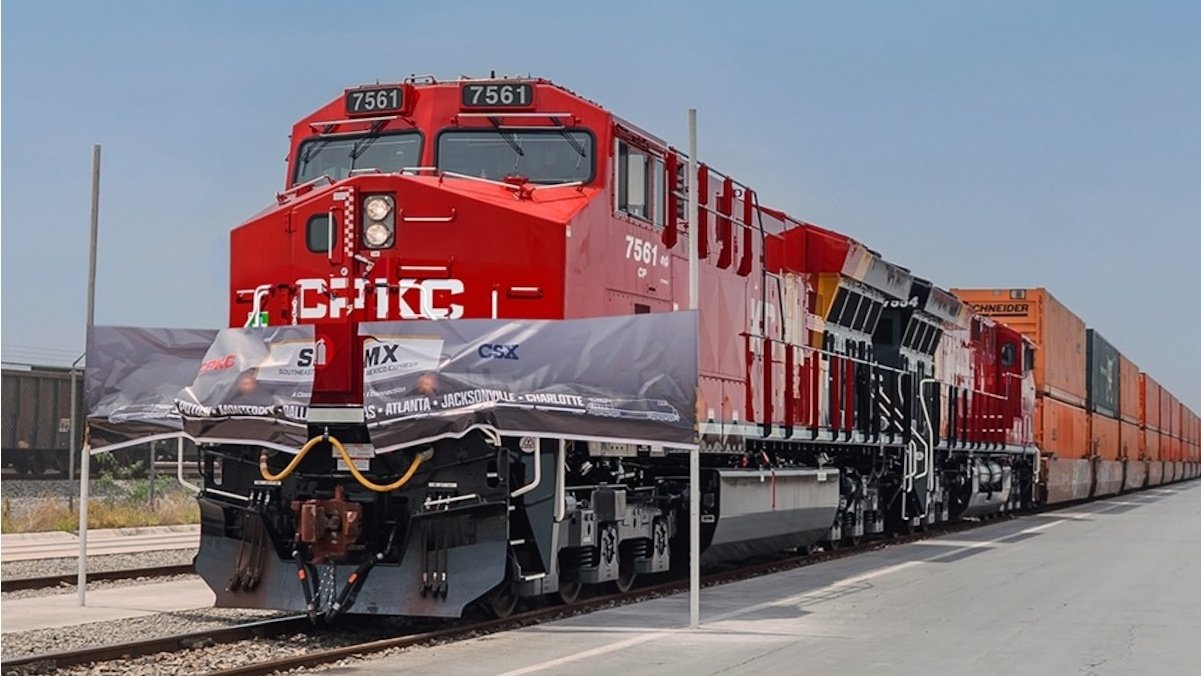
Domestic intermodal volume increased 3%, while the SMX cross-border interline service linking Mexico and Texas with CSX terminals increased 30% compared with the first quarter. The growth followed the launch of dedicated double-stack train services using the new interchange at Myrtlewood, Alabama.
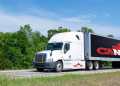
Brooks said the railway is seeing growing opportunities to shift freight from trucks to rail as a result of higher fuel prices, tighter regulatory enforcement affecting the trucking industry and reduced trucking capacity.
On the safety front, CPKC reported mixed results.
The company’s employee injury rate increased 32% during the quarter, while its train accident rate rose 3% compared with the previous year.
Redd acknowledged the disappointing safety performance but emphasized that the company remains committed to improving safety across its network. He said CPKC is addressing the underlying causes of the increase while continuing its focus on ensuring every employee returns home safely.