



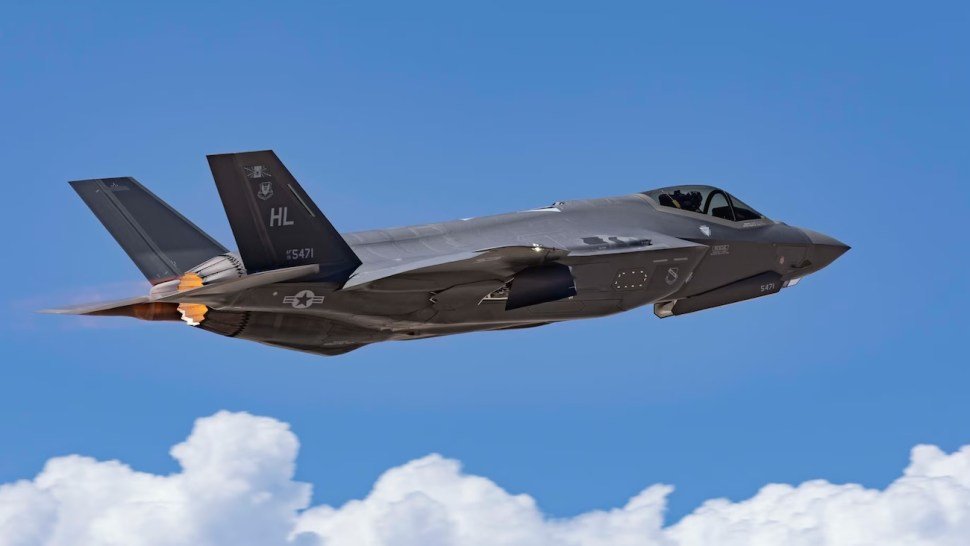
U.S. lawmakers and the Pentagon are investigating how a shipment of unserviceable F-35 Lightning II fighter jet components being sent from Australia to the United States was diverted to Hong Kong, an incident that has prompted fresh concerns over the security of technology linked to the aircraft’s stealth capabilities.
The shipment was supposed to reach the United States for repair, but it was rerouted somewhere over the Pacific, according to Politico on Friday, which cited three people familiar with the matter. The components were being moved by an intermediary working for F-35 prime contractor Lockheed Martin.
At this stage, it remains unclear what caused the diversion, whether it resulted from an error or an unauthorized action, and who currently has possession of the equipment. The specific transportation mode used for the shipment has also not been identified.
Fighter aircraft components are generally handled as controlled aerospace cargo. Depending on urgency, such shipments can move through military or contracted commercial airlift, while less time-sensitive material may travel by truck, sea freight or a combination of transportation modes. The Defense Logistics Agency has indicated that F-35 supply movements have used both military airlift and commercial carriers under arrangements involving U.S. Transportation Command.
The Pentagon’s F-35 Joint Program Office acknowledged the incident, describing it as “a shipment issue of unserviceable F-35 Lightning II components.” The office said it is coordinating with U.S. authorities and industry partners to recover the equipment, investigate what happened and introduce safeguards designed to prevent a similar incident in the future.
Canopy adds to security concerns
The shipment reportedly included an F-35 canopy, the cockpit enclosure that incorporates technologies associated with the aircraft’s low-observable design.
The reported presence of the canopy significantly increases the potential security implications of the incident. Unlike the loss of conventional repairable spares, physical examination of such a component could potentially provide adversaries with information about aspects of the F-35’s stealth characteristics and manufacturing techniques.
Concerns in Congress have been heightened by Hong Kong’s position as a Chinese special administrative region and the possibility, however unconfirmed, that Beijing could gain access to the diverted equipment.
There was no public evidence on Friday that Chinese authorities or the Chinese military had obtained the parts. The shipment’s precise location and custody also remained unknown.
According to Politico, State Department and Pentagon officials began briefing congressional staff working for key national-security committees in June. Further briefings are expected in the coming weeks. The incident had not previously been made public.
F-35 supply-chain controls under scrutiny
The episode is also expected to put renewed attention on the F-35 program’s international sustainment and repair network.
Because the F-35 is operated by the United States and numerous allied nations, repairable components routinely cross international borders as part of fleet-support operations. At the same time, the program’s dependence on external logistics providers and multinational maintenance networks creates complex chain-of-custody requirements for hardware connected to a highly sensitive aircraft platform.
The latest disclosure follows earlier criticism of Pentagon controls over F-35 spare parts.
A 2023 Government Accountability Office review concluded that the Defense Department had not established sufficient accountable-property records to provide real-time visibility into changes in F-35 spare-parts inventories. According to the GAO, the program had reported more than 1 million parts missing over the previous five years.
The watchdog also found that the department was unable to review losses worth tens of millions of dollars because Lockheed Martin controlled the relevant data.
The diversion comes at a time when Washington is also considering further international F-35 sales. This week, the State Department approved a potential $24.3 billion package for Saudi Arabia covering 48 F-35 aircraft, dozens of Pratt & Whitney engines, spare parts and support equipment. The proposed sale remains subject to congressional approval.