



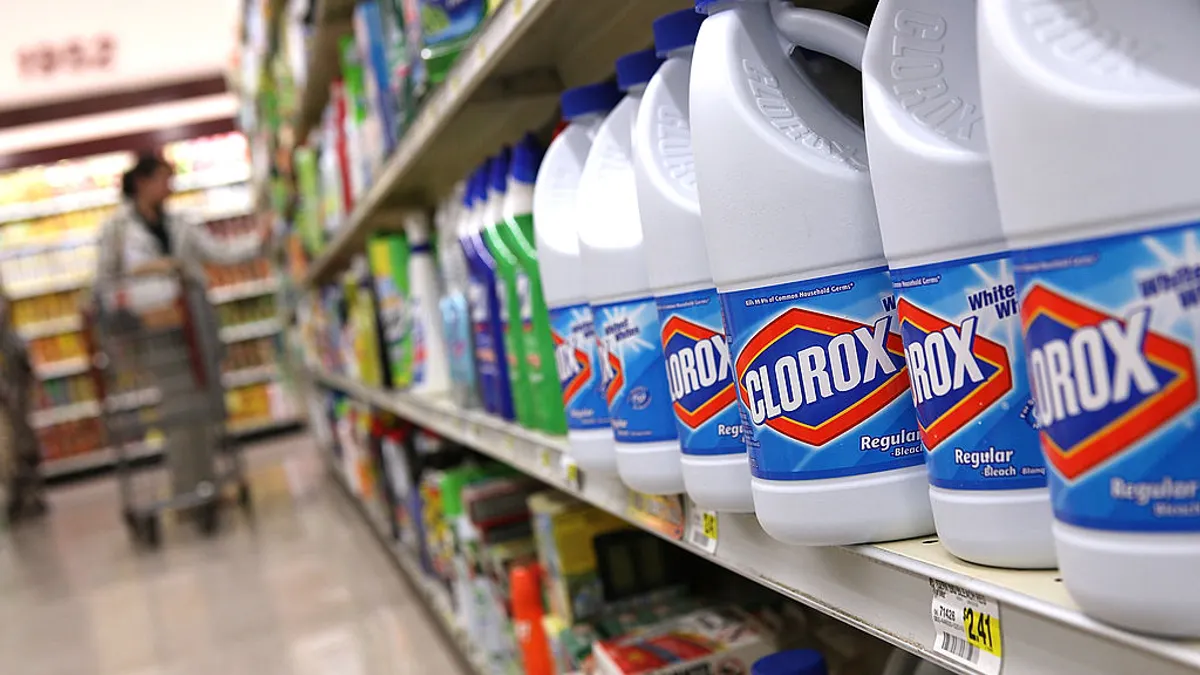
Clorox is preparing for another difficult year on the cost front, with inflation across its supply chain expected to exceed $200 million during the current year.
Executives told investors during the company’s August 3 earnings call that the impact would be roughly twice the historical range typically associated with rising prices.
The pressure is coming from several directions. Energy, commodities and supplier costs are among the biggest contributors, but transportation and logistics are also becoming increasingly expensive.
Clorox EVP and CFO Luc Bellet pointed specifically to higher trucking, ocean freight and logistics-related expenses as significant factors behind the increase.
He warned that inflationary pressure is proving more persistent than the effect suggested by headline oil prices alone and is expected to become more pronounced during the remainder of the year.
Logistics costs add another layer of pressure
Higher oil prices following shipping disruptions linked to the Iran war have already pushed up costs across manufacturing supply chains.
Other companies have reported similar effects. McCormick & Co., a producer of spices and ingredients, has attributed part of its inflation outlook to the conflict and expects inflation of around 6% during its fiscal year.
At WD-40, meanwhile, the cost of some oil-dependent inputs used in specialty chemicals has increased by as much as 100%.
Clorox is facing a broad increase across its own supply chain, with commodities representing the largest component of the higher costs. But Bellet said the company is also experiencing “pretty material inflation” across different areas of logistics.
That includes the cost of moving products by truck and by sea, adding another layer of expense between suppliers, manufacturing operations and consumers.
Price increases return
To offset some of the pressure, Clorox is raising prices on selected products.
CEO and Chair Linda Rendle acknowledged that consumers are already feeling the effects of inflation, but said the company is introducing regular price increases for products particularly exposed to commodity costs.
One example is Glad trash bags, which contain polyethylene resin, a plastic raw material derived from oil and natural gas.
The company’s pricing strategy comes as it tries to protect margins while dealing with a cost environment that remains considerably more challenging than normal.
For the fiscal year that began on July 1, Clorox expects its gross margin to be approximately 42%, partly reflecting the impact of higher-than-normal inflation.
That would represent a modest decline from the 42.3% gross margin recorded last year.
A situation Clorox has faced before
The current environment is not entirely unfamiliar to Clorox.
Rendle said the company’s last significant period of high inflation came in 2022 and 2023. At that time, Clorox introduced four rounds of price increases across its product categories to deal with costs that were around 10 times higher than normal.
The company is now facing another period in which commodity prices, energy, transportation and logistics are all putting pressure on its cost base.
For Clorox, the challenge is therefore not limited to the price of raw materials. Rising trucking, ocean freight and other logistics expenses are becoming an increasingly important part of the inflation equation — potentially forcing the company to balance higher prices with the need to keep consumers buying its products.