




For CFOs dealing with U.S. tariffs whether they are seeking refunds or preparing to defend how those refunds are allocated the safest strategy may be to return to a few basic legal principles.
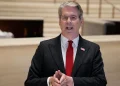
That is the view of Terence Lau, dean of Syracuse University’s College of Law, who says companies should pay particular attention to the sequence in which they document, make and communicate decisions about tariff-related funds.
His advice can be summed up in three words: document, decide, announce.
“The order of operations matters more than the decision,” Lau told CFO Dive in an email. “A lot of companies announced, then decided, then documented. The defensible sequence is exactly the reverse.”
Lau said companies considering a tariff refund strategy should first determine what they have already communicated about tariffs and pricing, going back to early 2025. They should then examine their contracts to establish whether the refunded money is theirs to allocate, assess the relevant tax consequences and only after that make a decision.
His recommendations come as companies across the United States face proposed class action lawsuits from customers challenging plans for allocating tariff refunds.
Although Lau is now an academic, his legal career began in the automotive sector. He worked in the general counsel’s office at Ford Motor Co., within the company’s international trade and transactions practice group, where he concentrated on distribution, mergers and acquisitions and compliance. He later moved to Bangkok, Thailand, to serve as Ford’s director for ASEAN government affairs.
Lau responded to CFO Dive questions about the legal issues companies should consider when developing tariff strategies. He stressed that his comments were offered in his capacity as dean and as general commentary on legal structures, rather than as legal advice to individual corporate executives.
Editor’s note: This Q&A has been edited for brevity and clarity.
Documentation can be critical
Asked about the main legal considerations CFOs should keep in mind when developing a tariff refund strategy, Lau pointed to documentation above all else.
“Almost any allocation of this money is defensible,” he said. “What is hard to defend is an allocation with no contemporaneous record of why,” particularly when a company spent 2025 telling customers that tariffs were responsible for higher prices.
The distinction could become particularly important as companies face questions over who should ultimately benefit from refunds connected to tariffs paid under the International Emergency Economic Powers Act.
The importer of record is not always the party that bore the cost
According to Lau, the central legal difficulty is that tariff refunds follow the customs entry rather than necessarily following the economics of the transaction.
The entity listed as the importer of record may not be the company that ultimately absorbed the tariff cost. It could be a U.S. subsidiary, a distributor, an affiliate of a contract manufacturer or even the foreign seller.
Meanwhile, the economic burden of the tariff may have moved through a supply chain three or four contractual steps before reaching a buyer that has no direct relationship with U.S. Customs.
That distinction matters because such a buyer would have no direct claim against the government for the refund. Its potential claim would instead be contractual and would have to be brought against its counterparty.
Unjust enrichment claims depend on the facts
Lau also addressed the potential for customers to argue that a company would be unjustly enriched by keeping a tariff refund.
He explained that unjust enrichment is an equitable claim and that its precise elements differ from one state to another. The commonly applied framework, however, involves three elements: the defendant received a benefit; the benefit came at the plaintiff’s expense; and the circumstances make it inequitable for the defendant to retain that benefit without compensating the plaintiff.
Some states add a fourth requirement: that the plaintiff have no adequate remedy at law.
Lau drew a distinction between separately identified tariff charges and broader price increases.
A separately itemized surcharge, he said, presents the stronger case. By contrast, an embedded increase in the overall price creates a weaker claim.
If a company charged a customer a specific dollar amount tied to a specific tariff and the government later returned that exact amount, the economic argument surrounding the refund can be relatively straightforward.
The situation becomes more complicated when a company raised prices in a market where freight costs, labor expenses, currency movements and competitive conditions were changing simultaneously. In that situation, a plaintiff would need to establish how much of the price increase was actually attributable to tariffs and demonstrate the resulting damages. That analysis could become even more difficult if it had to be established across an entire class of customers.
Earnings calls can create additional exposure
The public statements made by executives may also become important in tariff-related litigation.
Lau was asked about a lawsuit against Costco that referenced CFO Gary Millerchip’s comments about tariffs during an earnings call.
He declined to comment on the merits of any pending case, but said a broader lesson is already emerging from the disputes: legal exposure may be shaped less by what companies actually did than by what they publicly said.
“An earnings call is a voluntary deposition,” Lau said. The key difference, he added, is that nobody objects during the call and the transcript is freely available.
That makes executive comments particularly important when companies are later challenged over their tariff and refund practices.
Lau also noted that companies defending such claims have repeatedly argued that comments made by executives were taken out of context. Whether that argument succeeds in a particular case, he said, context does not necessarily travel with an isolated statement.
His practical advice is therefore to focus public communications on established actions rather than intentions.
Describe what you have done, not what you intend to do.
Intentions, Lau warned, can be interpreted as promises, while promises can subsequently be treated as contractual terms or representations.
For CFOs navigating tariff refunds, pricing disputes and potential litigation, the message is straightforward: build the record first, make the decision second and communicate it only after the underlying legal, contractual and tax questions have been addressed.