



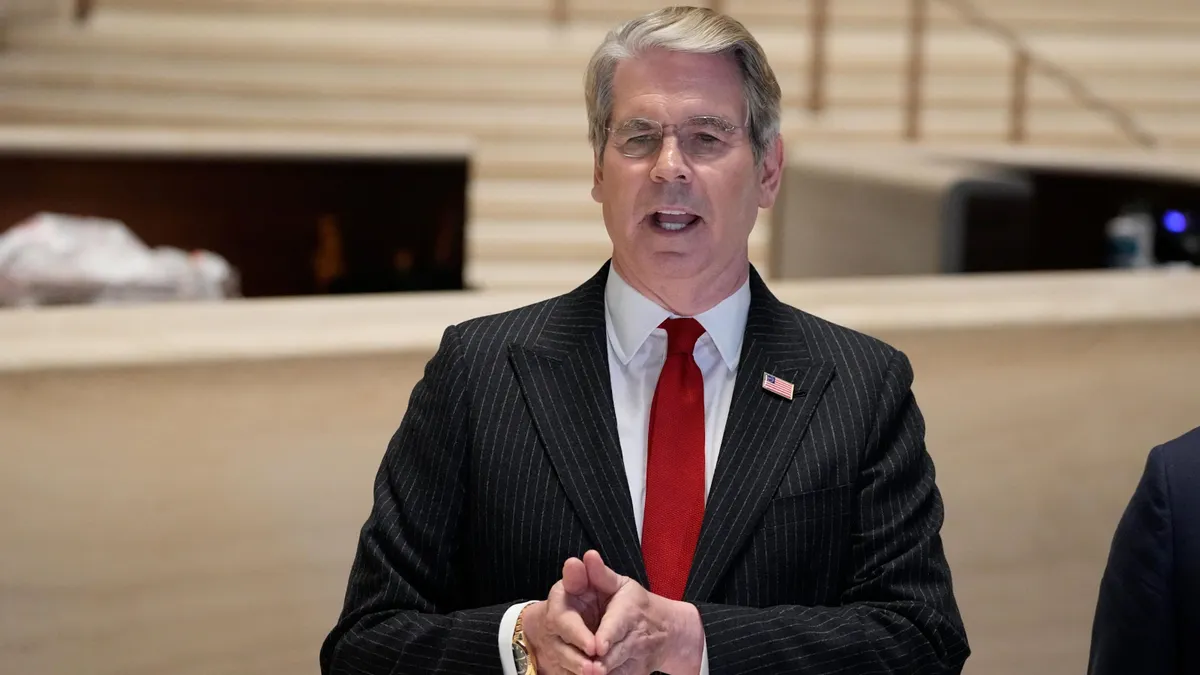
The United States and China have agreed to extend their current trade truce by two months, keeping the agreement in place until Jan. 10, 2027, Treasury Secretary Scott Bessent said as the two countries’ leaders met in Washington, D.C.
The extension pushes back the agreement’s previous expiration date of Nov. 10, 2026. The pact was reached after months of escalating trade tensions and included commitments from both countries to reduce tariffs and suspend certain trade-related measures.
For the United States, the agreement included reducing tariffs linked to fentanyl trafficking on Chinese imports to 10% and suspending a Section 301 investigation targeting China’s maritime and logistics industries. Those fentanyl-related tariffs had been imposed under the International Emergency Economic Powers Act. In February, the U.S. Supreme Court invalidated tariffs that had been imposed under that statute.
Bessent, who met Chinese Vice Premier He Lifeng earlier this week, said the conditions of the trade truce would now remain in effect until Jan. 10. He described the extension as additional time for both sides to determine what further progress could be made on economic issues.
The Treasury secretary also said it remained uncertain whether the United States and China would be able to finalize a broader agreement by that date or instead decide to extend the existing arrangement again. At the time of the announcement, the White House had not yet formally documented the extension.
China, for its part, agreed under the arrangement to suspend retaliatory tariffs and other non-tariff countermeasures. Beijing also committed to pausing the implementation of export controls on rare earths and purchasing 25 million metric tons of U.S. soybeans over the following three years.
Bessent said China had been broadly meeting its obligations during 2026, particularly on soybean purchases. However, he said Beijing was behind schedule on roughly $17 billion in other agricultural commitments and that Washington was encouraging China to accelerate those purchases.
“[The] Chinese have been very good thus far about meeting their obligations this year,” Bessent said. He added that China had agreed to purchase 25 million tons of soybeans and described its performance on those commitments as substantial.
His comments came as Chinese President Xi Jinping arrived in Washington for talks with U.S. President Donald Trump. The two leaders were expected to discuss the next phase of the economic relationship, with Bessent pointing to possible agreements involving financial services and additional agricultural purchases.
Artificial intelligence is also expected to feature prominently in the discussions. Trump has indicated that AI, which he has recently referred to as “super intelligence,” will be among the subjects addressed during the summit.
The extension keeps the existing trade framework in place while giving negotiators more time to address unresolved issues and determine whether the temporary truce can evolve into a broader economic agreement.