



Border trade between Mexico and the United States is entering a new phase, and Nuevo León wants to position itself at the center of it.
Governor Samuel García is backing billions of dollars in infrastructure, industrial development and security investments designed to turn the Mexican state into an increasingly important gateway for freight moving between the United States and Mexico.
Speaking Thursday at the 2026 North American Development Bank (NADBank) Summit in San Antonio, García outlined a strategy focused particularly on strengthening the trade corridor linking Monterrey with Laredo, San Antonio, Houston and Dallas.
At the heart of that strategy is what García described as the “Gold Triangle” connecting Monterrey, Houston and Dallas. Nuevo León hopes to further integrate the three markets as it seeks to benefit from the continued expansion of nearshoring and cross-border trade.
“That is the goal,” García said.
The two-day NADBank summit, held Thursday and Friday in San Antonio, brought together federal, state and municipal authorities from the United States and Mexico, as well as business organizations, academics, financial institutions, investors, project developers and industry experts. This year’s theme was “Strengthening Cooperation to Deliver the Infrastructure of Tomorrow.”
For García, Nuevo León’s relatively short border with Texas represents one of the state’s greatest opportunities for future trade growth.
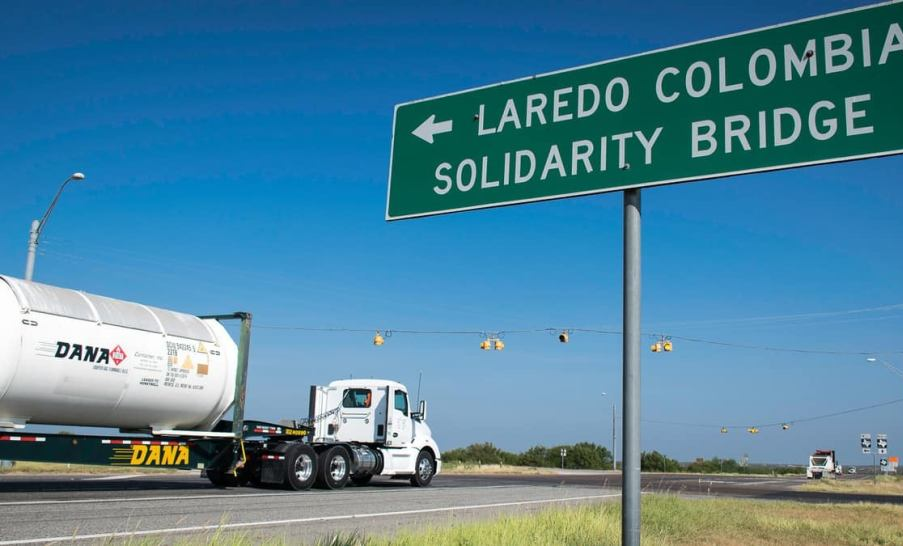
Commercial traffic at the Colombia-Solidarity International Bridge has already increased dramatically. According to García, freight movements have risen from approximately 800 per day in 2022 to more than 10,000 daily.
“Imagine the amount of commerce, revenue, money,” García said.
The governor said two additional border crossings are being planned, including a freight crossing and the proposed Green Corridors project. Together, he valued those projects at $17 billion in investment and said they could significantly increase cross-border capacity between Nuevo León and Texas.
The infrastructure strategy comes as Nuevo León continues to strengthen its position as a manufacturing and logistics center for North American supply chains.
García said the state represents approximately 14% of Mexico’s imports and exports, with advanced manufacturing, automotive production and logistics among its most important industries.
The state has added seven highways and expanded airport infrastructure, while direct flights to the United States have increased by about 40, according to García.
“We’re trying to have more business in logistics,” he said.
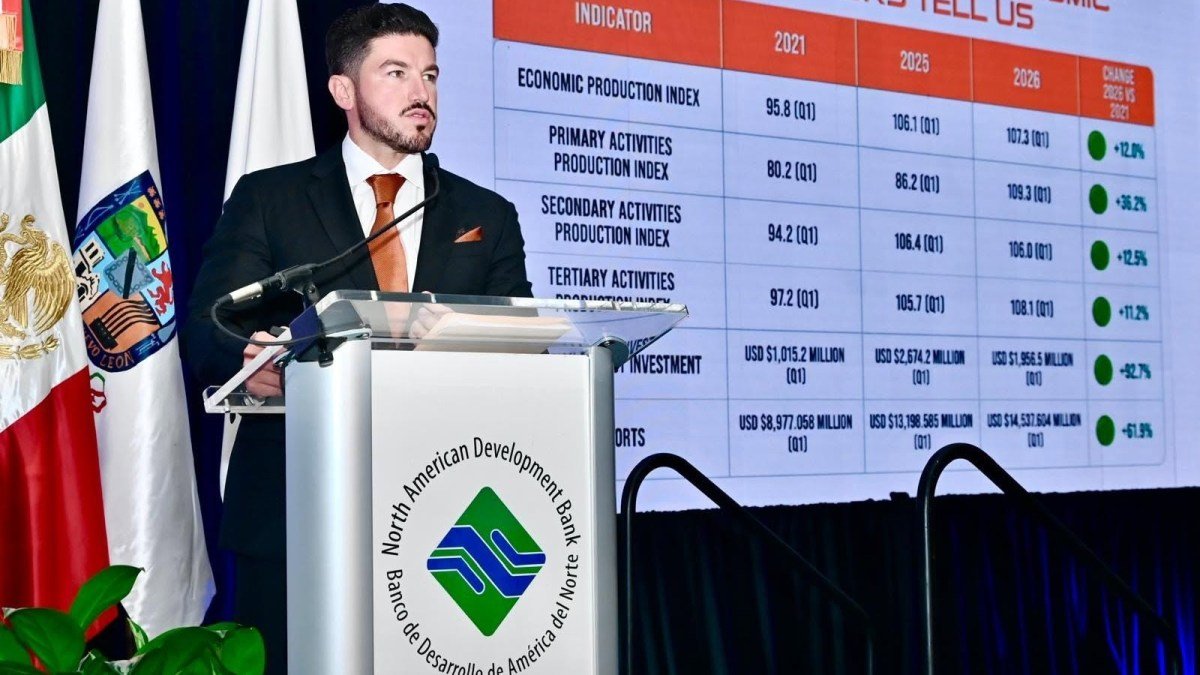
Security becomes a central part of Nuevo León’s nearshoring strategy
Infrastructure is not the only factor Nuevo León is emphasizing when courting manufacturers and logistics companies. Security has become an equally important part of the state’s pitch to investors.
“Every company we invite to Nuevo León, the first thing they ask is, what about safety?” García said.
According to the governor, Nuevo León has expanded its policing capabilities with an aviation division operating 10 helicopters and a heavy-duty division equipped with 100 trucks.
The state also stations law enforcement personnel near border crossings and deploys approximately 200 to 300 officers to patrol major highways.
The objective extends beyond fighting crime. Authorities want manufacturers, carriers and investors to have greater confidence that freight can move safely between Monterrey’s industrial zones and the Texas border.
“With the border and the new highways, you can go directly to Laredo and you don’t have to leave Nuevo León to go to the U.S.,” García said.
Rapid economic growth, however, has also created new infrastructure pressures inside the state.
García said the Monterrey metropolitan area now has a population of roughly 6 million. Over the past decade, the number of vehicles has also increased from approximately 2 million to 3.5 million.
Nuevo León is responding with new highway construction and investments in public transportation, with the aim of reducing congestion while improving connections between Monterrey, the United States and other parts of Mexico.
Nuevo León targets logistics companies with new border industrial zone
One of the most logistics-focused initiatives presented by García involves the creation of a new industrial development zone close to the Colombia border crossing.
The project forms part of the Mexican federal government’s Plan México industrial development initiative. García said the program offers significant tax incentives to companies establishing operations within designated industrial areas.
Nuevo León plans to develop an industrial zone covering approximately 40 hectares near the Colombia crossing and newly built highway infrastructure.
The governor directly targeted U.S. manufacturers and logistics companies whose business models involve assembling products in Mexico before shipping them back across the border.
“If any Texan, if any U.S. or any of you want to invest, but your main purpose is to assemble and return to the U.S., it does not make sense to go all the way up to Monterrey,” García said.
Warehousing activity is already expanding around the border, according to García.
“If you are in any import-export company, logistics, freight, transport, it makes a lot of sense for you to invest in the border of Nuevo León,” he said.
The state is also developing a much larger industrial zone in Pesquería, covering approximately 988 acres. The area is close to automotive manufacturing operations involving companies including Kia and Ternium.
García said around 400 Tier 1, Tier 2 and Tier 3 suppliers from the United States and Asia are already clustered around the region’s automotive industry.
Nuevo León promotes $135 billion investment surge
García presented the border infrastructure program as part of a much broader investment boom underway across Nuevo León.
The governor said the state attracted $135 billion in foreign direct investment during approximately four years of his administration. That compares with $11 billion recorded during the previous governor’s six-year term.
Nuevo León is now seeking to move beyond its traditional industrial base and develop into a center for electric vehicles, artificial intelligence, data centers, cybersecurity and other advanced technologies.
The state’s relationship with Texas, García argued, demonstrates just how deeply manufacturing supply chains have become integrated across the border.
He pointed to Tesla as an example. Although geopolitical uncertainty put the company’s proposed Monterrey factory on hold, García said approximately 200 Tier 2 suppliers nevertheless moved into the region after Tesla initially announced the project.
He also said around 65% of the components used in Tesla’s Model Y manufactured in Austin come from suppliers located in the Monterrey area.
“That’s how deep we are connected with Texas,” García said. “If both winners share technology, share companies, share this cooperation, I think that the best is yet to come.”
NADBank prepares nearly $164 million for Texas-Mexico border water projects
Infrastructure investment is also extending beyond freight and industrial development.
The North American Development Bank recently announced $164 million in water conservation investments for Texas’ Lower Rio Grande Valley while advancing additional water reliability projects across northern Mexico.
The investments were announced Thursday at the 2026 NADBank Summit in San Antonio and form part of the bank’s Water Resiliency Fund. The program is intended to improve water conservation, efficiency and supply reliability in communities along the U.S.-Mexico border that are facing increasing drought conditions.
NADBank Managing Director John Beckham said the bank plans, subject to board approval, to provide $76 million in financing for projects involving 12 irrigation districts in the Lower Rio Grande Valley.
The projects are expected to save nearly 44,000 acre-feet of water each year through measures including canal lining, converting canals into pipelines and other upgrades designed to improve system efficiency.
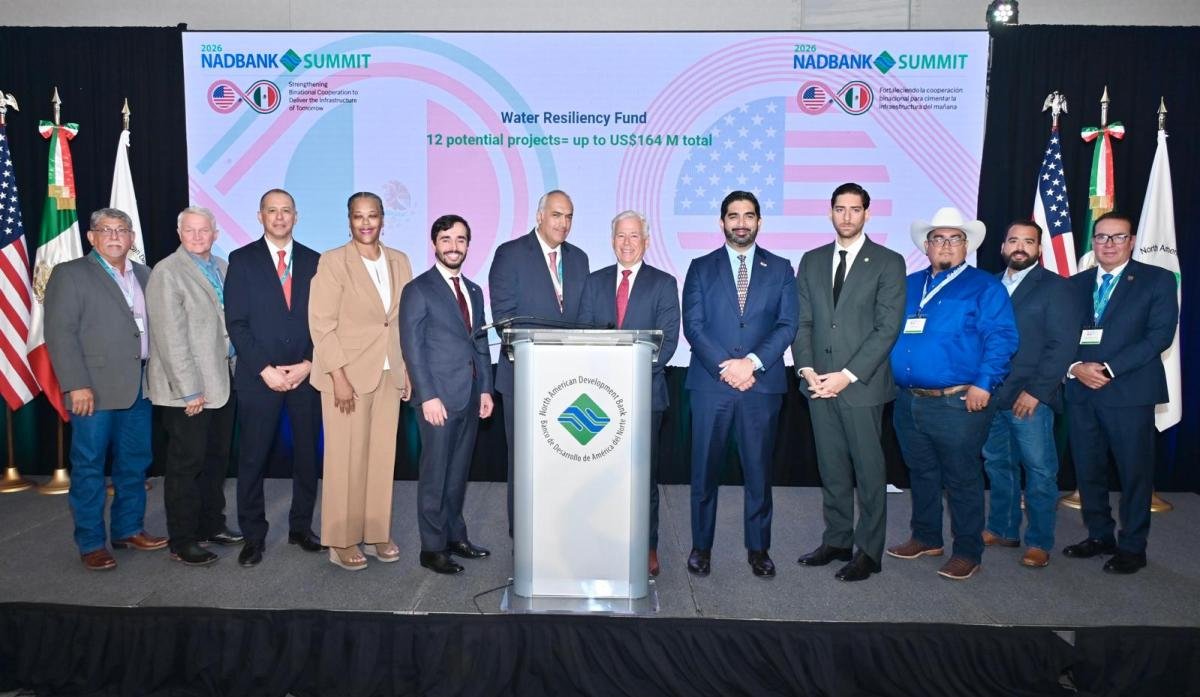
The San Antonio-based NADBank would contribute up to $76 million through grants and loans. The Texas Water Development Board is expected to provide nearly $70 million in grants, subject to approval at its September board meeting.
The U.S. Bureau of Reclamation and participating irrigation districts would contribute nearly $18 million combined.
“By partnering with and leveraging resources from the Texas Water Development Board, Bureau of Reclamation, and the irrigation districts, we will maximize the impact of every dollar invested to conserve precious water resources and provide a reliable water supply for Rio Grande Valley communities,” Beckham said.
NADBank is also reviewing potential projects across Mexico’s six northern border states after its Water Resiliency Fund received 112 expressions of interest from Mexican communities. Approximately 60% of those submissions came from states along the Rio Grande/Rio Bravo.
Projects in Mexico will focus on municipal utilities working to conserve water or diversify their sources of supply. NADBank will continue evaluating and structuring eligible investments in coordination with federal, state and local governments.
“Water security has become one of the most critical challenges facing the future of the U.S.-Mexico border region,” Mexican Ambassador to the U.S. Roberto Lazzeri Montaño said.
He added that he expects funding for water infrastructure in Mexican border communities to be announced “in the near future.”
Launched in 2025, the Water Resiliency Fund was created to accelerate investment in water conservation, efficiency and supply diversification in communities experiencing growing water stress along the U.S.-Mexico border.
Otay Business Park completes first phase near U.S.-Mexico border
Industrial development is also progressing on the U.S. side of the border.
Developers have completed the first phase of Otay Business Park, adding more than 612,000 square feet of distribution and logistics space near the U.S.-Mexico border in Southern California, according to a news release.
Elevation Land Company and a real estate fund advised by Crow Holdings Capital announced completion of the first phase of the 119-acre industrial campus in San Diego’s Otay Mesa logistics hub.
The initial phase consists of four Class A industrial buildings totaling 612,240 square feet.
The development is located along Siempre Viva Road near State Route 11 and the planned Otay East, also known as Otay Mesa East, commercial border crossing.
According to the developers, the first phase of the new port of entry is scheduled to open in late 2027.
Otay Business Park is being marketed toward e-commerce companies, third-party logistics providers, warehouse and storage users, as well as manufacturers.
All four buildings in the first phase have 32-foot clear heights and are available for either purchase or lease.
The largest building measures 233,880 square feet and includes 37 loading docks and 52 trailer stalls. Across the four buildings, available spaces range from approximately 79,800 to 233,900 square feet.
Developers said they are currently in discussions with several prospective tenants and buyers, although the names of those companies have not been disclosed.
Why it matters
Nuevo León’s plan to expand border crossings, highways, secure freight corridors and industrial zones could provide additional capacity for U.S.-Mexico trucking while giving manufacturers another option for locating production closer to the Texas border.
Taken together with the expansion of logistics facilities in Southern California and new investments in border water infrastructure, the developments highlight the broader infrastructure demands emerging as North American supply chains become increasingly integrated.