



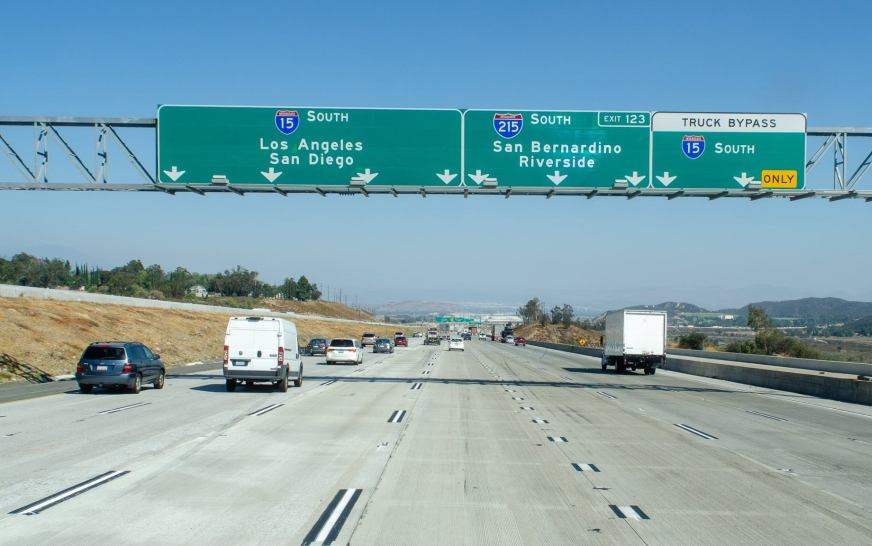
Outside Texas, California has recently become one of the most closely watched states in the autonomous trucking industry—even though driverless trucks are not yet operating commercially on its roads.
The reason is California’s long-running regulatory process for autonomous heavy-duty vehicles. Until recently, the state did not allow autonomous truck testing and had been working on a regulatory framework since 2021. That changed when California finally released its long-awaited rules for autonomous trucking.
The new framework quickly drew the attention of organized labor, particularly the California Teamsters.
The regulations took effect on April 28 and require autonomous trucks to complete 1 million miles of testing before they can commercially haul freight without a driver. On Aug. 5, 2026, the Teamsters filed a lawsuit in Alameda County Superior Court, arguing that California regulators moved too quickly in adopting the rules.
However, the lawsuit does not challenge the substance of California’s autonomous trucking regulations. Instead, it targets the process used to create them.
According to Teamsters California, the Department of Motor Vehicles used an expedited regulatory process intended for relatively minor rule changes involving less than $50 million in first-year costs or benefits. The union argues that this approach allowed the DMV to “circumvent” legal requirements to study and publicly disclose the economic consequences of the regulations.
For now, the legal challenge has not stopped the DMV from processing permit applications. The agency’s autonomous vehicle permitting process continues to move forward.
Aurora Innovation and Kodiak AI currently hold permits for testing autonomous trucks with safety drivers. California’s roster of 28 permit holders also includes companies such as Gatik and PlusAI.
For those companies, the most immediate obstacle may therefore be timing rather than the lawsuit itself.
PlusAI, for example, released its own commercial readiness scorecard on Aug. 10. The company reported 93.4% safety case readiness, 99.8% autonomous miles and 85.2% of trips completed without remote assistance.
Before removing drivers from the cab for commercial operations in 2027, PlusAI is targeting 100% completion of its safety case and more than 90% of trips completed without remote assistance.
California, however, will not be the company’s first commercial deployment market.
PlusAI is currently operating a commercial pilot in Texas with International Motors and Ryder. The program covers a daily 600-mile route along the I-35 corridor between Ryder facilities in Laredo and Temple.
The corridor also carries significant freight activity. In May 2026, Laredo was the busiest U.S. port for transborder freight, handling $35.3 billion in freight for the month, according to the Bureau of Transportation Statistics.
California’s Million-Mile Gateway to Driverless Freight
Earl Adams Jr., PlusAI’s vice president of public policy and regulatory affairs, said California’s approach reflects years of deliberate regulatory work rather than a rushed effort.
“In 2021 when I was the chief counsel at FMCSA, I watched and engaged with California DMV officials in what was a very intentional and thoughtful process,” Adams said in an interview with FreightWaves.
According to Adams, California officials deliberately chose a cautious path.
“They decided they’re not going to move fast … consistent with the state’s approach to regulating any type of technology, any type of innovation, and they were going to do it their way,” he said.
The resulting system consists of three stages.
First, a company must conduct 500,000 miles of testing with a safety driver, including at least 100,000 miles in California.
The next stage involves driver-out testing. Before applying for commercial deployment, a company must provide evidence of safe operation over an additional 500,000 miles without a driver behind the wheel.
Only after completing those requirements can a company move toward a commercial deployment application.
The same regulatory process also removed California’s previous prohibition on operating autonomous vehicles weighing more than 10,001 pounds. That change opened the door for heavy-duty autonomous freight operations to enter the state’s regulatory framework.
“You can’t get any more intentional and focused than the way that California laid out its regulations,” Adams said.
Teamsters Raise Safety and Employment Concerns
The Teamsters see the regulatory record very differently.
The union points out that heavy-duty autonomous trucks can weigh up to 16 times more than the robotaxis California has already allowed on public roads.
It argues that the DMV did not adequately assess the risks faced by motorists who would share highways with trucks still undergoing testing.
The Teamsters also cite polling showing that four out of five California voters want a human safety operator to remain onboard autonomous trucks.
Another major point of disagreement concerns employment.
The union disputes the DMV’s finding that autonomous heavy-duty vehicles would not eliminate a single job.
Adams said resistance to autonomous trucking is expected whenever a transformative technology enters a heavily regulated industry.
“It’s not a surprise that the Teamsters filed their lawsuit. Anytime you have a transformational technology, there’s going to be some resistance and that’s what we have here,” Adams said.
“It’s going to take time for people and for others to get comfortable with the technology.”
For PlusAI, the strategy is to continue preparing for California while allowing the state to determine how the legal challenge will affect the regulatory process.
The company plans to apply for the driver-in permit that begins California’s testing sequence.
“From our perspective, we’re going to follow California’s lead,” Adams said. “Lawsuits, all we can do is just watch it, monitor it, and then react and respond based upon what California, what the state does.”
Texas Established a Different Model
Texas reached a workable regulatory structure for autonomous vehicles years earlier and has done so with significantly less litigation.
Senate Bill 2807 gave the Texas DMV authority over autonomous vehicle operations beginning Sept. 1, 2025.
The state’s final administrative rules were adopted on Feb. 27, while the authorization requirement became enforceable on May 28.
Applicants must certify that the Texas Department of Public Safety has received a plan explaining how emergency responders—including firefighters, police officers and medical personnel—should interact with autonomous vehicles.
Adams said one of Texas’ main advantages is that operators can clearly understand regulatory requirements before launching deployment plans.
“There’s certainty and there’s clarity in the rules, and that’s what you need as we’re trying to plan out our deployment strategy,” he said.
Texas also offers autonomous truck developers highly valuable freight corridors.
The Texas Triangle, along with routes running north from the Mexican border, provides dense, repeatable and economically significant freight miles—conditions that companies need to build and validate their safety cases.
PlusAI is pursuing a similar international strategy.
In Spain, the company is operating a Level 4 autonomous driving program with IVECO and Spanish logistics operator Sesé. The project covers a 184-mile freight corridor between Madrid and Zaragoza.
PlusAI is also involved in a separate Level 4 autonomous trucking partnership in Japan with T2.
T2 previously operated Japan’s first commercial Level 2 autonomous trunk-line service in July 2025.
One Federal Framework or 50 Different Sets of Rules?
The growing patchwork of state-level autonomous vehicle regulations is the issue federal lawmakers attempted to address in May.
The House Transportation and Infrastructure Committee approved the BUILD America 250 Act by a vote of 61-2.
The proposed legislation is a $580 billion, five-year transportation reauthorization package that includes the first federal framework specifically designed for autonomous commercial vehicles.
The legislation directs the Department of Transportation to establish a performance-based safety standard.
It would also allow the Federal Motor Carrier Safety Administration to develop rules covering key operational issues, including requirements involving equipment such as warning triangles.
In addition, the bill would amend federal preemption provisions, allowing federal authorities to challenge state-level regulations that provide no measurable safety benefit or create unnecessary burdens on interstate commerce.
Adams believes a national framework would eliminate the regulatory fragmentation currently facing autonomous trucking companies.
“That’s getting rid of that patchwork of individual state rules which we believe will not only promote safety but it will effectively allow for national deployment in a safe and consistent way, because there’d be one set of rules,” Adams said.
“Right now … we got Texas over here, we got California over here, we got Florida here, Nevada, etc.”
The Uncertain Congressional Window
The future of the federal legislation remains uncertain.
The Senate has not yet acted on the bill and is currently in recess.
Responsibility for different portions of the legislation is also divided among several House committees, while the approaching midterm elections have consumed much of the congressional floor time required to advance a transportation reauthorization package of this scale.
Despite the uncertainty, Adams expects the autonomous vehicle provisions to remain politically viable, even if control of Congress changes.
“I’m an eternal optimist and I think in DC you have to be an eternal optimist otherwise you’d head to the Potomac,” he said.
“So we’ll see what happens, but … even if nothing happens until the new Congress, I still am optimistic that the proposal as passed by the committee, that the vast majority of it will be resubmitted again.”