



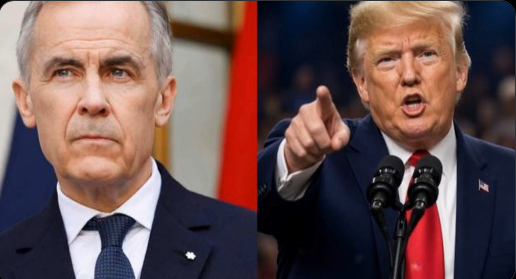
U.S. negotiators were pressing Canada last month to accept trade terms that, according to Prime Minister Mark Carney, would have effectively turned major Canadian industries into subsidiaries of their American counterparts or gradually driven them out of the country altogether.
The comments came Tuesday as Carney detailed the difficult negotiations between Canada and the United States, which had been aimed at resolving a series of trade disputes affecting both sides of the border.
With a U.S.-imposed Aug. 22 deadline approaching, Carney suspended the negotiations and called his negotiating team back to Canada.
“The attitude of the United States in these discussions, and subsequently, has been one that core Canadian industries either would be subsidiaries effectively of the United States industries, or would put in place terms where those industries would be gradually wound down in Canada and wiped out,” Carney told reporters outside his office.
“Of course, we’re not going to accept those terms.”
Despite the breakdown, Carney said the negotiations had produced elements that could have been mutually beneficial to both countries.
The prime minister said, however, that an “accumulation of issues, each of them serious enough” ultimately prevented Canada from agreeing to a deal. Among those concerns were the potential impact on the French language and Canadian culture, as well as restrictions that could have limited Canada’s ability to trade freely with other countries.
Carney said Ottawa remains prepared to return to negotiations if Washington is willing to engage in what he described as a serious discussion.
“When the Americans stop doing memes, stop throwing shade, stop trying to be tough and start being serious about having those discussions, we can have those discussions,” he said.
“It’s not constructive but that’s their democracy.”
Tensions continue to escalate
The collapse of the negotiations has been followed by increasingly hostile public exchanges between the two countries.
U.S. President Donald Trump and members of his cabinet have repeatedly criticized Canada in television appearances and on social media. Trump has also signed an executive order seeking to rename Lake Ontario as Lake America on U.S. maps, while the president and cabinet secretaries have shared AI-generated images and memes disparaging Canada.
Carney was expected to meet with labour groups in Ottawa on Tuesday to discuss the latest developments.
A source familiar with the meeting, who was not authorized to speak publicly, said it was scheduled for 2 p.m. Eastern time. Officials from unions representing workers in affected industries, particularly manufacturing, were invited to attend, the source said.
Unifor, Canada’s largest private-sector union, held a rally on Parliament Hill in late August, calling on the federal government to protect Canadian jobs as the trade dispute with the United States continues.
Carney also addressed tensions with Washington on Monday during a meeting with business leaders from companies including RBC, Bombardier, OpenText and Hydro-Québec.
Canadian counter-tariffs set to take effect
Canada’s counter-tariffs on almost $28 billion worth of U.S. products are scheduled to come into force on Sept. 8.
The Canadian measures will range from 15 per cent to 50 per cent and will cover a broad range of goods, including dairy products, steel, copper and certain beauty products.
The tariffs are Ottawa’s response to the 50 per cent duties imposed by Trump on $28 billion worth of Canadian goods, ranging from hockey sticks to honey.
The U.S. tariffs were partly imposed in response to a decision by all Canadian provinces except Alberta and Saskatchewan to stop stocking U.S. products on liquor-store shelves. That move followed American tariffs targeting steel, aluminum and automobiles.
Trump has also threatened to raise U.S. tariffs on Canadian automotive products from 25 per cent to 50 per cent in the new year, in response to Canada’s latest retaliatory measures.