




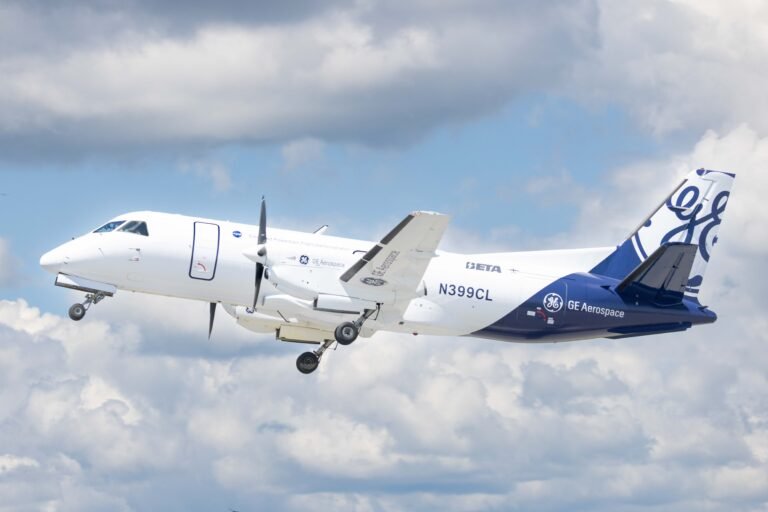
Transense Technologies plc, the UK-based developer of advanced sensor systems, and Unison, a GE Aerospace company, are highlighting a collaboration that has helped advance torque-sensing technology for next-generation aerospace propulsion.
The technology played a role in two significant hybrid-electric aviation milestones: the first hybrid-electric flight above 30,000 feet and the first hybrid-electric transatlantic crossing. The achievement was showcased at the prestigious Farnborough International Airshow.
The collaboration brought together Transense’s SAWsense torque-sensing technology and Unison’s expertise in aerospace engineering, industrialisation, qualification and integration.
Transense provided the underlying sensing technology, while Unison adapted and further developed it for an airborne demonstration at one of the world’s leading aerospace events.
The demonstration underlines ongoing efforts to develop technologies capable of supporting more efficient hybrid-electric propulsion concepts for future aircraft.
“This is an important milestone for advanced propulsion development and for the role of torque sensing in future aircraft propulsion technologies,” said Ryan Maughan, Managing Director of Transense Technologies plc. “We are proud to see our foundational SAWsense technology incorporated into Unison’s industrialised solution and successfully demonstrated at the prestigious Farnborough International Airshow.”
For aviation innovators, the demonstration offers a high-profile example of how specialised sensing technology can progress from laboratory development to flight-relevant applications. It also reflects the wider aviation industry’s efforts to develop next-generation propulsion systems.
“The flight demonstration at Farnborough reflects the strength of combining differentiated sensing technology with aerospace application engineering, qualification and integration,” said Josh Friedman, Engineering Leader at Unison. “We value our long-standing relationship with Transense and the role this collaboration plays in advancing next-generation propulsion technology development.”
The work illustrates how complementary expertise in sensing innovation and aerospace system application can contribute to the development of technologies being explored for next-generation aircraft propulsion. These systems are being pursued with the aim of improving efficiency, reducing emissions and extending aircraft range.
The collaboration therefore highlights the increasingly important role that advanced sensing technologies can play as the aviation sector continues to investigate hybrid-electric propulsion and other solutions for the future of flight.