



BNSF Railway, CPKC and CSX are preparing to seek extensive trackage rights across a combined Union Pacific-Norfolk Southern network if federal regulators ultimately approve the proposed transcontinental merger.
The three Class I railroads are not only opposing the $85 billion transaction. Their regulatory filings also detail the conditions and operating rights they intend to pursue should the Surface Transportation Board (STB) allow the deal to proceed.
Among the most significant areas of overlap is the Kansas City-St. Louis corridor. CPKC and CSX are both seeking access to infrastructure currently controlled by Union Pacific or Norfolk Southern, arguing that the remedy proposed by the merger applicants — granting trackage rights to Canadian National — would not restore meaningful competition.
The railroads laid out their positions in filings submitted Wednesday to the STB. Those documents provide an early look at the so-called responsive applications they expect to submit before the Nov. 18 deadline.
Several short line railroads have also filed requests seeking trackage rights and, in some cases, direct access to local customers.
All three Class I carriers are asking the STB to reject the UP-NS merger entirely. They argue that the transaction would weaken competition, damage the broader economy and fail to serve the public interest.
If regulators nevertheless approve the deal, however, each railroad says extensive conditions would be necessary to limit the competitive consequences.
BNSF put the issue bluntly in its filing, arguing that if regulators allow a transaction capable of fundamentally reshaping the U.S. rail industry, they must impose equally substantial remedies to protect shippers and the public.
The railroad stressed that even significant conditions would only mitigate part of the competitive harm it expects from the merger.
BNSF targets Norfolk Southern’s eastern network
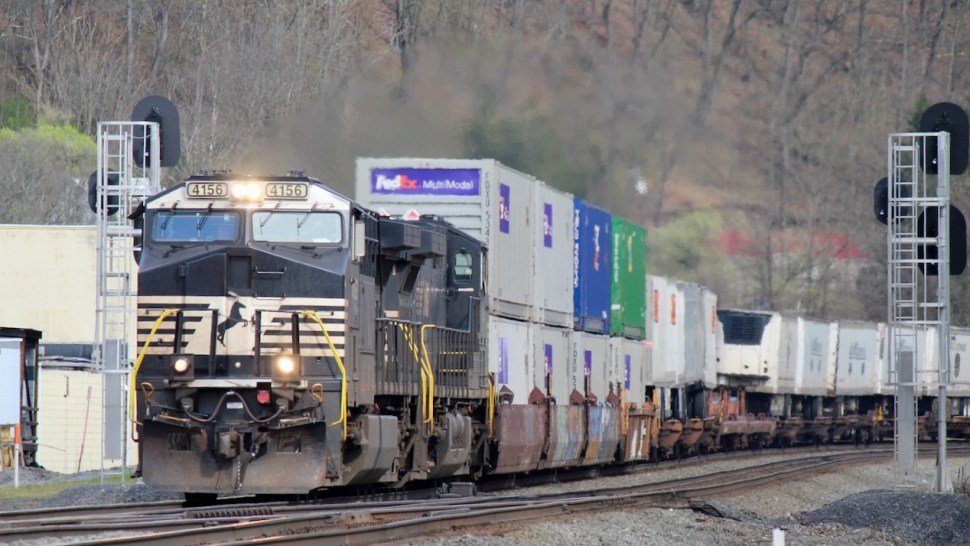
BNSF intends to seek 824 miles of trackage rights over Norfolk Southern’s Premier Corridor between Chicago and intermodal terminals in eastern Pennsylvania.
The requested rights would cover the route from Chicago to Bethlehem, Pennsylvania, including:
-
The Chicago Line from Chicago to Cleveland.
-
The Cleveland Line from Cleveland to Alliance, Ohio.
-
The Fort Wayne Line from Alliance to West Pitt, Pennsylvania.
-
The Pittsburgh Line from West Pitt to Harrisburg, Pennsylvania.
-
The Harrisburg Line to Wyomissing Junction, Pennsylvania.
-
Portions of the Reading Line and Lehigh Line east of Wyomissing.
The corridor is already an important intermodal route for BNSF and NS interline operations, particularly for their shared customer J.B. Hunt.
BNSF argues that the existing cooperation between the two railroads could be undermined after the merger. Today, BNSF and NS work together to provide intermodal services, but BNSF believes a combined UP/NS would have both the ability and the incentive to make BNSF less competitive on price and service.
According to BNSF, once its competitive role is restricted or eliminated, the merged railroad could charge higher prices.
The company therefore expects to submit a responsive application seeking overhead trackage rights on portions of the NS network between Chicago and eastern Pennsylvania.
BNSF also seeks a neutral Gulf Coast railroad
The Gulf Coast is another major concern for BNSF, particularly because the region contains large clusters of petrochemical facilities and generates substantial carload traffic.
BNSF wants the STB to require Union Pacific to establish a neutral switching or terminal railroad capable of directly serving facilities currently dependent on UP and BNSF rail service.
The railroad argues that many Gulf Coast shippers are effectively captive to the UP network because they lack competitive rail alternatives. That dependence can result in higher rates than those paid by customers served by multiple railroads.
BNSF believes the UP-NS merger would make the problem worse because Gulf Coast customers move substantial volumes toward eastern markets where NS and CSX currently compete.
After the merger, BNSF argues, UP could use its increased market power combined with its practice of bundling rail services for customers with multiple facilities — to impose even higher rates on captive shippers.
The proposed neutral carrier would give BNSF, UP and potentially other railroads equal access to rail-served customers in the region.
Such a structure could have a significant effect on the Gulf Coast market. Union Pacific currently operates the industry’s largest chemical franchise and serves approximately 900 customers in Houston alone.
Under BNSF’s proposal, the neutral terminal railroad could haul, switch or interchange traffic with UP and BNSF at nearby hand-off points.
The entity could potentially be jointly owned and managed by UP and BNSF, with other railroads participating depending on the geographic territory, or it could be operated by an independent short line or switching railroad.
CPKC seeks stronger and broader operating rights
CPKC plans to propose eight conditions designed to strengthen or protect its existing trackage rights over Union Pacific in Texas and over Norfolk Southern between Detroit and Chicago.
The Canadian carrier also intends to request new operating rights over UP infrastructure in Louisiana and Texas.
Additional requests will include trackage rights over NS in the Kansas City-St. Louis corridor, as well as new or modified trackage rights over UP in Kansas City and Chicago.
CPKC’s cross-border Texas network depends on UP trackage rights between Beaumont and Rosenberg, and again between Victoria and Robstown.
The railroad wants restrictions on the commodities it can move over those routes removed. It also seeks access to local shippers and connecting short lines.
CPKC further wants conditions that would reduce UP’s ability to delay or obstruct capacity investments needed to support CPKC’s growth. The railroad is also asking for defined service levels on the trackage-rights routes.
New Louisiana and Texas opportunities
In the Baton Rouge, Louisiana, area, CPKC plans to seek new rights to operate over UP trackage so it can reach local customers.
The railroad will also request new operating rights over UP’s Lufkin Subdivision between Shreveport, Louisiana, and Houston.
CPKC says that route could provide an alternative path if merger-related increases in traffic create congestion in the Houston terminal or between Houston and Livonia, Louisiana, where CPKC and UP currently share infrastructure.
CPKC challenges the Wylie terminal acquisition
Another major issue involves CPKC’s Dallas-area intermodal terminal in Wylie, Texas.
Norfolk Southern has exercised its right under the CPKC-NS Meridian Speedway agreement to acquire the Wylie terminal. NS currently handles most of the traffic entering and leaving the facility, primarily supporting the Atlanta-Dallas market.
CPKC wants the STB to prevent either NS or UP from acquiring the terminal.
The railroad argues that UP’s acquisition of NS would fundamentally change the competitive implications of the Wylie transaction.
Unlike NS, UP already operates two intermodal terminals in the Dallas area and competes directly with CPKC for traffic between Dallas and the U.S. Midwest.
CPKC therefore says that placing Wylie under UP’s control would put the facility in the hands of one of its principal competitors.
CPKC targets the Kansas City-St. Louis corridor
In the Midwest, CPKC wants trackage rights over Norfolk Southern’s former Wabash main line between Mexico, Missouri, and St. Louis.
It also wants related “close the gap” trackage rights over the Terminal Railroad Association between St. Louis and East St. Louis, Illinois.
CPKC considers the NS route between Kansas City and St. Louis superior to its own more circuitous route through Roodhouse, Illinois.
The railroad therefore expects to ask the STB to require the merger applicants to grant CPKC trackage rights over part of the NS route.
The objective would be to improve CPKC’s competitiveness on Kansas City-St. Louis traffic moving to and from its own network, while also allowing the railroad to function as a bridge between BNSF and CSX.
CPKC also wants access to local customers along the NS route.
In Kansas City, CPKC will seek access to UP trackage in the terminal area so it can connect its Knoche Yard with the Kansas City Terminal Railway.
It also wants the STB to protect its rights to use the Polo Line’s UP-CPKC paired-track arrangement between Airline Junction and Polo, Missouri.
Detroit-Chicago rights also in focus
CPKC relies on Norfolk Southern trackage rights to connect Detroit and Chicago and wants those rights strengthened.
Among the requested changes are provisions governing service levels.
For the first time, CPKC wants those rights to cover traffic interchanged with Conrail in the Detroit area, traffic interchanged with the Ann Arbor in Milan, Michigan, and traffic moving to or from any new facilities CPKC may build around Detroit.
In Chicago, CPKC wants permission to enter and leave its Chicago-Michigan trackage rights at CP 502.
It also wants authority to operate between CP 502 and locations on the Indiana Harbor Belt, including Gibson Yard.
The railroad will additionally ask the STB to preserve its right to operate over UP’s Techy Line, which connects CPKC’s Bensenville Yard with its main line toward the Twin Cities through Milwaukee.
CSX focuses on Kansas City, Pennsylvania and Virginia
CSX is preparing three major requests if the UP-NS merger receives regulatory approval:
-
Access to Kansas City over UP’s line between St. Louis and Kansas City.
-
Better access to eastern Pennsylvania through trackage rights over Norfolk Southern.
-
Access to a key dockside terminal at the Port of Virginia through trackage rights over NS and Norfolk & Portsmouth Belt Line.
CSX says it wants conditions that would place it in a position to preserve competition that the merged railroad would otherwise eliminate, particularly in markets where UP/NS could exercise significant control over competing carriers and dependent shippers.
CSX challenges the proposed CN remedy
CSX is particularly critical of the merger applicants’ proposed solution for the Kansas City-St. Louis-East St. Louis corridor.
Union Pacific has addressed the network overlap with NS by reaching an agreement with Canadian National. Under that agreement, CN would receive access to the UP route if the merger is approved.
CSX argues that the remedy does not go far enough because CN is not positioned to replicate the competitive role of an eastern railroad.
According to CSX, it is the only carrier capable of restoring the east-west competition that would disappear following the merger.
The railroad says shippers currently have a genuine choice in the Kansas City-St. Louis corridor through combinations including UP-CSX and NS-BNSF, as well as NS-CPKC.
The merger would place both lines under common UP/NS control, eliminating the independent eastern railroad alternative that currently places pressure on pricing and service.
CSX also argues that CN cannot reproduce the eastern network footprint currently provided by either CSX or NS.
CSX proposes a 50% divestiture
CSX plans to seek a 50% divestiture and dispatching control of UP’s line between East St. Louis and Kansas City.
The request would also include Neff Yard in Kansas City.
CSX says direct ownership in the Kansas City Line would allow it to build a complete service linking Kansas City with its broader eastern network through the East St. Louis gateway.
The railroad considers that structure essential to restoring the Kansas City service alternative that the merger would otherwise eliminate.
Eastern Pennsylvania becomes another CSX target
CSX says trackage rights over Norfolk Southern would allow it to serve as a counterweight to NS’s intermodal dominance in a region located within a one-day drive of roughly one-third of the U.S. population.
The company expects to request rights over NS from Chambersburg through Harrisburg and Allentown to Manville, New Jersey.
Those rights would allow CSX to reach an independent terminal in Bethlehem, Pennsylvania, helping preserve interline options for shippers west of the Mississippi.
The requested routes specifically include:
-
The NS Lurgan Branch between Chambersburg and Harrisburg.
-
The NS Harrisburg Line between Harrisburg and Wyomissing Junction.
-
The NS Reading Line between Wyomissing Junction and Bethlehem.
-
The NS Lehigh Line between Wyomissing Junction, Allentown Yard and Bethlehem.
-
The NS Lehigh Line from Bethlehem across New Jersey to Manville Yard.
Port of Virginia access remains a major CSX priority
Virginia represents another important battleground.
Norfolk Southern is currently the only Class I railroad with access to the Port of Virginia’s Norfolk Intermodal Terminal.
CSX has spent years pursuing direct rail access to the facility through federal courts and the STB.
CSX argues that the existing NS operation does not create the same competitive concern because NS currently moves traffic for interchange with UP, BNSF and CPKC, whose transcontinental shipments pass through the Norfolk terminal.
According to CSX, NS currently has no systematic incentive to prevent those railroads from obtaining efficient interline access.
A combined UP/NS, however, would change that dynamic.
CSX believes the merged railroad would have both the ability and incentive to use NS’s exclusive on-dock rail access to the terminal — as well as control over the only line available to competing carriers — to direct transcontinental traffic toward UP’s network and away from BNSF and CPKC.
CSX therefore expects to request trackage rights over Norfolk & Portsmouth Belt Line and NS routes in the Norfolk area to reach the terminal.
CN details its own Kansas City agreement
Canadian National submitted a separate filing detailing its agreement with Union Pacific for access to the route connecting the St. Louis area with Kansas City.
CN has asked the STB to make the agreement a condition of approval for the UP-NS merger.
The railroad also anticipates acquiring connecting trackage rights over the Terminal Railroad Association through a separate filing.
CN additionally wants access to energy customers currently served by UP in Hillsboro and Carlinville, Illinois, as well as Des Moines and Avon, Iowa.
Those connections could be provided through haulage or trackage rights.
CN argues that the related agreements serve the public interest while preserving competition.
Norfolk Southern defends the merger
Norfolk Southern has been asked to respond to the filings from its competing railroads.
The company says it will address the issues raised in the regulatory record, while defending the merger on the basis of its expected economic and transportation benefits.
NS estimates that the transaction would shift approximately 2.1 million truckloads from roads to rail every year.
The railroad also says the merger could save shippers approximately $3.5 billion, savings that could ultimately be passed on to consumers.
In addition, NS projects the creation of approximately 1,200 new union jobs.
The company says those benefits have been reinforced by unprecedented voluntary commitments intended to provide strong protections and guarantee substantial public benefits.
Union Pacific, meanwhile, characterized the rival filings as evidence that competing railroads are concerned about facing a stronger competitor.
UP said its opponents are using the regulatory proceeding to pursue their own commercial interests rather than investing their own capital to improve service.
The railroad argues that the requested conditions would neither strengthen the U.S. supply chain nor benefit consumers.
Rival railroads have made similar demands before
The current filings follow a familiar pattern in the U.S. Class I railroad industry.
When a major merger creates a significantly larger competitor, rival railroads often seek operating rights, divestitures or other remedies designed to protect their competitive positions.
A similar situation emerged during the 1996 Union Pacific-Southern Pacific merger.
At that time, Conrail sought to acquire SP’s eastern network, including trackage extending from the Gulf Coast to St. Louis.
Regulators ultimately rejected Conrail’s proposal.
The subsequent Conrail split produced another example. Canadian National sought to build a Montreal-New Jersey route by proposing to acquire Conrail’s Montreal Secondary to Syracuse, New York, and the short line New York, Susquehanna & Western from Syracuse to New Jersey.
Norfolk Southern and CSX eventually reached a haulage-rights agreement that addressed CN’s concerns, prompting CN to withdraw its request to acquire the trackage.
A more recent example came during the regulatory review of the Canadian Pacific-Kansas City Southern merger.
CN sought to be compelled to divest itself of the KCS route between Springfield, Illinois and Kansas City, which would have provided it access to Kansas City.
Regulators rejected that request as part of the approval of the CP-KCS merger in 2023.
Thus the current UP-NS proceeding is following a familiar pattern. Competitors are trying to block a larger competitor from getting too much market power while at the same time trying to position themselves to get access to strategic infrastructure if the merger is approved.