




On September 16, the Hong Kong-flagged crude oil tanker Cospearl Lake (IMO 9337171) was nearing the end of its voyage to Dalian, China, carrying a crude oil cargo loaded the previous month in the Fujairah lightering zone in the Gulf of Oman.
The Chinese state-owned very large crude carrier (VLCC) was carrying around 2 million barrels of crude, but the cargo had not been loaded directly in the Persian Gulf. Shipping data indicates that the oil had instead been transferred from another tanker.
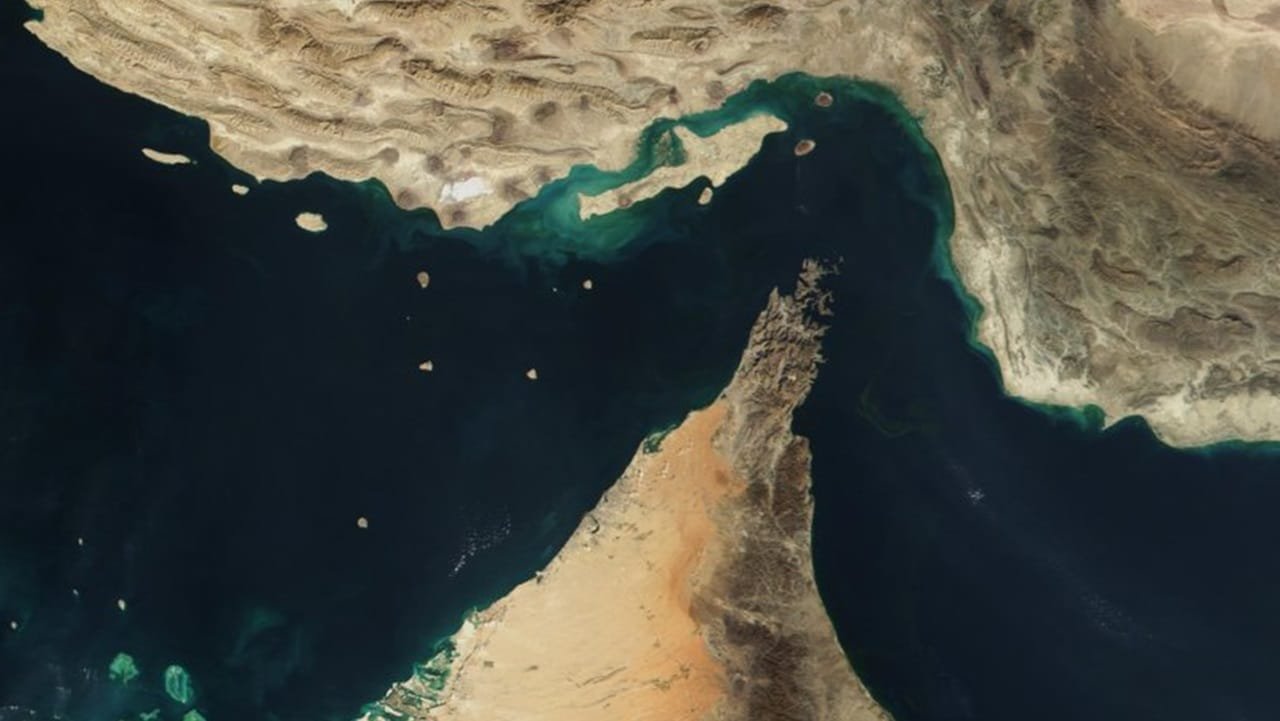
The voyage is one of a growing number of examples illustrating how some shipowners and charterers are changing the way they collect crude amid the continuing disruption around the Strait of Hormuz. Rather than sending tankers through the waterway, some operators are increasingly relying on ship-to-ship (STS) transfers in the Gulf of Oman.
The shift reflects the risks and rising costs associated with Hormuz transits. Tankers now operating shuttle services between the Gulf and the Gulf of Oman include vessels owned or controlled by regional oil and gas exporters, alongside tankers operated by selected shipowners prepared to accept the risks linked to crossing the Strait.
These shuttle movements have become an important part of the regional oil trading network, particularly for the United Arab Emirates (UAE), which has been at the forefront of the system. They are also contributing to the continuity of global oil supplies.
At the same time, shuttle operations are running alongside conventional, non-shuttle voyages in which tankers continue sailing directly toward their final destinations without transferring their cargoes to another vessel.
The flexibility of the shuttle network, however, comes with a significant security concern. The system is increasingly exposed to the risk of further Iranian attacks.
Iran’s Persian Gulf Strait Authority (PGSA) has signaled that it is monitoring tankers participating in STS transfers and has warned other vessels against “cooperating” with them. The authority has so far placed more than 70 vessels, both tankers and non-tankers, on its so-called blacklist of “non-compliant” ships that do not follow what it describes as “Iranian arrangements” in the waterway.
Two tankers illustrate how the shuttle trade is developing
The Cospearl Lake, which is linked to Cosco Shipping Corp, was among the first China-associated tankers to successfully leave the Strait of Hormuz in April during a short-lived ceasefire. The vessel had spent weeks stranded in the Gulf region because of the Iran war.
On April 11, the tanker departed the region carrying an Iraqi cargo of Basrah Medium crude, which had been loaded in early March. It used an Iran-controlled route to leave the area.
Since then, available data from Kpler and MarineTraffic shows that the Cospearl Lake has not been observed making another transit of the waterway. Instead, the tanker loaded Middle Eastern crude at least twice between June and August in the Gulf of Oman.
Toward the end of August, it also participated in a ship-to-ship crude oil transfer.
Tracking every vessel involved in the STS chain is not always straightforward. In some cases, the tankers used to shuttle and transfer cargoes remain unidentified or cannot be fully confirmed.
Another vessel provides a clearer picture of how the system works.
The Mombasa B (IMO 9739501) is among the tankers moving oil from the Gulf region toward the Gulf of Oman. Its operations illustrate how crude can be ferried to the transfer area and how regional state-owned companies, including the UAE’s ADNOC Logistics & Services, are using vessels under their control to sustain and expand the shuttle network.
The Mombasa B’s activity also highlights the level of risk involved. Despite being targeted in an Iranian attack in July, the tanker subsequently returned to the Strait of Hormuz.
The VLCC was chartered by the UAE’s ADNOC from Sinokor Maritime, its owner. According to a Bloomberg report, Sinokor began leasing tankers to the UAE for shuttle operations from at least mid-April.
Shipping data from Kpler and MarineTraffic shows that the Mombasa B entered the Persian Gulf region in ballast on April 11, using an Iran-controlled route around Larak Island.
It has since moved repeatedly between terminals in the Gulf, where it loads cargo, and the Gulf of Oman, where those cargoes are transferred to waiting tankers.
Since June, the Mombasa B has been involved in shuttle runs, many of them carried out as dark transits, meaning the tanker does not transmit AIS data. This has been particularly common while crossing the Strait of Hormuz.
On July 13, Iranian forces targeted the Mombasa B while it was transiting the waterway. The UAE Ministry of Defense said the tanker had been hit by cruise missiles.
The attack killed one Indian crew member and injured eight other seafarers. The tanker remained in service despite the attack, although it suffered material damage after a fire broke out onboard. The fire was eventually brought under control.
The Mombasa B has since been included on Iran’s list of 77 “non-compliant” vessels.
UAE expands capacity as shuttle network adapts
The UAE has taken a leading role in the VLCC shuttle trade while also expanding its shipping capacity.
On August 7, ADNOC Logistics & Services (L&S) announced the acquisition of six VLCCs on the secondary market, with delivery scheduled for the third quarter of 2026.
The UAE is not alone in relying on tankers for shuttle activity. Other regional countries, including Kuwait, have also been using their vessels for similar operations.
ADNOC’s VLCC fleet is not limited to transporting Emirati crude. Available data supports reports that some ADNOC tankers have been loading Iraqi Basrah crude and then crossing the Strait of Hormuz through the U.S.-facilitated Omani corridor.
That activity points to a broader regional network designed to keep oil moving despite the security risks around the Strait. As the network expands, those risks are also expected to evolve.
One example is the Liberia-flagged Al Maqam (IMO 9732577), a VLCC that one shipping database identifies as having been owned by ADNOC since August 2026.
In August, the tanker loaded around 2 million barrels of Basrah Medium crude in Iraq, according to figures published by Iraq’s State Oil Marketing Organization (SOMO).
The scale of the wider oil flow has also shifted.
Kpler data shows that crude and condensate loadings from the Persian Gulf reached approximately 5.8 million barrels per day (mbpd) in August, including volumes loaded in the Gulf of Oman through STS transfers.
Those levels have risen significantly in September, reaching around 8 mbpd so far.
Iraqi loadings deep inside the Gulf have also increased. They stood at approximately 2.6 mbpd so far this month, compared with 1.6 mbpd in August and roughly 984,000 barrels per day in July.
Some additional Iraqi barrels may also be attempting to leave the region through dark shipments without AIS signals or through shuttle tankers, meaning those volumes may not yet be reflected in the available figures.
For buyers of Iraqi crude, the market has consequently developed another option. Bloomberg reported on August 27 that buyers can now reportedly arrange to collect Iraqi cargoes through STS transfers in the Gulf of Oman rather than loading them directly inside the Gulf.
A flexible workaround, but not a return to normal
The shuttle trade is becoming as important as existing regional oil pipelines that countries such as the UAE and Saudi Arabia use to divert part of their oil flows away from the Strait of Hormuz in retaliation for Iranian threats.
Saudi Arabia could also look at expanding the use of STS transfers in the Gulf of Oman.
That prospect gained prominence after last week’s attack on the kingdom’s East-West pipeline that forced a halt in exports from Saudi Arabia’s Red Sea terminals.
But the growth in shuttle operations should not be taken as a return to pre-war conditions.
Average loading volumes in the Gulf region prior to the war were around 20 mbpd of non-Iranian crude, condensate and oil products. Today’s shuttle activity is nowhere near enough to bring back that level with the same traditional trading architecture.
At its heart, the shuttle model was a wartime disruption workaround. It is flexible enough to keep oil flowing, but it also requires more tankers as volumes increase. This is less efficient than traditional terminal loading where cargoes are loaded directly onto vessels bound for their import destinations.
Another major limitation is security. The shuttle system does not eliminate the threat of Iranian attacks, and there is already evidence that some of the tankers involved in these operations have been hit.
There is also the potential for further escalation.
Iran’s crude oil loadings fell to under 500,000 barrels a day in August, compared to around 2 mbpd earlier in 2026, Vortexa said. If the U.S. naval blockade keeps those volumes constrained for a long time, Iran could try more aggressively to disrupt shuttle operations.
In that scenario, the Omani corridor would be vulnerable and risks could also remain high in the Persian Gulf where Iranian forces may have greater visibility in some areas, including Iraqi waters.
The security picture was underscored on September 9 when an unknown projectile struck a storage tanker carrying fuel oil in Iraqi waters.
For now, shuttle tankers have opened another route to keep crude flowing around one of the world’s most strategically sensitive waterways. But this same network that provides flexibility also places more ships directly into the evolving security environment around the Strait of Hormuz.