



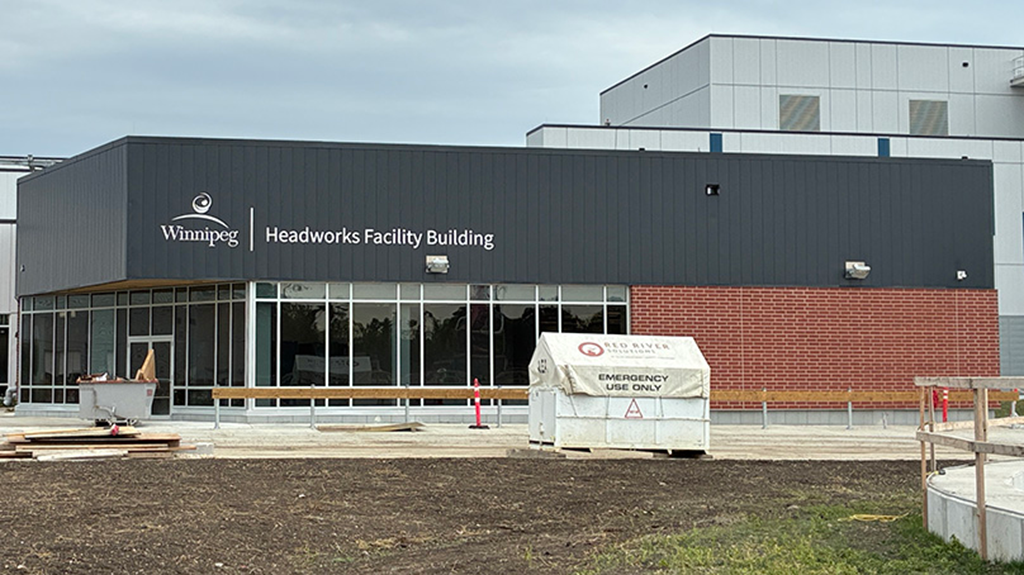
A major stage in Winnipeg’s long-term wastewater infrastructure program has been reached, with the city confirming that wastewater is now flowing through the newly constructed headworks facilities at the North End Wastewater Treatment Plant (NEWPCC).
The facilities form part of the multibillion-dollar North End Wastewater Treatment Plant Upgrade Projects, a program that represents the largest capital project in the City of Winnipeg’s history, with an estimated overall cost of $3.1 billion.
The NEWPCC currently handles around 70 per cent of Winnipeg’s wastewater. The newly completed headworks facilities serve as the first stop for wastewater entering the plant.
According to the city, wastewater arriving from deep underground is collected at the headworks before being pumped up to ground level. At that stage, large pieces of debris and grit are removed from the flow.
This initial treatment stage is essential to protecting the rest of the plant and ensuring that subsequent treatment processes can operate effectively.
The headworks project, covering the Headworks, Biosolids and Nutrient Removal Facilities portion of the upgrade program, carries an award value of approximately $272 million. The project is located at 2230 Main St. in Winnipeg and falls within the public water and sewer sector.
Aecon also welcomed the milestone, saying it is “proud to be helping deliver this vital project through Red River Solutions,” its joint venture with Oscar Renda Contracting of Canada Inc.
Meanwhile, the City of Winnipeg says work is progressing on the two remaining components of the overall upgrade program.
Project 2: Biosolids facilities
Construction on the biosolids facilities is expected to begin imminently.
Project 3: Nutrient removal facilities
The nutrient removal facilities project is currently in the procurement stage. Once completed, the facility will treat the liquid portion of wastewater before it is discharged into the river.
With wastewater now moving through the new headworks, Winnipeg’s broader effort to modernize one of its most important environmental and municipal infrastructure systems has entered another significant phase.