



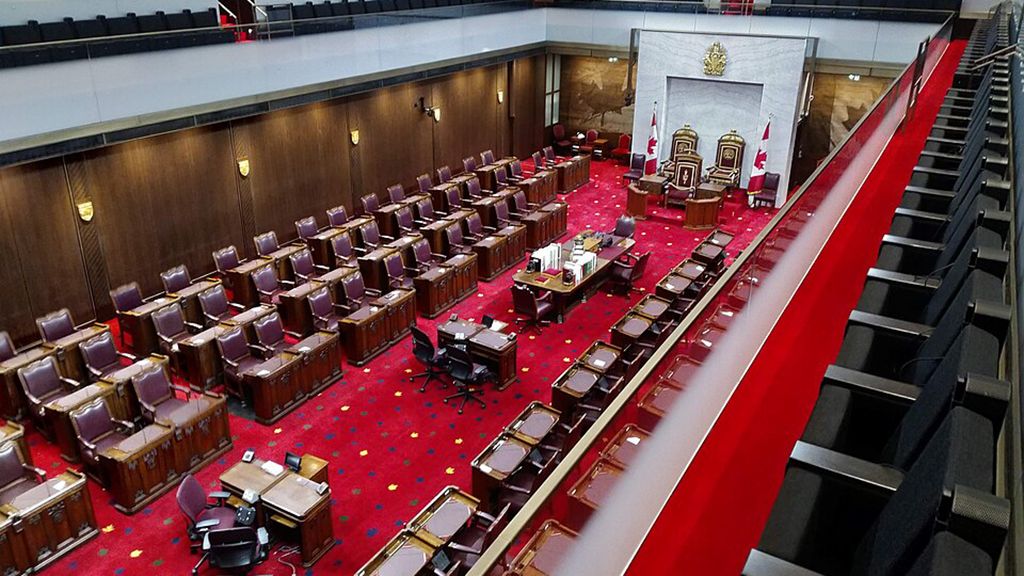
Members of Parliament return to Ottawa Monday after the summer recess, facing a fall sitting dominated by economic policy, trade relations and the consequences of the rapidly intensifying dispute with the United States. The summer break was marked by escalating tariffs, political departures and a renewed effort by the Liberal government to strengthen Canada’s relationships beyond its southern neighbour.
Prime Minister Mark Carney has said his Liberal government intends to bring forward some of the most consequential legislation seen in decades during the current sitting. Government House leader Steven MacKinnon has described significant economic legislation as the expected centrepiece of Parliament’s fall agenda. Finance Minister François-Philippe Champagne is also preparing new legislation to extend relief on the excise tax on fuel, while the government works toward a fall budget.
The parliamentary balance has also shifted significantly since the last election. The Liberals now hold a majority in the House of Commons, with 173 seats after a series of floor crossings and byelection results over the past year. That change moved the government from a fragile minority position to a narrow majority, reducing the opposition parties’ influence over the parliamentary agenda.
Six House of Commons seats remain vacant and will have to be filled through byelections in the months ahead. Among the latest departures is Conservative MP Larry Brock, who resigned his Brantford-Brant seat last week to return to his previous career as a Crown prosecutor.
On Sunday, Conservative Leader Pierre Poilievre held a campaign-style rally in Brantford, Ont., in the riding located just west of Hamilton. He announced Brantford Mayor Kevin Davis as the Conservative candidate for the upcoming byelection, although the vote has not yet been officially called.
The New Democratic Party enters the new session in a substantially smaller parliamentary role. Party leader Avi Lewis remains without a seat in the House, while longtime MP Alexandre Boulerice has left federal politics to seek a provincial seat in Quebec. The departures leave the NDP with only five MPs in Ottawa.
The Liberals have also experienced prominent departures. Steven Guilbeault resigned in August after expressing frustration with the direction of the Liberal Party under Carney, particularly its shift on energy and environmental policy. His departure followed broader disagreements over the government’s evolving approach to energy development and climate policy.
Energy infrastructure has nevertheless remained high on Ottawa’s agenda. During the summer, the federal government moved closer to creating the conditions for a new pipeline to Canada’s West Coast. Carney and Alberta Premier Danielle Smith announced in July that they had reached an arrangement intended to support a future project to the southern British Columbia coast through a public-private partnership.
At the same time, Canada’s trade relationship with the United States deteriorated sharply. President Donald Trump continued to increase pressure on Ottawa, including threats to impose further tariffs on steel and automobiles if the two countries fail to reach an agreement.
The latest breakdown in negotiations came in August, when Canada pulled its negotiating team out of discussions with the White House at the last minute. Ottawa characterized the proposal on the table as unacceptable, with Carney arguing that Canada could not accept what the United States was asking for. U.S. officials have presented a different account of the negotiations and disputed Ottawa’s assessment of the proposed terms.
The collapse of the talks was followed by another round of tariffs from Washington and countermeasures from Ottawa. Trump subsequently intensified his rhetoric toward Canada, including measures surrounding the renaming of Lake Ontario as “Lake America” for U.S. federal purposes. The U.S. executive order was formally issued in August, while Canadian users continue to see the lake’s traditional name on major mapping services.
Carney, meanwhile, has accelerated his international travel as he seeks to strengthen Canada’s economic relationships with countries outside the United States and attract fresh investment. His diplomatic agenda has increasingly focused on Europe and other international markets as Ottawa pursues greater diversification. (AP News)
Over the past week, Carney travelled to Strasbourg, France, to address the European Parliament. The visit came after European Commission President Ursula von der Leyen raised the possibility of Canada becoming the European Union’s first “associate member,” a proposed status that does not currently exist within the EU. Carney subsequently endorsed the broader goal of deeper Canada-EU cooperation while emphasizing that any future arrangement would have to respect Canadian sovereignty.
Carney also made a brief visit to the United Kingdom for a bilateral meeting with Prime Minister Andy Burnham. Back in Canada, he hosted the country’s first national investment summit in Toronto, a two-day event aimed at attracting capital and highlighting major investment opportunities. Former prime minister Stephen Harper took part in the summit and delivered its closing remarks.
The pace of Carney’s schedule became a topic of conversation when he addressed his caucus on Friday. During his remarks, he corrected himself after referring to the period as “seven weeks” rather than “seven days.”
“It felt like seven weeks, but it was seven days. But this is the pace we need,” Carney said.
The prime minister is due in New York this week for meetings linked to the United Nations, although he is not scheduled to address the General Assembly. More international travel is expected during the fall as several major summits approach.
With Parliament back in session, the government will therefore have to manage a combination of domestic economic legislation, a changed parliamentary landscape, unresolved trade tensions with the United States and an expanding effort to build stronger economic partnerships around the world.