




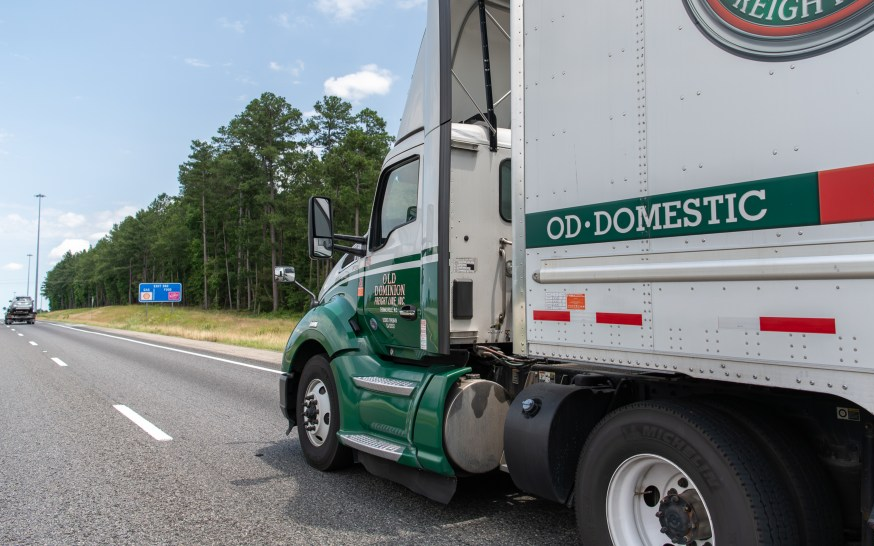
Old Dominion Freight Line has announced a 4.9% general rate increase (GRI) covering various tariff codes, effective Oct. 5. The timing is notable: the less-than-truckload carrier is introducing the increase one month earlier than last year, when its GRI was itself moved forward by a month.
LTL carriers typically apply GRIs once a year to standard tariff codes. The announced percentage represents the expected average adjustment to base rates across different lanes and weight classes. Carriers use these increases to help offset inflationary costs and finance investments in capital expenditures.
Last year, Old Dominion’s (NASDAQ: ODFL) GRI was also expected to average 4.9%.
“To continue meeting our customers’ expectations and supporting the commitments we make to them, we must continue to invest in the strength, capacity, and efficiency of our service network and technology systems,” said Greg Lawrence, vice president of pricing services, in a news release.
He added that the latest GRI is intended to help offset continued cost pressures tied to real estate, equipment, technology, and competitive wages and benefits for employees.
LTL carriers keep moving rate increases forward
Old Dominion is not alone in adjusting the traditional annual timetable.
ArcBest ([NASDAQ: ARCB]) again brought forward its GRI this year. The company implemented a 5.9% increase for LTL services across both of its business units on June 22. That was approximately six weeks earlier than the anniversary of last year’s increase, continuing a pattern in which ArcBest has used an 11-month cadence in recent years.
Saia ([NASDAQ: SAIA]) implemented a 7.1% general rate increase on July 6. Its latest increase was 120 basis points higher than the previous year’s hike and was introduced three months earlier.
The latest round of increases is taking place as the U.S. industrial economy continues to show signs of strength.
The Institute for Supply Management’s Manufacturing PMI remained in expansion territory for an eighth consecutive month in August. The index registered 54.6, just 100 basis points below the four-year high reached in July. A reading above 50 indicates expansion, while a reading below 50 signals contraction.
The new orders subindex, which provides an indication of future activity, fell by 3 percentage points in August but remained firmly in growth territory at 53.7.
Carrier tonnage typically follows the new orders index with a lag of roughly three months.
Pricing power remains a focus
Old Dominion’s latest GRI underscores a broader trend among LTL carriers: companies are continuing to move rate increases forward as the industry’s favorable pricing outlook remains in place.
The increases also highlight the cost pressures facing carriers, particularly in real estate, equipment and labor, as the sector enters a growth phase supported by solid manufacturing demand.