



For shippers, predictable cargo flows are becoming increasingly valuable as global transportation networks face congestion and disruption. Port-to-inland routes can provide the kind of stability companies need to make supply chains more resilient, Brian Harold, managing director of APM Terminals Mobile, told Supply Chain Dive.
“What we’re seeing now is more about diversification,” Harold said. “They don’t want to put all their eggs in that one basket.”
The strategy is also focused on reducing supply chain risk. When cargo depends heavily on a single port reached through routes such as the Panama Canal or the Red Sea, disruptions in either corridor can quickly create significant problems for shippers.
According to Harold, moving cargo from ports into inland locations can help reduce costs, limit empty miles and make better use of available rail capacity compared with heavily congested ocean freight corridors.
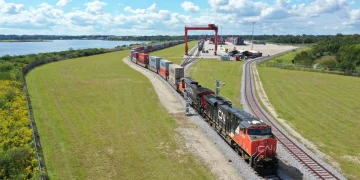
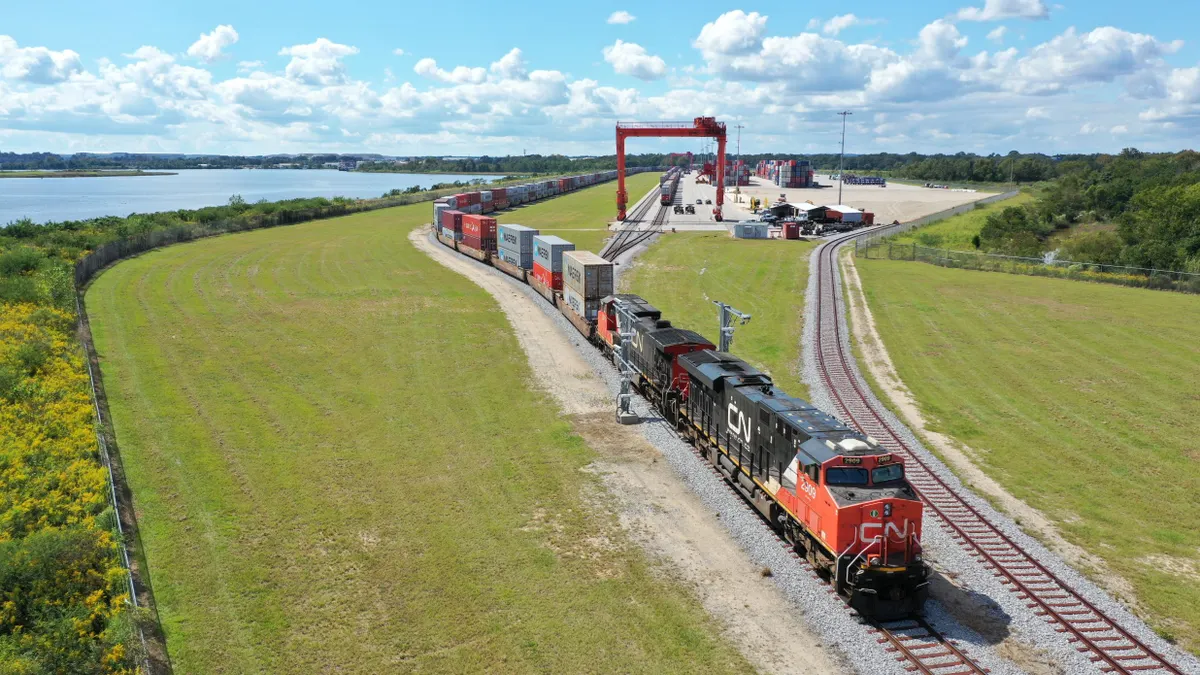
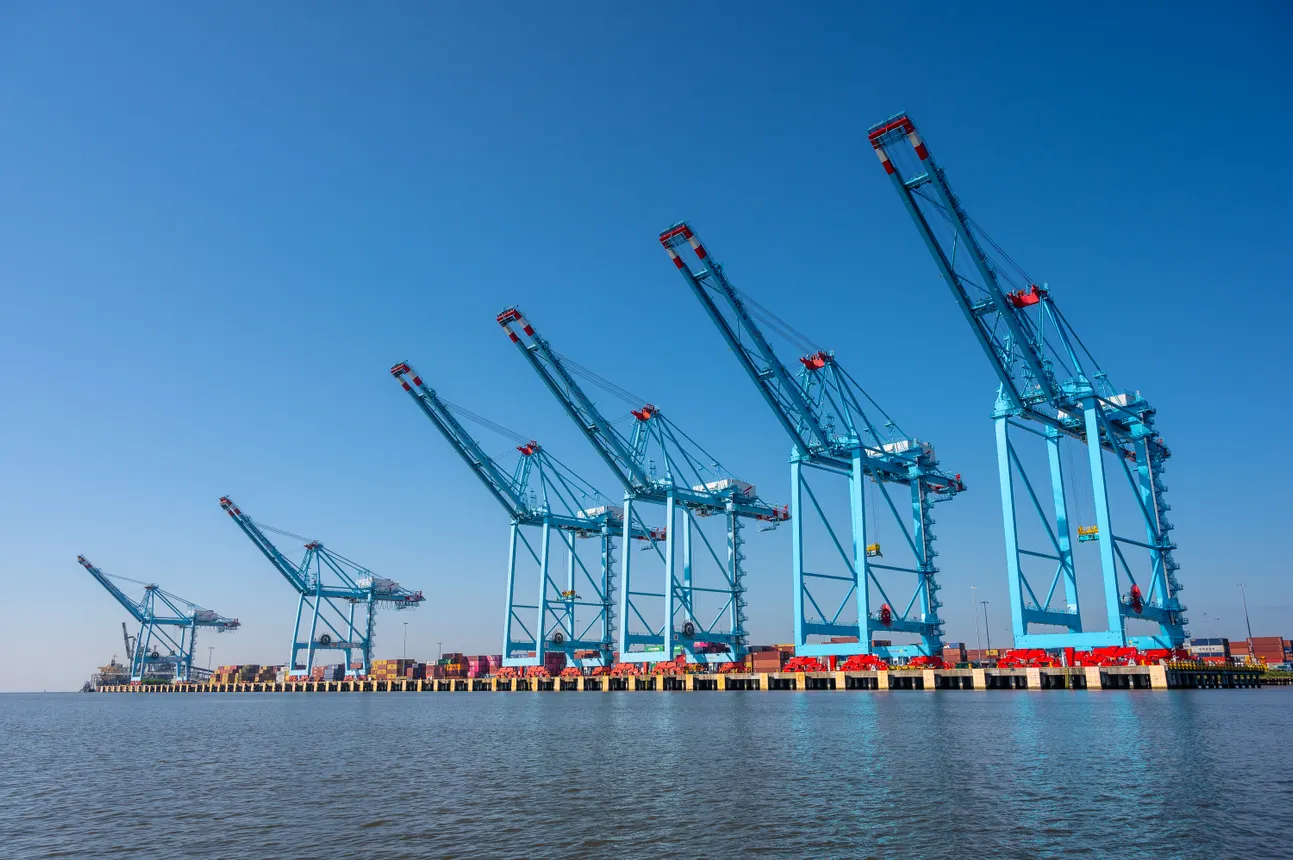
At the Port of Mobile, APM Terminals is the only container terminal operator. The terminal opened in 2008, while APM Terminals added its rail facility in 2016. Before that, Mobile, Alabama, had no intermodal rail connection, Harold said.
The port currently handles about 600,000 TEUs annually, with the capacity to increase gateway throughput to 2.5 million TEUs.
“We’re investing a lot of money in the gateway right now, along with the state, deepening and widening the ship channel,” Harold said. “We’ve expanded the terminal five times within the past 10 years, and invested over a billion dollars.”
Lower costs by reducing empty miles
Shippers seeking to control transportation costs can benefit from inland port routes because they can replace long truck movements with shorter drayage moves, reducing the distance cargo has to travel between its origin and destination, Harold said.
One of the challenges with traditional long-haul moves is the additional equipment repositioning involved. A shipper may have to move a container by truck for 300 miles and then return the chassis another 300 miles. In another scenario, a container picked up at a port may travel a considerable distance by truck, while the shipper remains responsible for returning the empty container to the port after unloading.
Moving that transfer point inland can significantly change the economics.
“If you can have a shipper that instead of trucking 300 miles each way, can now just have the truck move … about a mile or two to an inland port site, and then the railroad takes it from there, that’s a huge win and usually a very good positive impact to their overall supply chain cost,” Harold said.
Shippers also compare the cost of trucking with rail, as well as rail with barge, when determining the most efficient transportation option.
State regulations can add another consideration. Harold noted that some states impose additional costs when cargo travels overweight by truck.
Longer truck hauls can also be complicated by hours-of-service requirements, which limit how long drivers can operate during a given day.
Port of Mobile shows how inland connectivity can work
The Port of Mobile provides an example of how a gateway can connect directly into inland transportation networks. APM Terminals operates the port’s single container terminal, while automotive cargo represents a major business sector in Alabama.
Automotive supply chains are particularly complex, Harold said, because manufacturers work with numerous Tier 1 and Tier 2 suppliers, each moving significant amounts of cargo.
“It requires flexibility within a port to really be able to cater to the needs of automotive manufacturers,” he said.
The consequences of delays can be substantial. If automotive manufacturers do not receive required cargo, an entire production line can potentially be shut down, with costs reaching thousands of dollars per minute for shippers, Harold said.
For those companies, the ability to move cargo quickly from vessel to an inland location can provide an important buffer.
“If a shipper can just basically expedite their cargo when it comes off a vessel within 24 hours to an inland site, right next to their distribution center or their manufacturing center, then that’s a huge plus for the stability of their supply chain,” Harold said.
Class 1 rail access provides a competitive advantage
Access to Class 1 railroads is another factor strengthening Mobile’s appeal for shippers.
Harold pointed to Canadian National as an example. CN does not have access to ports on the U.S. East or West coasts, but it does connect to Gulf ports. That gives the railroad access to an opportunity that is less exposed to the constraints affecting other major coastal gateways.
Rail capacity is also an important consideration when comparing inland routes with more heavily used corridors.
Harold said East Coast and West Coast rail lanes are already heavily utilized, leaving relatively little additional capacity available on a consistent basis.
“Whereas from the Gulf for containerized cargo, there’s a tremendous amount of capacity available on these rail lines,” he said.
For shippers looking to diversify transportation options and reduce exposure to disruptions, those inland connections offer an alternative that combines shorter truck moves with available rail capacity.