


• Latest
  • Trending
How restaurants can mitigate rising fuel costs

How restaurants can mitigate rising fuel costs

October 5, 2026
STG Logistics announces new CEO, board members

STG Logistics announces new CEO, board members

October 5, 2026
UK parcel carrier Evri to enter US delivery market with Cross Border Connect acquisition

UK parcel carrier Evri to enter US delivery market with Cross Border Connect acquisition

October 5, 2026
ADVERTISEMENT
C.H. Robinson to acquire RXO for $5.8 billion, bringing two 3PL powerhouses together

C.H. Robinson to acquire RXO for $5.8 billion, bringing two 3PL powerhouses together

October 5, 2026
Costco CFO stands by tariff-refund strategy as churro makes a limited U.S. return

Costco CFO stands by tariff-refund strategy as churro makes a limited U.S. return

October 5, 2026
USPS extends delivery expectations for shipments outside the contiguous U.S.

USPS extends delivery expectations for shipments outside the contiguous U.S.

October 5, 2026
flydubai partners with Unilode to strengthen ULD management as cargo operations expand

flydubai partners with Unilode to strengthen ULD management as cargo operations expand

October 5, 2026
Air Cargo Pressure Builds Unevenly as Q4 Peak Approaches

Air Cargo Pressure Builds Unevenly as Q4 Peak Approaches

October 5, 2026
ISEE partners with Holman to accelerate autonomous yard truck deployments

ISEE partners with Holman to accelerate autonomous yard truck deployments

October 5, 2026
FMCSA brings back 30-day HOS relief for truckers responding to emergencies

FMCSA brings back 30-day HOS relief for truckers responding to emergencies

October 5, 2026
Hapag-Lloyd’s Zim takeover heads for reset as Israel requires new review

Hapag-Lloyd’s Zim takeover heads for reset as Israel requires new review

October 5, 2026
Optimus Technology acquires SmartHop Freight Platform

Optimus Technology acquires SmartHop Freight Platform

October 5, 2026
C.H. Robinson to acquire RXO in major 3PL deal

C.H. Robinson to acquire RXO in major 3PL deal

October 5, 2026
  • Home
  • About Us
  • Press Room
  • Podcasts
  • Media Kit
  • Contact Us
  • Careers
Monday, October 5, 2026
  • Login
  • Register
The Logistic News
  • Logistic
  • Air
  • Maritime
  • Land
  • World
  • Business
  • Tech
  • Events
  • Advertise
No Result
View All Result
  • Logistic
  • Air
  • Maritime
  • Land
  • World
  • Business
  • Tech
  • Events
  • Advertise
No Result
View All Result
The Logistic News
No Result
View All Result
Home Business

How restaurants can mitigate rising fuel costs

Optimising delivery frequency, consolidating shipments and improving route planning can help restaurants contain rising transportation costs as fuel prices continue to put pressure on logistics budgets.

The Logistic News by The Logistic News
October 5, 2026
in Business, Land, Logistic
Reading Time: 3 mins read
0
How restaurants can mitigate rising fuel costs
ADVERTISEMENT

Restaurant operators can consider several parts of their distribution networks to minimize the effect of rising logistics and fuel costs, such as delivery frequency, shipment size and route optimization, according to supply chain experts.

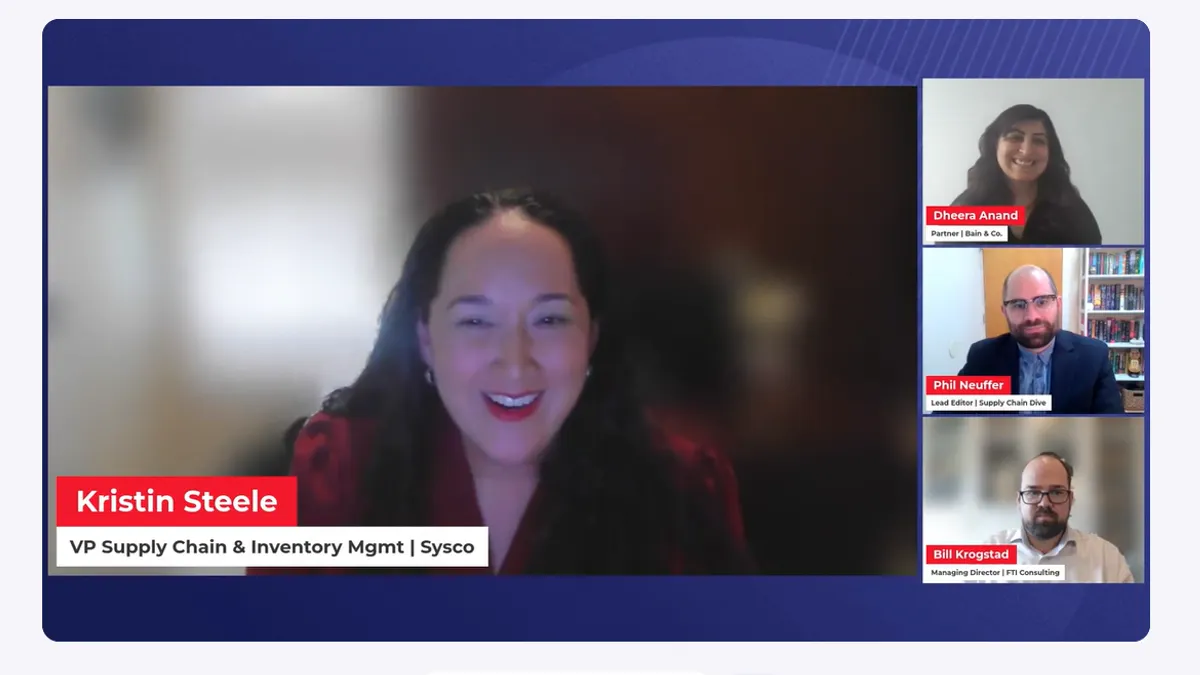
Bill Krogstad, managing director at FTI Consulting, said restaurants should look at how often the deliveries take place and how much product is moved during each drop, speaking at a virtual event hosted by Restaurant Dive and Supply Chain Dive.

The issue has come to the forefront as shippers encounter a range of logistics challenges in 2026 including rising fuel and diesel costs. The disturbances in the Strait of Hormuz have put pressure on oil supply and transportation costs have become even more uncertain.

ADVERTISEMENT

Gas prices were $4.47 per gallon as of Sept. 29, up $1.35 year-over-year, according to data from the Energy Information Administration. Diesel prices climbed to $6.38 per gallon during the same period, a $2.63 increase from the year prior.

One opportunity relatively simple is re-think frequency of delivery.

“If you can move a store from a restaurant from five deliveries a week to four, you’re obviously going to get some fuel savings right there,” Krogstad said.

However, restaurants need to think about the trade-offs of reducing the number of deliveries, such as available storage capacity and how often products need to reach individual locations.

Route optimization can also be key to keeping fuel consumption in check. It also enables restaurants and their logistics partners to evaluate whether trucks are being used efficiently and whether enough locations are being served on each trip to make the route economically and operationally viable.

“Really looking at your route optimization, making sure you’re getting as many restaurants on a truck that will fill that truck [and] make sense logistically I think is critical to reducing your fuel expenses.”

Another choice is freight consolidation, especially for smaller companies that don’t have enough volume to fill a truck. Less-than-truckload services reduce the entry cost of transportation by sharing capacity among shipments from multiple customers.

But the approach can also have trade-offs, such as more stops and possibly longer transit times.

Transportation providers are also seeking to recoup higher operating costs, and are passing on fuel surcharges from ocean carriers and parcel carriers. Krogstad said reviewing existing freight agreements could therefore be another opportunity to identify savings.

Some fuel surcharge agreements were negotiated years ago and may not have been revisited since. Companies should therefore review the suitability of their existing contracts and whether the terms still apply in the current market environment.

Beyond frequency of delivery, restaurants can be more segmented in their distribution networks.

“Companies can segment the delivery frequency and drop sizes based on specific characteristics of their networks,” said Dheera Anand, partner at Bain & Company. This could include grouping SKUs by volume, geography and service levels required.

Existing capacity can also be better utilized by improving the utilization of trucks and distribution centers. Efficient routing and improving mileage on delivery routes can further help in reducing transportation expenses.

“Early warning systems” is another area of increased focus, which can provide greater visibility and support exception management.

When restaurants and their logistics teams can identify potential disruptions before they affect operations, they have more options to respond.

“If you can see a late shipment or a capacity constraint a little bit earlier, then you have more options to reroute, to transfer at potentially a lower cost than you do when it’s happening right in the moment,” said Anand.

More visibility can also aid with scenario planning, especially when fuel prices can quickly change the economics of a supply chain.

“Fuel costs can be very volatile and can dramatically change your economics on sourcing, locations, delivery, cadence and your network configurations,” said Anand.

Restaurant supply chain teams can use scenarios for different fuel-cost situations to understand how transportation costs could impact their total cost-to-serve. Rather than merely reacting after costs have increased, companies can plan for potential changes and assess different sourcing, delivery and network configurations in advance.

Previous Post

flydubai partners with Unilode to strengthen ULD management as cargo operations expand

Next Post

USPS extends delivery expectations for shipments outside the contiguous U.S.

Next Post
USPS extends delivery expectations for shipments outside the contiguous U.S.

USPS extends delivery expectations for shipments outside the contiguous U.S.

Leave a Reply Cancel reply

Your email address will not be published. Required fields are marked *

A D V E R T I S E M E N T

Popular News

  • Drone Delivery Takes Flight: Amazon Partners with UPS for Trial Program

    Drone Delivery Takes Flight: Amazon Partners with UPS for Trial Program

    0 shares
    Share 0 Tweet 0
  • Rail Cargo Group Strengthens European Network with Captrain Netherlands Acquisition

    0 shares
    Share 0 Tweet 0
  • Automotive Inbound Logistics Market: Navigating Future Challenges

    0 shares
    Share 0 Tweet 0
  • Global Inflation Cools to Target After Three Years, Central Banks Face Policy Dilemma

    0 shares
    Share 0 Tweet 0
  • Dubai Mercantile Exchange Rebrands as Gulf Mercantile Exchange Following Saudi Tadawul Group Acquisition

    0 shares
    Share 0 Tweet 0

Recent News

STG Logistics announces new CEO, board members

STG Logistics announces new CEO, board members

October 5, 2026
UK parcel carrier Evri to enter US delivery market with Cross Border Connect acquisition

UK parcel carrier Evri to enter US delivery market with Cross Border Connect acquisition

October 5, 2026
C.H. Robinson to acquire RXO for $5.8 billion, bringing two 3PL powerhouses together

C.H. Robinson to acquire RXO for $5.8 billion, bringing two 3PL powerhouses together

October 5, 2026

Discover a new era of logistics reporting with The Logistic News, your go-to platform for breaking news, insightful features, and exclusive interviews shaping the global logistics and freight landscape. Trust us to deliver accurate, timely, and relevant information that empowers professionals and enthusiasts alike in navigating the intricacies of this vital sector.

Navigation

  • Home
  • About Us
  • Press Room
  • Podcasts
  • Media Kit
  • Contact Us
  • Careers
  • Privacy Policy
  • Terms of Use

© 2024 - thelogisticnews.com

Welcome Back!

Login to your account below

Forgotten Password? Sign Up

Create New Account!

Fill the forms below to register

All fields are required. Log In

Retrieve your password

Please enter your username or email address to reset your password.

Log In

SIgn Up Newsletter

This will close in 20 seconds

Manage Cookie Consent
We use technologies like cookies to store and/or access device information. We do this to improve browsing experience and to show (non-) personalized ads. Consenting to these technologies will allow us to process data such as browsing behavior or unique IDs on this site. Not consenting or withdrawing consent, may adversely affect certain features and functions.
Functional Always active
The technical storage or access is strictly necessary for the legitimate purpose of enabling the use of a specific service explicitly requested by the subscriber or user, or for the sole purpose of carrying out the transmission of a communication over an electronic communications network.
Preferences
The technical storage or access is necessary for the legitimate purpose of storing preferences that are not requested by the subscriber or user.
Statistics
The technical storage or access that is used exclusively for statistical purposes. The technical storage or access that is used exclusively for anonymous statistical purposes. Without a subpoena, voluntary compliance on the part of your Internet Service Provider, or additional records from a third party, information stored or retrieved for this purpose alone cannot usually be used to identify you.
Marketing
The technical storage or access is required to create user profiles to send advertising, or to track the user on a website or across several websites for similar marketing purposes.
Manage options Manage services Manage {vendor_count} vendors Read more about these purposes
View preferences
{title} {title} {title}
No Result
View All Result
  • Logistic
  • Air
  • Maritime
  • Land
  • World
  • Business
  • Tech
  • Events
  • Advertise

© 2024 - thelogisticnews.com