




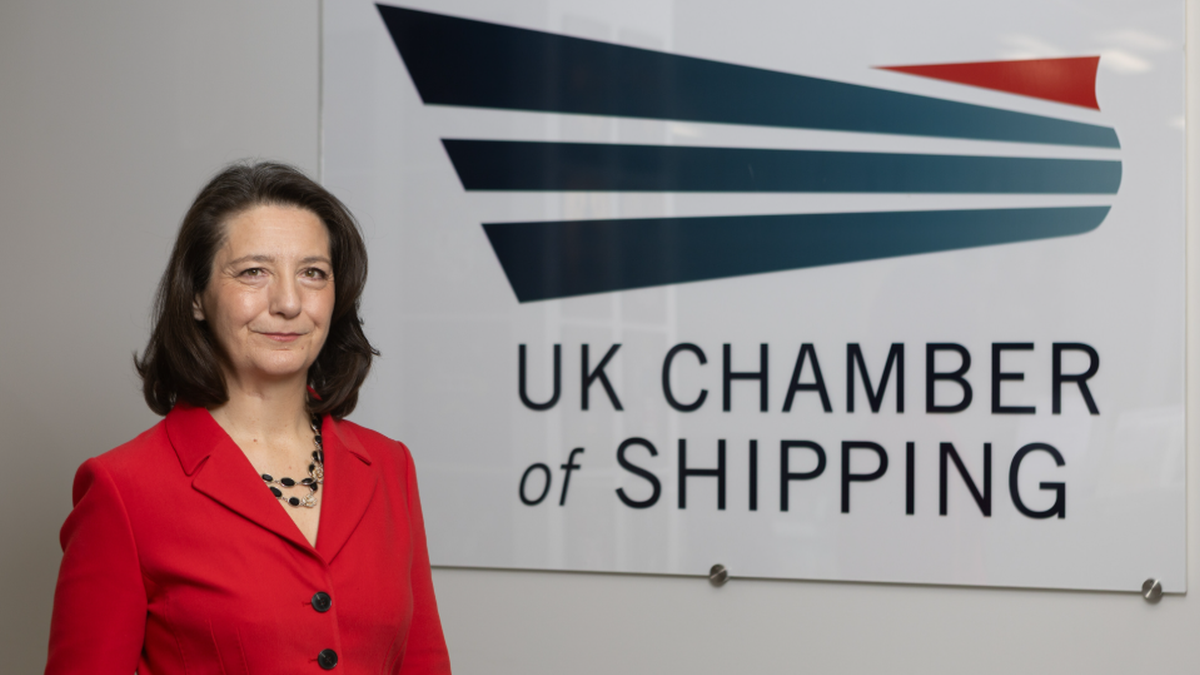
Karrie Trauth, Executive Vice President of Shipping and Maritime at Shell and president of the UK Chamber of Shipping (UKCS) since March, has set out a clear objective for her tenure: strengthening the United Kingdom’s position as a competitive maritime nation.
Speaking to Seatrade Maritime News on the sidelines of the UK Chamber of Shipping’s second maritime conference in London, Trauth said the organisation’s priority was straightforward: making the UK a more competitive shipping nation.
For Trauth, competitiveness extends well beyond the performance of the shipping sector itself. It encompasses attracting investment and shipowners and operators to the country, developing the next generation of seafarers, creating jobs and encouraging people to pursue careers at sea. It also covers the wider maritime ecosystem, including the country’s services and ports.
The president also pointed to the fragmented way in which the maritime industry can sometimes express its views, despite the UK being an island nation with a long-standing connection to shipping.
“In many ways, this industry has a fragmented voice even in an island nation,” Trauth said, stressing the importance of using the Chamber’s external affairs function and its influence to give members a stronger collective voice.
She acknowledged that this approach is not entirely new, but said her presidency is placing a sharper emphasis on prosperity and the economic contribution of the maritime sector.
The issue of maritime employment was also prominent during a crewing session held as part of the UKCS’s second bi-annual UK Maritime conference, organised in cooperation with Riveria Media. Discussions highlighted the essential roles played not only by the crews operating ships, but also by the land-based personnel responsible for running maritime companies.
Trauth was more cautious when discussing the issue of crew criminalisation. She noted that organisations in the UK are already working to support seafarers, including the International Labour Organisation (ILO) and trade unions. She also pointed to the involvement of lawyers in the City of London, who, she said, take on such cases.
For the UK Chamber of Shipping, however, one of the most important challenges is attracting younger generations to maritime careers.
That means encouraging young people to step aboard ships in the first place, giving them the opportunity to go to sea and ensuring they gain the practical experience needed to build long-term careers in the sector, according to Trauth.
She highlighted how this experience can later benefit the wider maritime economy. Seafarers who eventually come ashore and pursue careers such as law or admiralty law bring with them first-hand knowledge of the industry.
“They’re coming from a place of knowledge,” Trauth explained, underlining the potential for experienced seafarers to become ambassadors for an industry increasingly viewed as forward-looking.
Efforts to attract new entrants are already showing signs of progress. Trauth said the Careers at Sea campaign, run through the Merchant Navy Training Board within the UK Chamber of Shipping, has generated a significant increase this year in the number of people seeking information about maritime careers.
The campaign has particularly encouraged more people to explore how they can become cadets and begin the required training, providing the sector with a potentially stronger pipeline of future maritime professionals.