



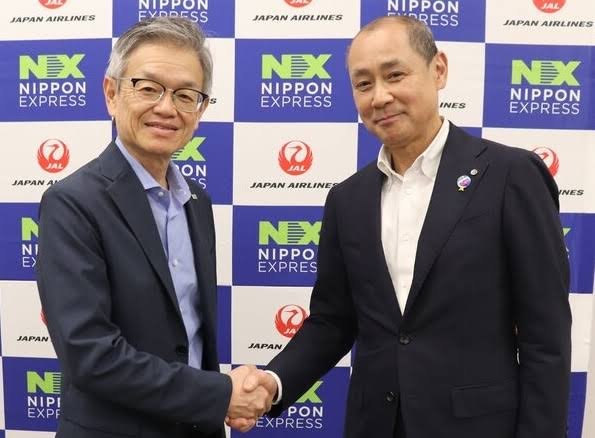
The growing demand for artificial intelligence (AI) infrastructure and semiconductor-related equipment is prompting Nippon Express Holdings and Japan Airlines (JAL) to strengthen air freight connections between North America and Asia. The two companies have introduced a new weekly freighter service designed to provide additional capacity for high-value, oversized and heavy cargo moving across the Pacific.
Announced in an October 1 press release, the new service operates from Los Angeles International Airport (LAX), connecting the North American gateway with Narita International Airport (NRT) in Japan, Taiwan Taoyuan International Airport (TPE) and Singapore Changi Airport (SIN). Japan Airlines operates the circuit using a Boeing 747 freighter with a maximum payload capacity of 100 tonnes.
The inaugural flight departed Los Angeles on October 3. Weekly operations are scheduled to continue throughout the remainder of 2026. Although the companies have not disclosed the service’s operating schedule for 2027, both have indicated that they intend to pursue further expansion of their networks.
AI infrastructure fuels air freight demand
AI-related hardware and semiconductor shipments have become one of the principal growth drivers for the global air cargo market, particularly on transpacific routes. In June, demand for these commodities helped lift worldwide air cargo volumes by 7% year on year, according to a Xeneta report published in July.
The semiconductor industry is also experiencing sustained growth. World Semiconductor Trade Statistics reported that global semiconductor sales reached $159.7 billion in August, an increase of 8% compared with July. Sales rose for the 18th consecutive month. The Americas recorded growth of more than 180% in August, while sales in Asia-Pacific increased by 143%.
Against this backdrop, the Nippon Express–JAL partnership is intended to offer more stable and flexible air transport capacity for demanding shipments, including server racks and equipment used in data centres. The aircraft’s 100-tonne payload capacity is also designed to accommodate other high-value-added cargo categories benefiting from the expansion of generative AI and continued investment in digital infrastructure.
A circuit built for both transpacific and intra-Asian flows
The new service is aimed at strengthening North America-Asia connections and will also tap growing Asian demand for shipments related to AI and semiconductors. Nippon Express said few airlines operate large freighter aircraft in the region, giving opportunities to boost availability of dedicated cargo capacity.
The circuit’s multi-stop set-up is meant to provide more flexibility in how shipments move between markets. “The ability to load and unload cargo at each stop gives customers the flexibility to create different routing options and improve operational efficiency,” the company said in its announcement. This approach is intended to accommodate a wide range of transportation needs between Asia and North America, including destination points deeper into Latin America.
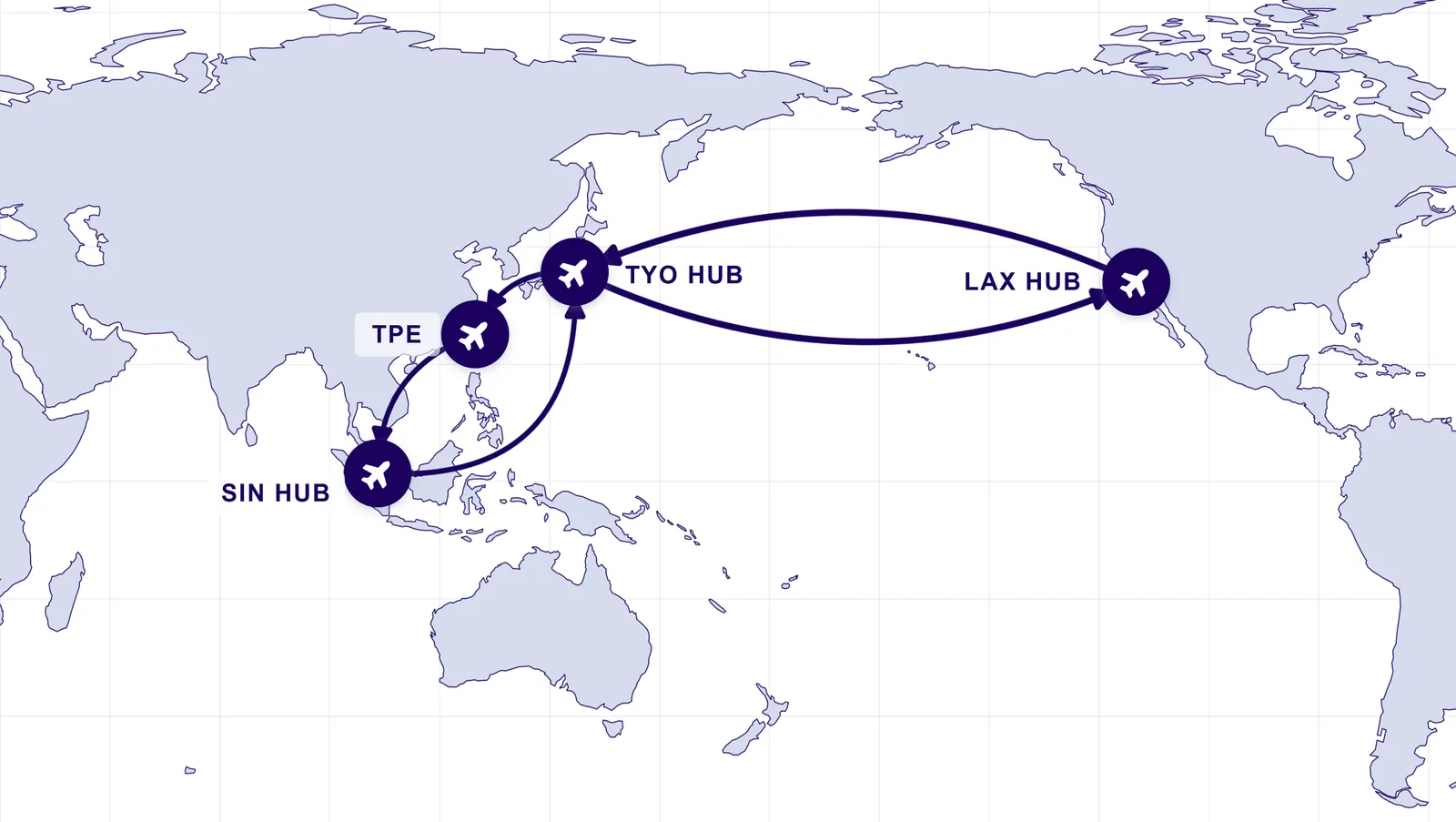
Map showing the routes of Nippon Express and Japan Airlines’ new North America–Asia and intra-Asia air cargo circuit.
Airlines adjust networks to exploit technology-driven growth
While AI-related shipments represent less than 10% of the total air cargo volumes, the effect of these shipments on network planning is becoming clearer, Xeneta’s July report said. Carriers and freight forwarders are tailoring services to meet demand on specific trade lanes where shipments of technology products are becoming more important.
DHL Global Forwarding is another example of this trend. In early 2026, the airline introduced a transpacific service with three weekly flights between Bangkok (BKK) and Cincinnati (CVG). The new route was mentioned as one of the key demand drivers for the technology sector.
The Nippon Express-Japan Airlines initiative is a sign of the same wider shift as air freight operators look to provide the capacity, flexibility and connectivity required to move increasingly specialized equipment across international markets as investment in AI, semiconductors and digital infrastructure speeds up.
Related articles about Japan Airlines & Nippon Express